

72" x 80" Professional Moving Blanket Factory: Durable Protection for Every Move
2026-10-20
Every mover knows the moment of truth: that sharp corner against a doorframe. That’s why Top Packaging makes its 72" x 80" professional moving blankets the way it does—dense, stitched, and ready for the daily grind. No fluff, just protection that lasts from the warehouse to the third-floor walk-up. But not all moving blankets are built the same, and the factory details matter more than you’d expect.
72 x 80: Room to Wrap the Whole Piece, Not Just the Corners
A 72 by 80 inch surface doesn't just reach the edges—it swallows them. Most covers stop at the corners, leaving sides exposed and ends flapping. This size wraps the entire piece, top to bottom, side to side, so nothing hangs out or gets snagged in transit.
Think of it as a full embrace rather than a partial handshake. Whether you're tucking in a mattress, draping over a sofa, or bundling up a bulky load, the extra length and width let you fold the material under itself. No more fighting to stretch a too-small sheet or layering two pieces just to cover a gap.
And because it wraps the whole unit, you don't have to keep checking the corners. One pass, one smooth fold, and the job is done. The generous margin means less tugging, fewer readjustments, and a finish that actually stays put.
What the Weave Feels Like Before a Single Stitch Goes In
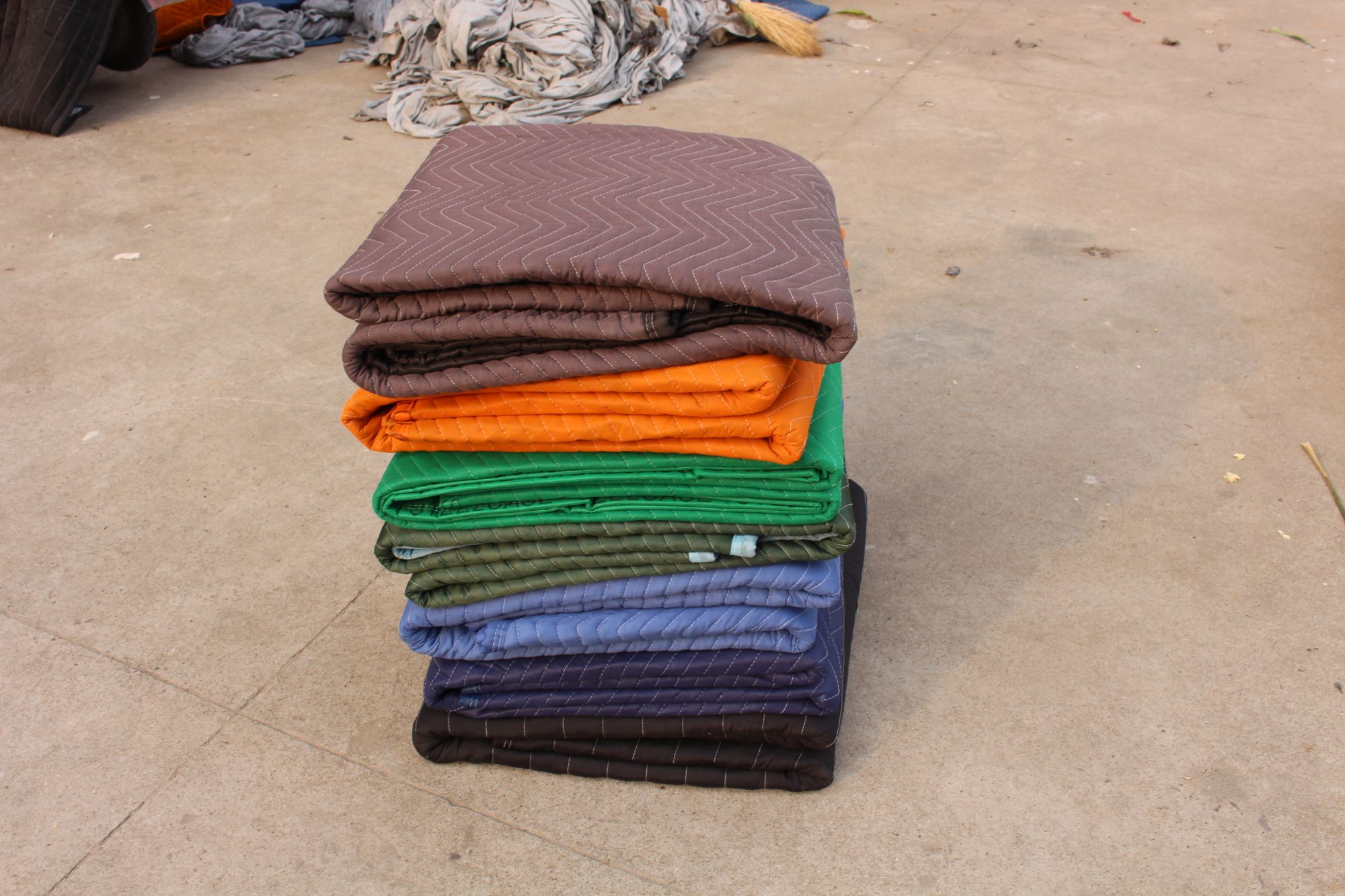
The warp threads lie taut across the loom, each one humming with a quiet tension that has nothing to do with sound. Run a fingertip along them and you'll feel a faint, even resistance — like the surface of a cold stream before the first stone breaks it. The wool is not yet cloth, but it already carries a memory of the sheep's back, a slightly greasy warmth that clings to the ridges of your fingerprint. There is no pattern yet, no over-under rhythm, only this held breath of parallel lines waiting for something to cross them.
If you close your eyes and press your palm flat against the warp, the sensation is oddly intimate: a hundred tiny cords pressing back with the same firmness, as if the loom itself is deciding whether to trust your hand. The air around the threads smells of raw lanolin and dry wood, and the slightest movement of your arm makes the whole arrangement shiver without producing a single note. It is the feel of a promise not yet made, a texture that exists only in potential.
Before the first weft thread is thrown, the weave has no inside or outside, no drape or fold. What you touch is neither fabric nor string but a threshold — a grid of almost-sound, almost-warmth, almost-softness. Your fingers learn the exact spacing between each strand, the tiny irregularities where the spinner's hand paused, the places where the tension dips just enough to let a thread curve like a smile. It is the quietest part of making, the moment when the cloth knows what it will become but hasn't yet agreed to become it.
Edges That Keep Their Threads After Dragging Across Truck Beds
You know how most truck bed mats start to fray at the corners after a few months? The edges catch on gear, get dragged across the metal, and before long you've got loose threads hanging everywhere. That's not the case here. These edges are built to take that kind of abuse without breaking down, so you can slide a toolbox or a cooler across the bed and the stitching stays intact.
The trick is in the binding. Instead of a basic overlock stitch that unravels under friction, the edge uses a reinforced wrap that keeps every thread locked in place. Even when you drag something heavy over the same spot repeatedly, the threads stay put and the edge keeps its shape. It's a small detail, but it's the difference between replacing a mat every season and using the same one for years.
Heavy Enough to Stay Put, Light Enough to Fold One-Handed
The weight of a high chair often dictates how much you actually use it. Too light, and it slides across the kitchen floor the moment your toddler kicks back. Too heavy, and you dread pulling it out for every meal. This one threads that needle: solid enough to hold its ground during even the most enthusiastic spaghetti twirling, yet not so cumbersome that it becomes a permanent fixture in the corner. The low center of gravity keeps it planted, but the real trick is in the balance — the frame carries just enough heft to feel secure without turning into dead weight when you need to move it.
But staying put is only half the story. The one-handed fold is the part that makes you wonder why every chair doesn't work this way. No pinching levers, no second hand to steady the seat, no awkward crouch to find the release. You grab the handle under the tray, squeeze once, and the whole thing collapses forward like it's been waiting for the invitation. It's the kind of motion you can pull off with a baby on your hip and a phone in the other hand — which, as any parent knows, is the only way anything ever gets done. When it's folded, it stands on its own, slim enough to slide behind a door or between the fridge and the counter, out of sight but never out of reach.
That combination of stability and ease doesn't happen by accident. The folding joint is housed in a reinforced polymer block that clicks firmly when locked open, so there's no wobble when your child leans sideways to grab a dropped spoon. And because the fold uses the chair's own weight to assist the motion, it doesn't demand wrist strength or perfect leverage — just a gentle pull and gravity does the rest. It's the rare piece of baby gear that respects both the chaos of mealtime and the reality of a kitchen with limited floor space.
Same Blanket for a Glass Tabletop and a Leather Sofa
A single throw can work on both a glass table and a leather sofa, but only if you skip the fluffy or slippery fabrics. Look for a mid-weight cotton or a cotton-linen blend with a visible weave. On glass, it sits flat without magnifying every wrinkle; on leather, that slight texture keeps it from sliding into a heap every time someone sits down.
For the table, drape it off-center and let the edges fall naturally. Avoid heavy tassels that catch the light through the glass and create odd shadows. On the sofa, tuck the blanket into the seat creases and along the back. It becomes a scratch barrier for pets or a quick layer for chilly evenings, and it doesn't need constant readjusting.
Wash the blanket once before using it in both spots. This softens the fibers, removes any factory stiffness, and cuts down on static that would otherwise pull dust onto the glass tabletop. Choose a heathered or slightly mottled color so small spots from drinks or pet hair don't stand out on either surface.
Cleaning It After a Move Without Turning the Fill Into Lumps
Unpacking a pillow or comforter after a move usually means dealing with flat, musty fill that has been squashed in a box for days. Start by shaking the item outside with a loose grip, not by snapping it hard. That quick, forceful motion pushes the stuffing into corners. Work through the fabric with your fingers instead, flattening your hand and pressing from the center outward to spread the fill evenly. If you find a stubborn lump, pinch the fabric around it and roll it between your fingers until the fibers separate. Do all of this before washing; once wet, clumped fill becomes much harder to fix.
When you are ready to wash, skip any machine with a center post and use a front-loading washer on the gentlest cycle. Use a tiny amount of mild detergent meant for delicate fabrics, and run an extra rinse to remove residue that stiffens the fill. The dryer is where most lumps form, so keep the heat low and add a few dryer balls or clean tennis balls to break up clusters as they tumble. Stop the cycle every 15 to 20 minutes, reach in, and pull apart any clumps with your hands. Take the item out while it is still slightly damp and let it air dry over a rack or the back of a chair, flipping it occasionally until it regains its loft.
FAQ
They're built with a dense, woven fabric that resists tearing, plus double-stitched edges so they hold up under repeated use. The 72" x 80" dimensions cover large furniture without leaving corners exposed.
Yes, the factory accepts custom orders for size, color, and even added features like grommets or logo printing, as long as you meet the minimum quantity.
The thick fabric acts as a cushion against vibration and shifting inside the truck, and the tight weave keeps dust and moisture from reaching the surface of your items.
We use a blend of recycled cotton and polyester fibers, which balances softness with durability. The outer layer is tightly packed to prevent snagging on sharp edges.
For standard blankets in stock, we ship within 3-5 business days. Custom orders usually take 2-4 weeks depending on the quantity and specifications.
They're designed for repeated use and can be machine washed on a gentle cycle with cold water. Avoid high heat drying to keep the fibers from shrinking.
Because you're buying directly from the source, you skip the middleman markup. Bulk orders get significant discounts, often 30-50% lower than what moving supply stores charge.
Conclusion
There’s a reason this 72 x 80 moving blanket covers more than just the corners—it wraps around dressers, headboards, and awkwardly shaped pieces with enough overlap to keep every inch shielded. Before the stitching even begins, the fabric tells you what to expect: a dense, nubby weave that grips wood and glass without sliding, yet feels smooth enough not to scratch a polished surface. The real test comes later, after a few rough drags across a truck bed. Those bound edges don’t fray or shed threads the way cheap blankets do; they hold their line because the hem is built to take abuse, not just look tidy on a shelf.
Weight matters in a moving blanket, and this one hits a sweet spot. It’s substantial enough to stay put over a sofa arm or a table edge without constant readjusting, but you can still fold it one-handed while balancing a box on your hip. That balance carries over to what you’re protecting—the same blanket works under a fragile glass tabletop and over a leather sofa without leaving fibers or pressure marks. After the move, cleaning isn’t a gamble. The fill doesn’t bunch into hard lumps when washed; it keeps its loft and shape, so the blanket is ready for the next job instead of being tossed in the rag pile.
Contact Us
Contact Person: Shelly
Email: [email protected]
Tel/WhatsApp: 86-577-64286522
Website: https://www.topmovingpad.com/