

All-Steel Ceramic Antistatic Floor Company: What to Look for Before You Buy
2026-10-17
Choosing the right all-steel ceramic antistatic floor isn’t just about picking a product—it’s about trusting the company behind it. Before you commit to a purchase, there are critical factors that separate a reliable supplier like Lipin Floor from the rest. From load-bearing capacity to static dissipation performance, the details you overlook today could become costly problems tomorrow. This guide walks you through what to look for before you buy, so you can make a decision with confidence.
How to Spot Substandard Steel Cores Before They Reach Your Site
Ask the supplier for the mill certificate before the truck leaves the yard, then check the heat number against the physical tags. A missing or mismatched heat number is your first red flag, not a clerical error to shrug off. Run a quick spark test on a cut end if you can: a steady, dull orange spray with few branches usually points to a lower-carbon steel, while a shower of fine, bright bursts suggests something harder but not necessarily tougher. Neither replaces a lab report, but both give you enough to hold a shipment at the gate.
Look at the core edges and surface finish. Substandard cores often show uneven rolling marks, pitting, or a bluish heat tint from rushed cooling. Bend a small sample if the spec allows it; cheap cores crack or snap where a proper one takes a set without tearing. And don't trust the packaging. Neat strapping and fresh paint hide more bad steel than any rust spot ever will.
The Real Weight Capacity Numbers Most Suppliers Won't Discuss
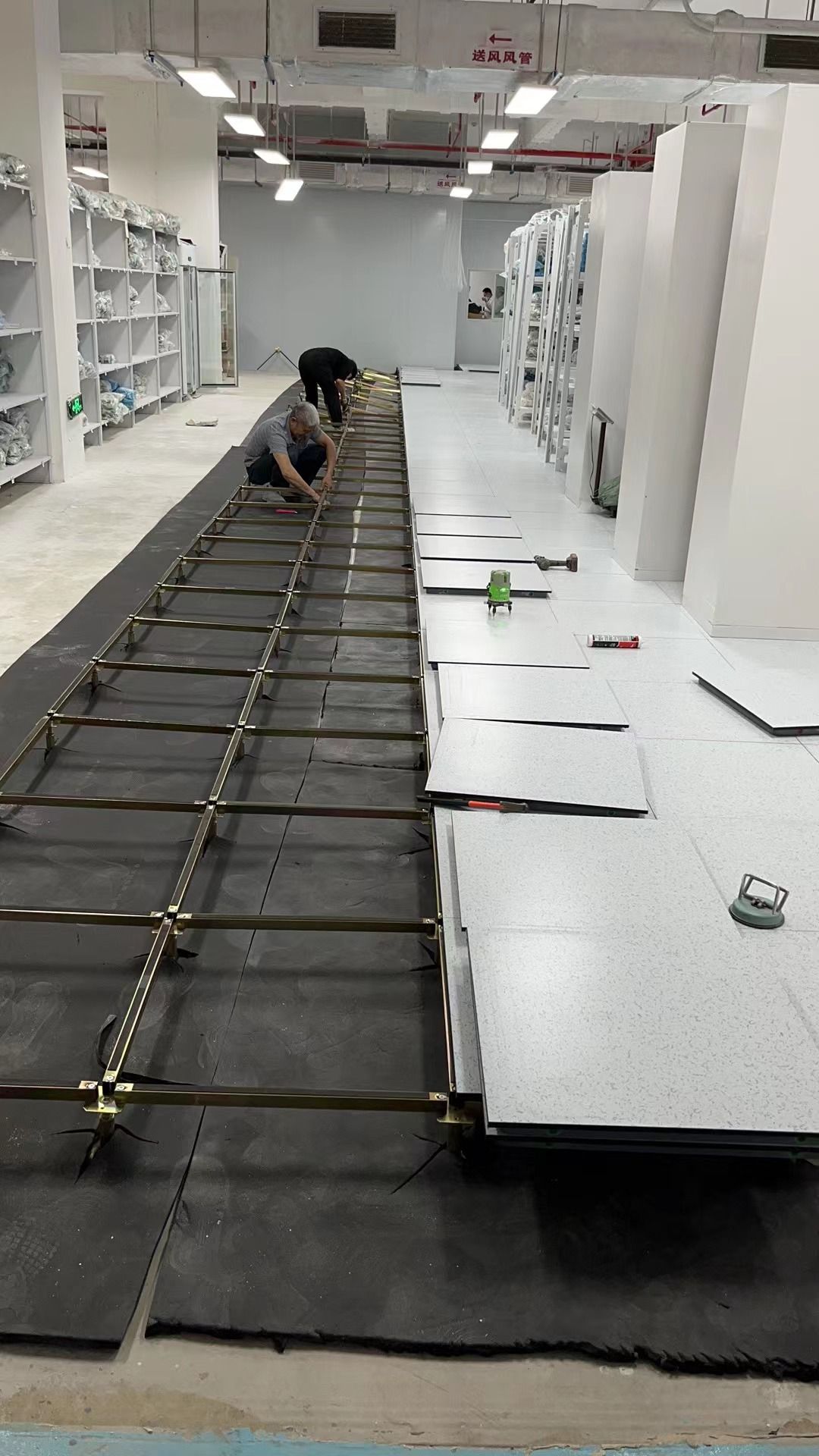
Ask most suppliers for a rack's weight capacity and you'll get a single bold number: 500 pounds, 800 pounds, maybe a ton if they're feeling generous. But what they won't tell you is that number is usually calculated under ideal lab conditions—evenly distributed load, perfectly level floor, brand-new hardware, and zero lateral movement. In the real world, your gear is never perfectly balanced, your floor has a slight slope, and that rack will be bumped, leaned on, and loaded unevenly for years. The result? A so-called 500-pound rack might start groaning at 300 pounds of real, messy, top-heavy weight.
The truth is, capacity has a lot more to do with how the weight sits than how much it weighs. A wide, flat load spread across the bottom shelf puts very different stress on the frame than a narrow, tall load perched on the top rung. Most suppliers won't discuss this because it complicates their marketing. They'd rather print one impressive number than explain that your actual safe limit drops by 30-50% once you factor in dynamic loading, uneven distribution, and years of minor corrosion or metal fatigue. The honest math is rarely flattering.
If you really want to know what a rack can handle, ignore the headline spec and look at the welds, the gauge of steel, and the bracing design. Then mentally subtract a third for real-world conditions. Or better yet, ask the supplier for their capacity at a 2:1 safety factor with an off-center load. Most will go silent—because the real numbers aren't something they're comfortable putting in writing.
Why Anti-Static Ratings Fade Faster in Humid Environments
Most people assume that high humidity helps anti-static performance, since moisture on a surface encourages charge dissipation. That assumption holds only for a short window. In sustained damp conditions, the very additives that give a material its anti-static rating start to break down or migrate away. Surfactants and conductive fillers that rely on a stable polymer matrix can leach out when water molecules continuously penetrate the surface. As a result, the measured surface resistivity creeps upward, and the anti-static rating—often certified under moderate lab conditions—degrades far quicker than it would in a dry, controlled environment.
Another overlooked factor is contamination. Humid air carries more dissolved salts, dust particles, and microbial spores, all of which settle onto treated surfaces. A thin film of condensed moisture then acts as a solvent, pulling conductive ions out of the anti-static layer and spreading them unevenly. This creates microscopic dead zones where charge builds up. Once those zones link together, the entire surface loses its uniform dissipative behavior. Re-testing in a humidity chamber often reveals that the material falls below its original rating threshold months earlier than expected, even if the visual appearance hasn't changed.
It's also worth noting that many anti-static ratings are based on equilibrium conditions—meaning the material is given time to stabilize with ambient moisture. In real-world humid settings, that equilibrium rarely lasts. Temperature swings, dripping condensation, and repeated wet-dry cycles stress the chemical bonds in anti-static coatings. Cracks and micro-delamination form, allowing deeper moisture ingress that accelerates hydrolysis of the active components. The net effect is a feedback loop: more humidity, more structural damage, faster loss of anti-static capability. So while a little moisture might boost performance on day one, prolonged humidity does the opposite.
Installation Prep That Prevents Hollow Tile Failures Later
Most hollow tile issues trace back to a substrate that wasn't truly flat or clean. Before any adhesive touches the surface, run a straightedge across the floor and walls—any gap wider than 1/8 inch over 4 feet needs leveling compound or grinding. Dust, curing compounds, and old paint residues act as bond breakers, so vacuum thoroughly and wipe with a damp sponge, not just a quick sweep.
Primer selection gets overlooked until tiles start popping. Use a primer matched to your substrate and adhesive; acrylic primers work for porous concrete while epoxy primers handle non-porous or slightly damp slabs. Check moisture levels with a calcium chloride test or relative humidity probe—anything above 75% RH in concrete means you need a moisture barrier before tiling.
Even perfect prep fails if the thinset is mixed too wet or applied too thick. Follow the exact water-to-powder ratio on the bag, mix until lump-free, then let it slake for 5-10 minutes and remix. Work in small sections so the adhesive stays within its open time—if a skin forms on the surface, scrape it off and reapply, because a skinned-over layer creates a dead bond that leads directly to hollow spots.
Warranty Wording That Signals Trouble in the Fine Print
The phrase “lifetime warranty” does a lot of heavy lifting while committing to very little. In many warranties, “lifetime” is quietly defined as the expected service life of the product — measured in months or a few years, not the span of a human life. Add the usual exclusion for “normal wear and tear,” and you have a document that sounds reassuring while covering almost nothing.
Look closely at who can actually make a claim. “Original purchaser only” and “proof of purchase required” may sound routine, but they can shut out anyone who received the item as a gift or bought it secondhand. If the remedy section says the company will repair or replace “at its discretion,” you are not being promised a fair fix — you are being promised whatever the manufacturer finds cheapest or most convenient.
Exclusions often pile up near the end: “void if modified,” “not transferable,” “excluding consequential damages.” These phrases rarely appear in the marketing copy, yet they can override the headline promise. When the fine print leans on vague, open-ended language instead of clear, measurable terms, treat that warranty as a warning label rather than a safety net.
Matching Floor Panels to Cleanroom and Server Room Realities
Cleanroom floor panels rarely get the credit they deserve. They sit under constant foot traffic, equipment loads, and aggressive cleaning chemicals, yet they must not shed a single particle or harbor static. The reality is that a panel that works beautifully in a pharmaceutical cleanroom may fail outright in a semiconductor fab, simply because the particulate size threshold differs by an order of magnitude. Matching the panel to the cleanroom reality means looking past the glossy datasheet and asking how the surface, edge sealing, and understructure behave after a year of daily IPA wipes and HEPA-filtered airflow.
Server rooms present an entirely different set of demands. Here the floor is not just a walking surface; it is a plenum for cold air, a raceway for power and data cables, and a grounding plane for sensitive electronics. A panel that is perfectly flat but lacks proper conductivity can turn a routine equipment swap into an electrostatic discharge incident. At the same time, a highly conductive panel with poor load rating will crack under a fully loaded server rack being rolled into place. The real task is to reconcile these two realities: cleanroom panels must prioritize non-shedding and chemical resistance, while server room panels must balance airflow, static dissipation, and structural integrity.
No single panel type wins everywhere. In a facility that houses both environments, the smart approach is to map the actual workflow, not the ideal one. Where carts roll heavily, choose a high-load panel with a sealed edge. Where airflow matters most, pick a perforated panel with adjustable dampers and verify its static dissipation under low humidity. And always test a sample panel in place for a week, because the gap between a manufacturer's controlled lab and your building's morning shift is where the real mismatches surface.
FAQ
The core is fully welded steel, not cementitious or wood-based fill, which gives it better structural consistency and long-term flatness. The ceramic surface is fused to the steel, so you get a hard, static-dissipative finish that resists scratches and chemical spills better than vinyl or laminate overlays.
Look beyond the uniform load number. Check the concentrated load and rolling load figures too, because equipment casters and server racks create point pressure. For most server rooms, a concentrated load of at least 1,000 lbs over one square inch is a safe baseline, but heavy storage or robotic traffic may push that requirement higher.
It can if the edges are unsupported or if installers lift panels by the surface instead of using suction cups. A quality all-steel ceramic panel has a reinforced edge and a factory-bonded ceramic layer, which reduces chipping. Ask the manufacturer about field cutting techniques and whether they provide pre-cut panels for corners and columns.
That depends on your equipment sensitivity. A typical antistatic floor measures between 10^6 and 10^9 ohms from surface to ground. If you're protecting semiconductor tools or medical imaging, you may need a tighter range, so request test reports per ASTM F150 or IEC 61340 rather than accepting a generic "antistatic" label.
Yes, usually 10-15% heavier per square foot than calcium sulfate or wood-core panels of the same size. That extra weight can actually help with stability and sound deadening, but it also means your pedestal system and subfloor must be rated for the total weight. Confirm the assembled system height and pedestal spacing before ordering.
Ask for third-party test reports on load performance, fire rating, and electrostatic properties. Request a sample panel shipped to your site so you can inspect the ceramic bond, edge finishing, and overall flatness. Also check whether they offer references from projects similar in size and use case to yours.
You'll need regular dry mopping or vacuuming with an antistatic-treated pad. For stubborn marks, use a damp mop with a neutral pH cleaner, but never flood the surface. Avoid wax or polymer coatings unless the manufacturer specifically approves them, because those can break the electrical path to ground.
Not always. The premium pays for durability, fire resistance, and consistent antistatic performance over years. If your space has light foot traffic and no sensitive electronics, a less expensive vinyl-covered panel may suffice. But for data centers, control rooms, or cleanrooms where downtime is costly, the all-steel ceramic construction tends to hold its properties longer with fewer replacements.
Conclusion
Before committing to an all-steel ceramic antistatic floor company, dig into the steel core itself. Many suppliers use thin gauge metal or recycled scrap that warps under load, so ask for mill certificates and core thickness measurements—not just the finished panel weight. The real test is point load and concentrated rolling load, figures most vendors conveniently omit because their panels fail at the edges where servers roll. Demand the static load rating under a 1,000-pound point load and the rolling load for casters, not just the uniform distributed load printed on the box. If the numbers are vague or expressed as “industry standard,” walk away.
Antistatic performance is another silent killer: conductive properties fade faster in humid environments if the ceramic glaze uses cheap carbon powder instead of a true conductive network. Ask for third-party test reports at 70% relative humidity, not just 50%. On site, insist on proper subfloor leveling and a moisture barrier before panels arrive—hollow tile failures trace back to rushed prep. Read the warranty wording carefully; exclusions for “improper installation” often overturn claims. Finally, match the panel to the room: cleanrooms need low particle emission and edge sealing, while server rooms prioritize airflow cutouts and cable management. A supplier who asks about your specific environment is a keeper.
Contact Us
Contact Person: yuki
Email: [email protected]
Tel/WhatsApp: +86 18664390732
Website: https://www.lipinfloor.com/