

Aluminum Intake Manifold Supplier Guide: Finding the Right Manufacturer for Your Engine Needs
2026-09-19
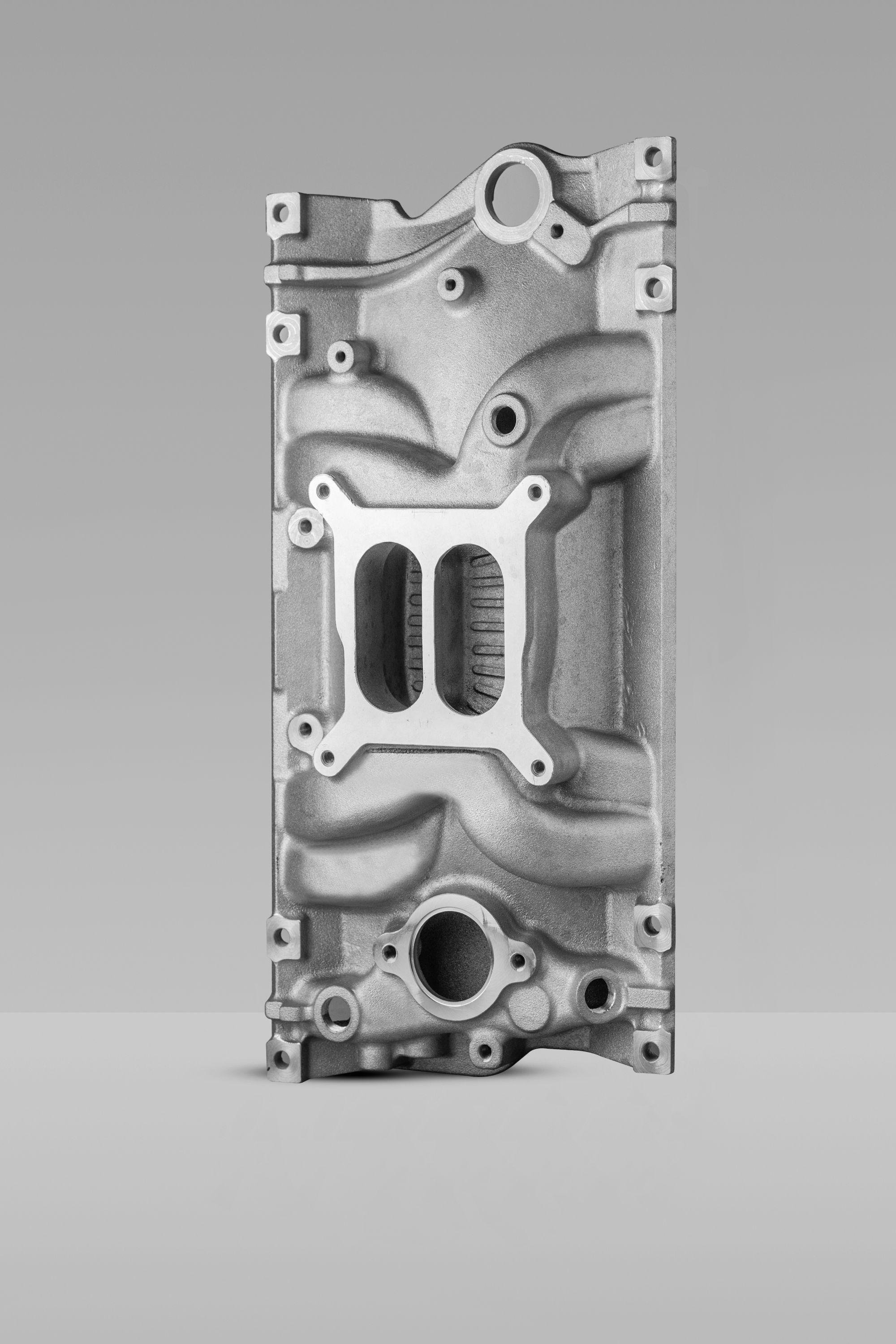
Choosing the right aluminum intake manifold supplier can make or break your engine build. With so many manufacturers claiming perfection, how do you separate reliable partners from costly mistakes? In this guide, we’ll walk through the key factors—from material quality to production consistency—and spotlight a standout option like DDR, whose track record speaks for itself. Whether you’re prototyping or scaling up, the wrong choice could cost you horsepower and peace of mind.
Alloy Choice Isn't Just 6061 vs. 356
Walk through most fabrication shops and you’ll hear the same tired debate: 6061 versus 356. It’s almost a reflex. But that framing misses how much an alloy’s behavior shifts with the process it’s actually going through. 6061 is a wrought alloy — it arrives as extrusions, plate, or bar, and it welds and machines predictably. 356 is a casting alloy that pours into complex molds far more readily. Those are useful starting points, not a final answer.
The bigger levers are often the temper, the exact composition within the spec, and what happens after the part leaves the mold or the mill. A 6061-T6 extrusion can handle different stress states than 6061-T651 plate, and a 356-T6 casting behaves very differently from 356 aged to a softer condition. Small shifts in magnesium, copper, or iron content quietly move ductility and corrosion resistance. Overlooking those details is how you end up with a part that looks right on paper and fails in service.
There’s also a whole range of alloys that live between the two famous names. 7075 brings higher strength if you can accept the corrosion tradeoff. 2024 is still a go-to for fatigue-critical machined parts. 6063 extrudes into cleaner, more intricate profiles. A356.2 with tighter impurity limits gives foundries more consistent results than generic 356. Choosing well means matching the alloy to the load, the environment, and the manufacturing route — not just picking a side in a decades-old argument.
The Port Shape Conversation Most Buyers Skip
Most buyers obsess over woofer size and amplifier wattage, yet rarely glance at the port opening. That's a mistake, because the shape of a speaker's port directly shapes how air moves through the cabinet. A flared round port, for instance, lets air exit more gradually than a sharp-edged rectangular slot. The result is less turbulence, cleaner low end, and fewer chuffing noises when the bass hits hard.
Slotted ports have become popular because they fit neatly into narrow cabinet faces and look sleek. But those right-angle corners disrupt airflow. You may not notice during casual listening, but play a track with sustained sub-bass at moderate volume and the port can start to huff. That air noise isn't just a distraction; it signals that the port isn't controlling the driver as well as it should, which can smear transient detail in kick drums or bass guitar.
The next time you audition a speaker, run your hand near the port during a bass-heavy passage. If you feel chuffing or hear a breathy flutter, the shape is working against the design. A well-executed round port, even a modest one, will often outperform a larger but poorly shaped slot. It's a conversation that takes two minutes to have, but it can save you from living with a speaker that huffs every time the music demands authority.
Reading a Supplier's Sample Run Like a Detective
Most people glance at a sample run and check if the color matches and the stitching holds. A detective looks deeper. You should be asking: does the fabric feel heavier than the approved swatch? Is the print registration off by half a millimeter? Did they substitute a cheaper zipper that looks identical at first glance? These small deviations rarely show up in photos, but they often signal bigger problems down the line.
Pull the sample apart. Flip it inside out, stretch the seams, run your fingernail along the edge of a buttonhole. Suppliers sometimes build a single "golden sample" with extra care, while the bulk run gets sloppier. Compare the sample against the tech pack line by line, not just visually but by touch and weight. If a pocket sits 2mm lower than specified, that's not an accident—it's a shortcut.
Finally, trace the supply chain of the sample itself. Check the lot number on the fabric roll, the date stamp on the poly bag, the country of origin on the trims. A supplier might send a sample made from leftover premium material while planning to use a lower grade for production. Ask for the actual first pieces off the production line, not a pre-production mock-up. The goal is to catch the lie before it becomes a container full of returns.
Casting Method Trade-Offs You'll Feel in the Throttle
Sand-cast intake manifolds carry a texture like fine-grit stucco inside the runners. That roughness isn't a defect—it's deliberate turbulence promotion, breaking up fuel puddling at low rpm. But put your foot down hard and the same surface drags on air velocity, softening the hit you expect when the butterflies snap open. You feel it as a lazy swell rather than a sharp crack.
Switch to a die-cast throttle body and the bore comes out glass-smooth. Idle air control becomes crisp, tip-in feels immediate, and the pedal reads your ankle like a strain gauge. The downside? Any casting flash or slight porosity near the shaft bore turns into an air leak you'll chase with carb cleaner at midnight. Precision costs patience.
Then there's the lost-foam or investment-cast intake: thin walls, weird organic shapes, and a surface that lands somewhere between the two. It lets you tune runner length without packaging nightmares, but heat soaks through faster and the throttle response changes as the engine bay warms up. What feels sharp on a cold morning goes slightly rubbery after an hour in traffic—you learn to drive around the material, not just the map.
Why 'Machined in House' Changes the Quote
When a shop says "machined in house," the quote isn't just a number—it's a different calculation. Without a middleman, the usual markup from a subcontractor disappears. That alone can knock 15–30% off the line item, but the bigger shift is in how changes are handled. A design tweak that would trigger a new purchase order and a week of back-and-forth with an outside vendor can often be absorbed on the floor the same afternoon.
There's also the matter of scheduling. In-house machining means the part doesn't wait in someone else's queue behind a dozen larger orders. If a run falls behind, you can re-sequence machines without negotiating priorities. And when a tolerance issue comes up, the programmer and the machinist are in the same building—so a call about a tight bore doesn't turn into a three-day email thread. That tighter loop cuts the hidden costs that rarely show up on a formal quote.
Of course, the opposite can be true if the shop is at capacity. Internal machining isn't automatically cheaper—it's the control that changes the math. You pay for that control through machine time, tooling, and labor, but you stop paying for an outside vendor's risk buffer. For low-volume, high-mix work, that's often the difference between a quote that fits the budget and one that gets rejected before it's even read.
Warranty Language Worth a Second Look
Most shoppers skim the warranty card like it's fine print on a concert ticket, but a handful of phrases quietly decide whether you're covered or caught off guard. "Limited lifetime" doesn't mean your lifetime—it often refers to the product's expected service life, which could be as short as seven years for some electronics. And "normal wear and tear" is a polite umbrella that excludes the very things warranties feel designed to catch, like faded finishes, stretched straps, or batteries that lose their grip after eighteen months.
Then there's the word "original purchaser," hiding in plain sight. If you bought the item used or received it as a hand-me-down, that coverage evaporates before you even file a claim. Some brands now go further with transferable warranties, a quiet flex that says they trust their build quality enough to follow the product, not the receipt. Reading those two or three extra lines can save you from the classic trap of assuming a warranty is a promise, when sometimes it's just a marketing handshake with a dozen escape hatches.
What really deserves a second look is how claims are processed. "Shipping not included" might mean you pay $45 to send back a $60 item for repair. "Replacement at our discretion" could land you a refurbished unit in a different color, not the one you chose. And "proof of purchase required" isn't just a receipt—some policies want the original box, the UPC code, and a photo of the defect within 30 days. When a warranty spells out those moving parts instead of hiding them in a PDF, that's a sign the company actually plans to honor it.
FAQ
Look for a supplier that asks about your engine's airflow targets, operating temperatures, and boost levels rather than just quoting a price. A good manufacturer will discuss wall thickness consistency, port alignment tolerances, and surface finish requirements upfront, and they should have in-house pressure testing or leak detection rather than relying on visual checks alone.
Request sample cutaways or X-ray/CT scan reports from previous manifold projects with similar internal cavities. Ask about their gating and riser design approach, degassing practices, and whether they use vacuum-assisted casting or low-pressure filling. If they hesitate to share process details, treat that as a warning sign.
A356 and 356 are common choices because they offer a good balance of castability, machinability, and strength after heat treatment. For higher boost or endurance applications, consider A357 or 354 with tighter control on iron and copper content. Avoid generic “aircraft aluminum” claims; ask for the actual alloy designation and mechanical property data.
Sand casting offers more freedom for intricate internal passages and is usually cheaper for low volumes, but surface finish and dimensional repeatability can vary. Permanent mold casting produces smoother surfaces and tighter tolerances with less porosity risk, at a higher tooling cost and longer lead time for mold fabrication. Choose based on your production volume and whether you plan to port or polish the runners extensively.
Ask about 3D-printed sand molds or machined billet prototypes for fit checks before committing to production tooling. Some suppliers offer hybrid approaches: they print the core package for a few castings while the production mold is being cut. This lets you verify port alignment and mounting flange flatness early, preventing costly redesigns later.
At minimum, request a material certificate showing alloy chemistry, a dimensional inspection report for critical mounting surfaces and port openings, and a pressure or leak test result for each unit. For higher-tier suppliers, ask for Cpk data on key features and a surface finish measurement on gasket sealing areas. Avoid suppliers that only provide a generic certificate of conformance without supporting measurements.
If your project involves frequent design changes, tight delivery windows, or high-value engines where warranty claims would be costly, domestic production often pays for itself through faster communication, easier factory visits, and shorter shipping times. For large, stable-volume commodity manifolds, offshore may still be cost-effective, but factor in freight, duties, and the cost of holding extra safety stock.
Provide a complete 3D CAD model with defined port locations and flange thicknesses, the target alloy and heat treatment spec, expected annual volumes, and any surface coating or machining requirements. Also state whether you need the supplier to perform final machining or if you will handle it in-house. Missing any of these details leads to padded quotes or unpleasant surprises after tooling starts.
Conclusion
Choosing an aluminum intake manifold supplier forces you to look past the familiar 6061 versus 356 debate. Alloy selection matters, but it's the thermal fatigue behavior, silicon content for castability, and post-casting heat treatment that show up in long-term engine health. The port shape conversation is another place buyers skip too quickly. A smooth CAD render doesn't reveal core shift, parting line mismatch, or how the short-side radius actually behaves under real airflow. When a supplier sends a sample run, treat it like a detective would: check the runner surface finish with a borescope, measure port openings against a gasket, and look for signs of weld repair or excessive flash. Those small inconsistencies become power loss or boost leaks once the engine is under load.
Casting method isn't just a production detail; it's a throttle response variable. Permanent mold tends to give denser walls and more consistent runner volumes, while sand casting can introduce porosity that shows up as idle instability or pressure drop under boost. If the supplier machines intake manifolds in house, the quote usually reflects tighter control and fewer finger-pointing moments between foundry and machine shop. Before you sign anything, read the warranty language for porosity limits, pressure testing methods, and rework permissions. A supplier that spells out those terms is usually the one that will honor the part when engine loads get serious.
Contact Us
Contact Person: Shelly
Email: [email protected]
Tel/WhatsApp: 8613967667688
Website: https://www.yongyu.com/