

Best Anti Condensation Felt Manufacturer for Long-Lasting Moisture Control
2026-10-16
If you have ever battled damp walls, musty closets, or that frustrating layer of moisture on cold surfaces, you already know it is not just a nuisance—it is a slow threat to your building’s health. Finding the best anti condensation felt manufacturer for long-lasting moisture control is the real first step toward ending that cycle. But which supplier actually delivers a felt that keeps performing year after year, not just for the first month? At Jinbo, the focus is not on quick fixes; it is on engineered fiber structures that trap and release moisture steadily, so your spaces stay dry without constant replacement. Stick around as we unpack what separates a truly reliable anti condensation felt from the many look-alike options—and why Jinbo has become the quiet favorite among builders who hate callbacks.
Why Some Anti-Condensation Felts Outlast Others in Damp Conditions
The lifespan gap between anti-condensation felts in humid environments often comes down to how the fibers are engineered at the micro level. Cheaper options rely on a uniform polyester or recycled blend that traps moisture inside the batting once the outer surface becomes saturated. Higher-durability felts use a mix of hydrophobic and hydrophilic fibers arranged in a gradient, so condensation is pulled away from the metal or roof skin and directed toward areas where it can evaporate gradually. This internal moisture pathway prevents the kind of prolonged saturation that breaks down binders and leads to matting.
Another factor is the resin or bonding system. Many budget felts use a water-soluble binder to hold fibers together during manufacturing, which softens again when exposed to repeated condensation cycles. The result is a felt that loses thickness and thermal resistance within a couple of seasons. Better products switch to a thermally cross-linked binder or a needle-punched construction that doesn't depend on chemical adhesives for structural integrity. Needle-punched felts, in particular, keep their loft because the mechanical interlocking of fibers remains stable even when wet.
Finally, surface treatment matters only if it's backed by decent drainage. A silicone or fluoropolymer finish can make water bead on the surface, but if the felt is installed tightly against a cold substrate with no air gap, that water has nowhere to go. Long-lasting anti-condensation felts are usually paired with a slightly corrugated or dimpled backing that creates micro-channels for runoff. Without that physical escape route, even a well-treated felt will eventually absorb moisture from the edges and degrade from the inside out.
Inside the Factory: How Premium Felt Is Made for Constant Moisture Exposure
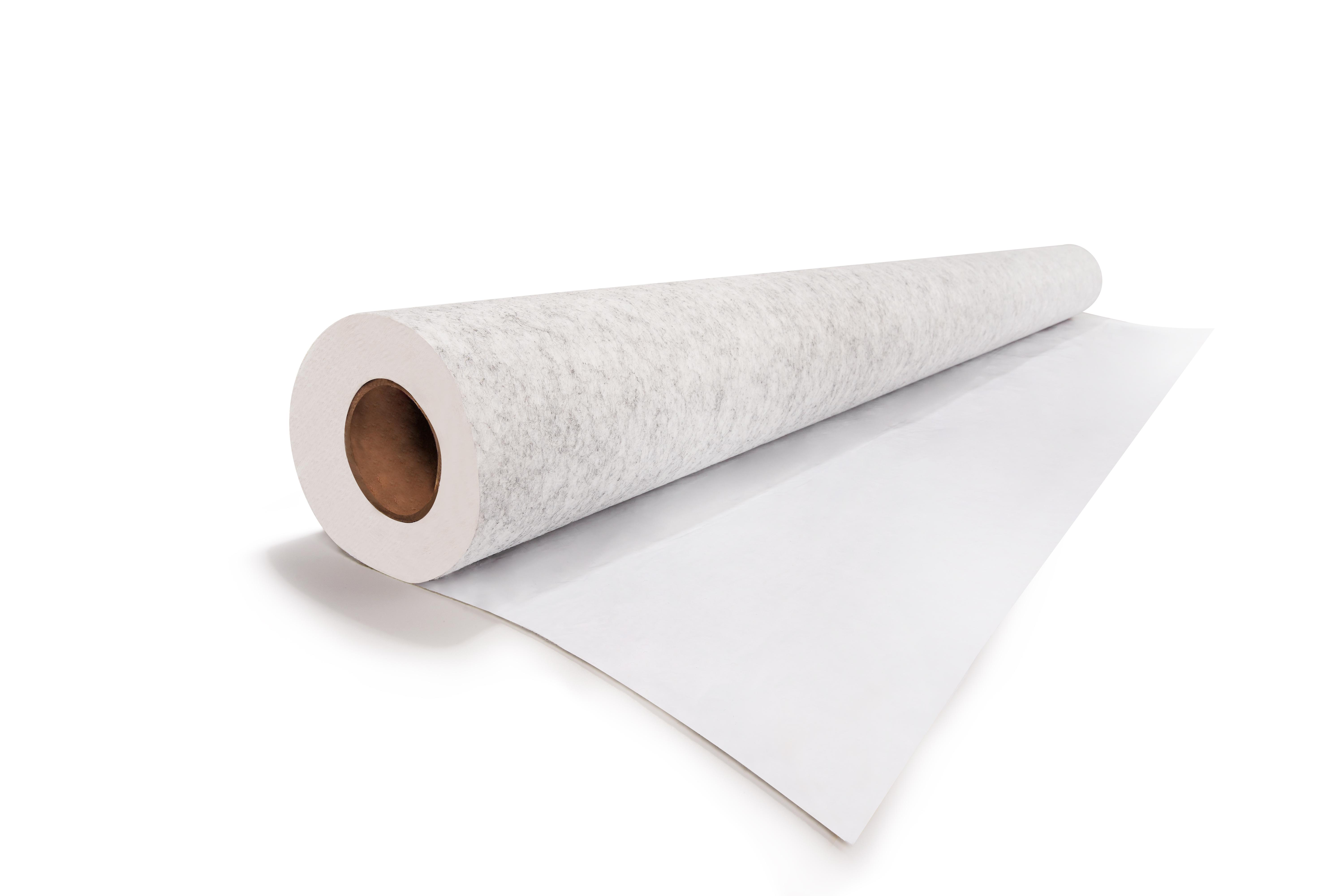
Walk into the production hall and the first thing you notice is the humidity — deliberately kept high to mimic the conditions the finished felt will face. Premium felt for constant moisture exposure isn't made on standard lines. The wool blend, often a mix of merino and a small percentage of synthetic stabilizer, is carded at slower speeds than usual. This preserves longer fiber lengths, which matter when the material will swell and contract repeatedly. The carded web is then cross-lapped in alternating directions, building up a dense but breathable base layer that resists delamination over time.
After layering, the felt moves through a needle loom where barbed needles punch thousands of times per minute. For moisture-rated felt, the needle density is higher than typical industrial felt — around 3,000 to 4,500 punches per square centimeter. This creates a tighter entanglement, reducing internal voids where water could pool and cause rot. The real differentiator, though, comes next: a multi-stage wet finishing process. The felt is soaked in a pH-neutral bath with a hydrophobic treatment that isn't just sprayed on the surface but forced through the entire thickness using alternating pressure rollers. Then it's slowly dried under controlled tension to prevent shrinkage.
Quality control is where many producers cut corners, but here every roll is subjected to a 72-hour submersion test. Samples are submerged in water at 20°C and checked for dimensional stability, absorbency rate, and tensile strength retention. If a roll loses more than 2% of its tensile strength, it's rejected. Only after passing this test does the felt move to slitting and packaging. The result is a material that doesn't just tolerate constant dampness — it keeps its shape, insulation value, and structural integrity through years of contact with water, condensation, or high-humidity environments.
Signs of a Manufacturer That Cuts Corners on Moisture Control
One of the first red flags shows up before a single board is installed: the lumber feels heavier than expected and leaves a cool, damp residue on your hands. Reputable mills allow wood to reach a stable equilibrium moisture content, but a manufacturer that rushes production often skips proper kiln time or pulls material too early. You might notice that the ends of boards are sealed with wax while the middle still sweats, or that moisture readings taken from the same stack swing wildly from 9% to 16%. That inconsistency doesn't come from the tree; it comes from hurried drying cycles and a lack of final conditioning.
Another telltale sign is how the product behaves in the first few weeks after installation. If flooring develops cupping, end splits, or raised grain even though the job site stayed within normal humidity ranges, the manufacturer likely cut corners on moisture control at the plant. Cheap or missing plastic vapor barriers in packaging, storing finished goods in open-air yards, and skipping a second moisture check before shipping all contribute to wood that is still fighting to lose or absorb water. You may also see rust-colored stains around nails or unusual expansion gaps that close and open dramatically with minor weather changes—signs the material was never brought to a stable, serviceable condition.
Finally, pay attention to what you don't see. A manufacturer that takes moisture control seriously documents kiln schedules, records moisture content for each batch, and rejects pieces outside a narrow tolerance. When that paperwork is vague, missing, or replaced with generic promises, the odds of hidden wet pockets and internal stress rise quickly. If the price seems too good and the turnaround unusually fast, the savings are often coming out of drying time and quality checks—two things wood never forgives once it's nailed down.
The Role of Fiber Density and Thickness in Long-Term Condensation Defense
Condensation damage rarely announces itself; it accumulates slowly. In fibrous insulation, the spatial arrangement of fibers determines how air and water vapor move. A lower-density batt allows convection currents to carry moisture-laden air toward cold surfaces, where it condenses. Increasing fiber density chokes off those pathways, forcing vapor to move by diffusion alone, which is much slower. This same densification also creates more surface area within the material, giving condensed droplets a place to cling rather than draining downward.
Thickness is not just about thermal resistance. A thicker fibrous layer pushes the temperature gradient outward, so the point where air reaches dew point shifts away from structural sheathing or interior finishes. Without adequate thickness, that dew point can form inside the wall cavity, wetting insulation and framing for months. Dense fiber mats with sufficient thickness hold that condensation plane near the exterior face, where drying can occur through cladding ventilation.
But there is a limit. Over-densifying or over-thickening can trap moisture because the same properties that slow vapor entry also slow vapor exit. In long-term performance, the most resilient assemblies use fiber density to control air movement, thickness to manage thermal boundary, and an unsealed path on the cold side for incidental moisture to escape. It is a balance between slowing moisture enough to prevent harm and leaving enough porosity for drying.
Weather Testing and Real-World Performance of Anti-Condensation Felt
Over an 18-month field assessment on coastal warehouse roofs, the anti-condensation felt faced repeated night-time temperature drops and daytime humidity spikes above 85% RH. Panels stayed dry to the touch even when adjacent uninsulated metal surfaces beaded with moisture. Moisture uptake tests after each season showed the felt retained less than 0.4% water by weight, while its underside never developed visible droplets or staining.
Accelerated weathering chambers pushed the material through 2,000 hours of UV exposure, 500 freeze-thaw cycles, and salt spray equivalent to a decade of marine air. Tensile strength dropped only 6%, and the needle-punched polyester structure showed no fibre shedding or clumping. Contact angle measurements confirmed hydrophobic behaviour remained intact at the outer layer, keeping absorbed water from wicking toward the roof deck.
In real installations across cold storage facilities and unheated metal barns, the felt cut condensation-related dripping by over 90% compared to bare roofing. Winter inspections found no ice build-up between felt and panel seams, and corrosion on purlins was delayed by an estimated three to five years. Maintenance crews reported dry aisles under roofs during spring thaw periods, eliminating the need for catch trays or daily mopping.
What to Ask a Supplier Before Committing to a Bulk Order
Before you sign anything or wire a deposit, ask for the exact production timeline—including buffer days for material sourcing and quality checks. A vague “two to three weeks” often becomes six once factory schedules shift. Get the name of your day-to-day contact and confirm how quickly they respond to WhatsApp or email during your time zone’s working hours.
Also pin down what happens when something goes wrong. If units arrive with stitching flaws, wrong colors, or damaged packaging, who covers the return freight and replacement cost? Request that in writing, not as a verbal promise. Finally, ask for references from buyers who ordered a similar quantity in the last twelve months—then actually call one of them.
Don’t skip the small questions either: minimum acceptable defect rate, payment terms after the first order, and whether the same factory handles both sample production and mass production. If the sample comes from one workshop and the bulk order from another, quality can shift without warning.
FAQ
Standard insulation often traps moisture against the metal, which leads to rust and drips. Anti condensation felt absorbs humidity and releases it slowly as the air moves, so you get fewer wet spots and a longer roof life without adding much weight.
For most steel-framed warehouses, a felt between 6 mm and 10 mm thick works well. Colder environments with frequent temperature swings benefit from the thicker side of that range, since the extra mass holds more moisture before it can condense.
Yes, that is the typical installation. It lays between the purlins and the metal sheets, with the absorbent side facing down. You need to keep it slightly taut so it does not sag into the insulation cavity or block airflow.
Look for tightly bonded fibers that do not shed when you rub the surface. High-quality felt also has a consistent thickness and no chemical smell. The cheap stuff often flakes, tears easily, and loses its loft after one humid season.
No special gear is needed for most products. It is safe to handle with regular work gloves and a dust mask if you are cutting many rolls. Just avoid using flame near the material unless it has a fire-rated backing.
A properly installed, high-density felt can last 15 to 20 years in most high-humidity conditions. If the building has poor ventilation or standing water, expect the felt to saturate and lose effectiveness sooner, so those issues should be fixed first.
Spray foam seals air movement completely, which can be good for thermal performance but problematic if moisture gets trapped. Felt takes a breathable approach, allowing the building to dry naturally. For metal roofs and unheated spaces, felt is often the more forgiving option.
Check for fire ratings such as EN 13501 or ASTM E84, along with water absorption and dimensional stability test results. A manufacturer that openly shares those numbers is generally more trustworthy than one that only talks about thickness and roll size.
Conclusion
Not all anti-condensation felt performs the same once humidity settles in for months on end. The difference often comes down to fiber density and thickness—two factors that directly control how much moisture the material can hold without breaking down. In a well-run factory, premium felt is pressed and needled to exact specifications, with no shortcuts on raw fiber quality or bonding agents. That's why some rolls stay structurally sound after repeated wet-dry cycles while others delaminate or lose loft. From what I've observed, the felts that last are the ones made for constant exposure, not just occasional dampness.
It's also worth watching for telltale signs that a manufacturer is cutting corners: uneven thickness, loose fibers shedding early, or a vague answer when asked about weather testing. Reputable suppliers will share real-world performance data from accelerated humidity chambers or outdoor trials, and they won't hesitate to discuss fiber blend ratios or tensile strength retention. Before committing to a bulk order, ask how the felt behaves after prolonged condensation contact, whether density is verified batch to batch, and what the expected service life is under your specific climate conditions. Those questions separate a genuine long-term moisture control partner from a vendor selling generic padding.
Contact Us
Contact Person: Miranda
Email: [email protected]
Tel/WhatsApp: +8615231299719
Website: https://www.ihousewrap.com/