

Best Sewer Cleaning Jetting Machine Supplier from China for Commercial Drain Maintenance
2026-09-15
Blocked sewer lines are a headache no business wants twice. Yet, many commercial maintenance teams still rely on outdated cleaning methods that leave sludge behind. Enter AMJET—a China-based supplier that's redefining what a sewer jetting machine should do. If you're tired of short-lived fixes and want equipment built for real-world drain challenges, keep reading.
What Sets Chinese Jetting Machine Builders Apart in Commercial Drain Work
Chinese builders often approach commercial drain jetting equipment with a focus on field-level adaptability rather than one-size-fits-all power ratings. Many shops integrate proven gasoline or diesel engines from global suppliers with locally hardened triplex pumps, and then tune the unloader valves and hose reel brakes for the stop-start rhythm of restaurant grease lines and apartment stack cleanouts. This gives contractors a machine that holds pressure on long lateral runs without the price premium associated with imported equivalents.
Another differentiator is how quickly these builders iterate on nozzle geometry and trailer layouts. Instead of relying on static catalogs, several manufacturers run their own municipal sewer test bays, swapping ceramic plungers, thermal relief valves, and foot-actuated hose guides based on feedback from commercial plumbers. The result is a noticeable emphasis on practical extras: remote throttle controls, anti-freeze recirculation loops, and modular water tanks that fit into standard service vans.
Spare parts availability also sets them apart. Because the supply chain sits close to pump and seal foundries, replacement kits tend to ship within days rather than weeks, and repair manuals often include torque specs and troubleshooting charts in plain language. That operational support matters when a crew is clearing a blocked shopping center grease interceptor on a Friday afternoon and cannot afford downtime.
High-Pressure Efficiency Without the Maintenance Headaches
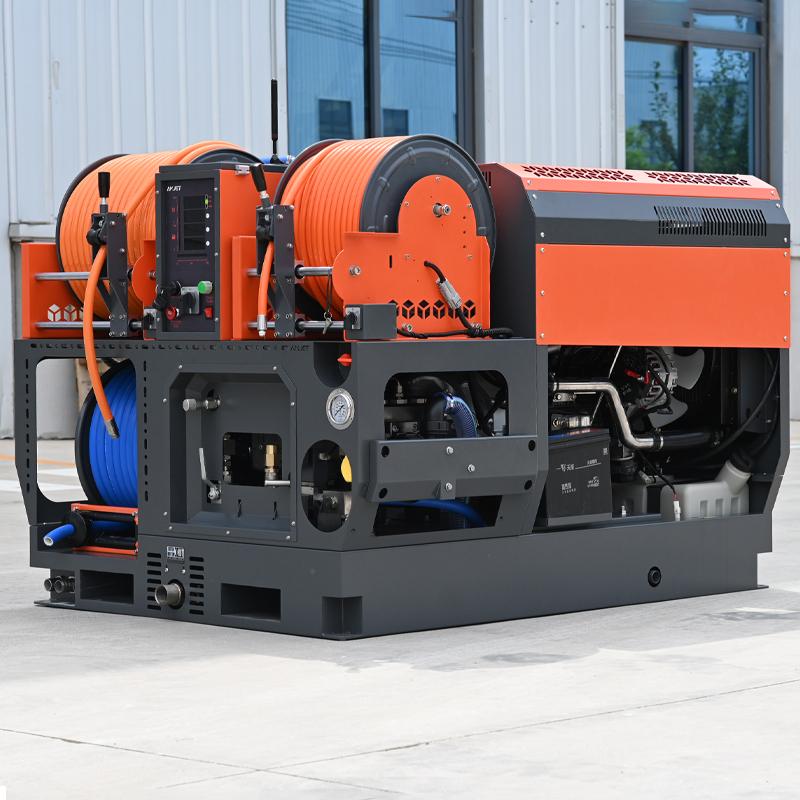
High-pressure systems often demand a trade-off: push the performance envelope and you inherit a maintenance schedule that eats into uptime. But the latest designs flip that equation. By integrating ceramic-lined plungers and self-adjusting seals, they sustain peak output without the constant need for packing replacements or pressure-washer downtime.
What makes this possible is a focus on thermal management and fluid dynamics. Heat is the silent killer of seals and valves, so these units route bypass flow through a cooling loop rather than dumping it back into the crankcase. The result is a cooler-running pump that maintains its pressure curve hour after hour, even under continuous load.
For operators, the proof is in the service intervals. Instead of weekly greasing and monthly seal swaps, you get months of hands-off operation. That means fewer wrenches, less guesswork, and more time actually cleaning, cutting, or blasting at full rated pressure.
Choosing the Right Nozzle and Hose Setup for Stubborn Blockages
When you're facing a clog that just won't budge, the nozzle you grab matters more than the pressure setting on the machine. A narrow jet nozzle concentrates water into a tight stream that can break through compacted grease or roots, but it can also punch through old pipes if used carelessly. Look for a nozzle with a forward jet to clear the path, plus rear-facing jets to help pull the hose deeper into the line.
Pair that nozzle with a hose that has the right stiffness and diameter. A hose that's too flexible will kink inside the pipe and waste your pressure before it reaches the blockage. If the hose is too thick for the pipe, it'll scrape against walls and may not make the turns. A 3/8-inch hose usually works for most residential drains, but check the inner diameter of your pipe first.
For stubborn blockages, consider a setup that lets you switch between jet patterns without pulling the hose out. Some nozzles have adjustable heads or interchangeable tips, which can save you a lot of back-and-forth. Just remember that high pressure isn't always the answer—sometimes a wider spray with lower pressure can flush loosened debris down the drain without damaging old joints.
From Factory Floor to Field: Quality Control That Shows Up on the Job
Quality control doesn't stop at the shipping dock. Components that pass inspection on the factory floor face a completely different set of stresses once they're bolted into place at a job site—temperature swings, vibration, uneven loads, and the occasional human error during installation. Smart teams now design their QC protocols to mirror field conditions during production runs, so a bracket that holds up on the test bench won't fail halfway through a shift.
The most useful quality checks happen after the equipment has been running for a few weeks. Instead of relying only on pre-shipment reports, field technicians are trained to flag subtle issues: a slight misalignment that causes premature wear, a seal that looks fine on paper but leaks under real pressure, or a weld that passes visual inspection but develops hairline cracks once the machine is under dynamic load. These observations feed back into the factory, tightening tolerances and updating inspection checklists before the next batch goes out.
There's also a mindset shift involved. Quality control measured in a climate-controlled lab can feel disconnected from the mud, dust, and deadlines of a construction site. When inspectors understand where their parts end up—and spend time watching installation crews work—they start catching problems that no specification sheet would ever reveal. That kind of ground-level awareness is what separates a checklist-driven QC program from one that actually delivers reliable equipment in the field.
Commercial Drain Scenarios Where a Reliable Jetting Machine Pays for Itself
Picture a busy restaurant kitchen on a Friday night. The floor drains are backing up with grease and food particles, and every minute of downtime means lost revenue. A plumber arrives with a jetting machine that starts on the first pull and holds pressure through the entire line. That reliability turns a potential disaster into a quick fix, and the service call gets billed at a premium because the problem never escalates.
Now think about a property management company handling dozens of commercial buildings. They could outsource every clogged drain, but the invoices pile up fast. Owning a dependable jetting machine changes the math. One technician can clear multiple locations in a single day, and the machine's consistent performance means fewer callbacks and more predictable scheduling. Over six months, the equipment cost disappears into the savings from avoided emergency subcontractor fees.
Even in less urgent settings, like a hotel's laundry facility or a car wash's sediment trap, a reliable jetter earns its keep through routine maintenance. Instead of waiting for a full blockage, crews can run preventive cleaning on a schedule. The machine's longevity and low failure rate mean it's not sitting in the shop waiting for parts while drains get worse. Each completed job adds to a track record of uptime that clients notice and keep paying for.
Ongoing Support and Spare Parts Availability for Uninterrupted Service
Keeping a production line moving isn't just about the initial install — it's about what happens six months, two years, or a decade down the road. That's why our commitment to spare parts goes beyond a dusty catalog. We keep critical components in regional hubs, often within same-day shipping distance of major industrial centers. When a gearbox seal or a servo drive fails, you're not waiting on a slow boat from a distant factory; you're getting a replacement that arrives while the maintenance window is still open.
What sets our support apart is the people behind the parts. Every customer is assigned a direct engineer — not a ticket queue — who knows your machine's history and can walk your team through unusual fault codes over a video call. We've had clients send a smartphone video of a vibrating conveyor at 2 a.m., and our engineer identified a worn bearing race just from the sound. That kind of hands-on, no-red-tape help keeps downtime measured in hours, not days.
We also understand that older equipment often outlives its original bill of materials. For machines we've supported for more than a decade, we maintain a retrofit library of compatible modern parts that can be swapped in without a full controls upgrade. This means a press from 2012 can get a new-generation safety relay or a more efficient hydraulic valve, extending its service life without forcing a costly line shutdown. Spare parts aren't an afterthought — they're part of the original design promise.
FAQ
Commercial jobs often involve larger pipe diameters, tougher blockages, and more frequent use. A suitable unit should offer higher pressure and flow rates, durable pump materials, and easy access to service parts, so it can handle long shifts without breaking down.
Look beyond polished brochures. Ask about the pump brand, hose quality, frame construction, and whether they provide real test videos or can arrange a live demonstration. A good supplier will also share spare parts lists and respond clearly to technical questions.
For commercial drains, a machine with 3000 to 5000 PSI and 18 to 30 LPM flow usually balances enough force to cut through grease and roots while still being manageable for a small crew. The exact range depends on pipe size and the type of blockages you see most often.
Yes, if you pick the right manufacturer. Many Chinese factories build equipment for international brands and know what heavy use demands. The key is to confirm the pump is from a trusted maker, the frame is welded properly, and the hoses and nozzles are rated for continuous operation.
You should expect clear documentation, spare parts availability, and direct contact with an engineer when something goes wrong. A supplier that only wants to sell you a machine and then goes silent is not the right fit for commercial maintenance work.
Often yes. Many manufacturers in China will adjust the pump size, hose length, reel type, or mounting configuration to match your truck or trailer. Make sure to explain your typical job site access and pipe sizes so the supplier can recommend the right build.
Ask for real-world examples from other commercial users, and don't rely only on peak pressure numbers. Flow rate matters just as much for moving debris. If possible, request a demo with a clogged pipe similar to what you encounter, or at least ask for video of the machine clearing grease and roots.
For a stock model, it may ship within one to three weeks. Customized builds can take four to eight weeks depending on the pump and reel setup. Always confirm the production schedule in writing and ask about shipping options to avoid surprises.
Conclusion
The best Chinese sewer jetting suppliers separate themselves by building machines around real commercial demands, not just raw pressure numbers. Their edge often comes from rethinking pump systems—using triplex plunger designs with ceramic seals that hold up under daily cycles in restaurants, apartment complexes, and municipal lines. Instead of chasing maximum PSI, they focus on matching flow rate to pipe diameter and debris type, so a 4,000 PSI unit with the right nozzle clears grease and root intrusions faster than a poorly configured 5,000 PSI machine. Factory testing means each unit runs under load before shipping; you see fewer leaks, cracked manifolds, or electrical failures on the job site. Choosing the nozzle and hose setup matters just as much as the machine itself—forward jets for cutting, rear jets for flushing, and a hose reel sized to the longest run, not the shortest.
A dependable jetting machine pays for itself quickly in commercial drain work. One emergency call-out for a blocked grease interceptor or storm line can cost more than the down payment on a quality unit, especially when you account for labor, overtime, and repeat visits. That's why support and spare parts availability become deciding factors. The best suppliers from China keep common wear items—seals, valves, nozzles, hoses—in regional warehouses, offer technical help over video call during a breakdown, and don't disappear after the sale. This practical combination of build quality, configuration advice, and after-sales response turns a machine into a daily revenue tool rather than a maintenance headache.
Contact Us
Contact Person: Mike
Email: [email protected]
Tel/WhatsApp: +86 19545555505
Website: https://www.amjeting.com/