

Centrifugal Air Compressor Selection Guide: How to Choose the Right One for Your Needs
2026-09-25
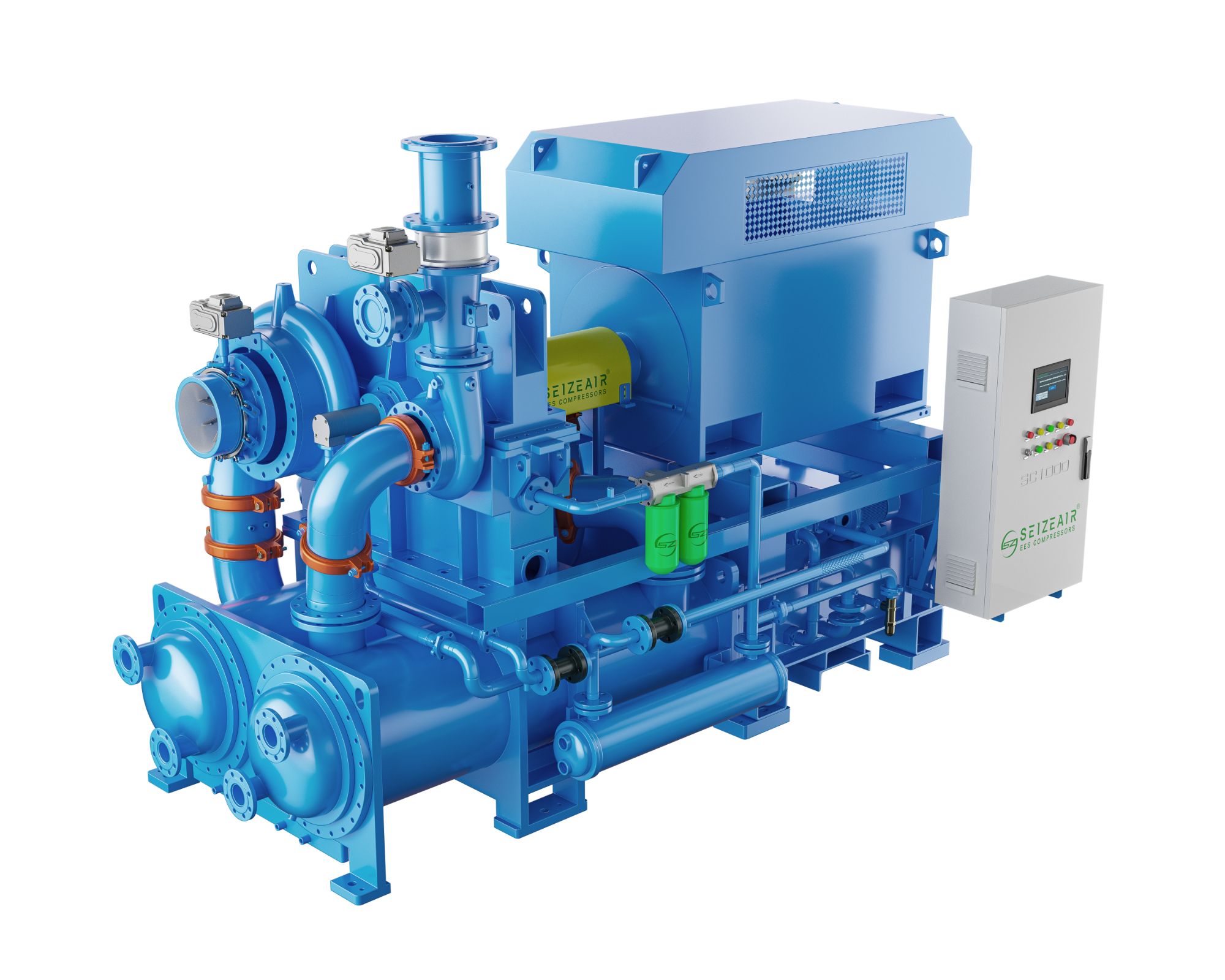
Choosing a centrifugal air compressor is a decision that ripples through your entire operation. Get it wrong, and you're not just dealing with wasted energy—you're inviting downtime, runaway maintenance costs, and a system that never quite fits. That's why we've put together this no-nonsense selection guide. Whether you're upgrading an aging unit or designing a new system from scratch, the choices you make now will dictate performance for years to come. And if you're looking for a partner who understands the stakes, Seize Air has the expertise and range to match your specific demands. Let's cut through the specs and find the compressor that actually earns its place on your floor.
Start by mapping your facility's actual air demand over a full week
Before touching equipment settings or adding capacity, spend seven consecutive days logging airflow, pressure, and power draw at the compressor discharge and at each major branch. Temporary data loggers or a fixed monitoring system both work, but the key is capturing the complete cycle from Monday startup through weekend shutdowns, not just a single shift.
You will almost certainly find that demand is not flat. Morning startups, shift changes, and certain batch processes create sharp spikes, while nights and weekends may show very low flow but surprisingly high leak loads. Use this week of data to separate base load from intermittent load, and flag any periods where the system pressure sags below the level your tools and controls actually need. Those dips are the first clues for where to focus your fixes.
Match the pressure range to your tools, not the nameplate maximum
Many technicians glance at the maximum pressure stamped on a tool's nameplate and assume that's where it should run. That figure is a safety ceiling, not a performance sweet spot. Pneumatic tools, regulators, and hoses often lose efficiency as they approach their upper limit—vibration increases, seals wear faster, and torque consistency drops. What you actually need is the tool's recommended operating band from its pressure-performance curve, which is usually much narrower than the headroom the nameplate suggests.
To match correctly, measure your system's dynamic pressure at the tool inlet, not the static setting at the wall regulator. A compressor line that reads 7.5 bar at rest may sag to 6.0 bar under full flow, and an impact wrench rated for 6.3 bar dynamic will underperform even though the nameplate maximum is 8.0 bar. Use a digital gauge with a flow-through tee right at the tool's air inlet, then compare that reading against the tool's required working range. Ignoring this drop is the fastest way to misdiagnose a perfectly good tool as weak.
When selecting a new tool, let its optimal working pressure fall inside the window your system can sustain at realistic flow rates—not the other way around. If your shop pressure rarely exceeds 5.5 bar under load, skip the heavy air drill that performs best at 6.3 bar even if its nameplate allows 8.0 bar. Instead, pick a tool with a wider acceptable range and place a precision regulator directly upstream. Also check hose diameter and quick-connect fittings: undersized components cause pressure drops far more damaging than running a few tenths below the nameplate maximum.
Compare energy consumption at partial load, where compressors actually run
Most compressor systems spend the bulk of their operating hours well below full capacity. Partial load performance is where real energy gets burned, yet it is often overlooked because nameplate efficiency only tells the story at peak. Comparing energy consumption at partial load means looking past the brochure numbers and checking how a compressor behaves when demand drops to sixty or seventy percent. In many cases, a fixed-speed unit will simply blow off excess air or run unloaded for long stretches, wasting power without producing anything useful. A variable-speed drive, by contrast, adjusts motor speed to match air demand more closely, avoiding those wasteful unload cycles. The difference shows up quickly on a utility bill, especially in plants with fluctuating demand profiles.
The real test is not just efficiency at one partial load point but the shape of the performance curve across a range. Some machines stay relatively efficient down to forty percent load, while others fall off sharply once they leave their sweet spot. It is worth pulling actual data from the controller or a power meter, because theoretical curves rarely capture things like cycling frequency, blowdown losses, or how often the compressor starts and stops. Even small differences in control strategy can lead to double-digit percentage gaps in annual energy use. When two compressors look similar on paper, a side-by-side comparison at partial load usually separates the genuinely efficient design from the one that only performs well in ideal conditions.
Another overlooked factor is how multiple compressors share a partial load. A single large machine running lightly loaded is often far less efficient than a smaller unit or a combination of properly staged machines. Comparing energy consumption at partial load should therefore consider system behavior, not just the individual compressor. Look at how the units sequence, how much time they spend in standby, and whether the control system is smart enough to avoid simultaneous part-load operation. These details drive total ownership cost more than the nominal motor efficiency. In practice, the machine with the lower full-load kW rating can end up costing more per cubic meter of air simply because it handles partial load poorly.
Check how altitude, inlet temperature, and dust will shift output
Altitude changes the game in ways most operators don't expect until they're on site. As you climb, air density drops, and the compressor has to work with fewer oxygen molecules per cubic meter. That means less mass flow into the combustion chamber, which usually pulls down the maximum power you can extract. If you're running a gas turbine or a diesel generator at 2,000 meters, don't be surprised if the rated output drops by 15% or more compared to sea level. The control system might try to compensate by opening fuel valves wider, but without a corresponding increase in air, you just get higher exhaust temperatures and a faster path to component wear.
Inlet temperature plays a quieter but equally stubborn role. Hotter air expands, so the same volume holds fewer oxygen molecules. On a 40°C afternoon, an engine that easily made full power at 15°C may fall short by 5 to 10 percent. This isn't a fault in the machine; it's basic thermodynamics. The tricky part is that many operators mistake this drop for a dirty filter or a failing turbo. Checking the temperature correction curve for your specific model will usually confirm the real cause. Some installations add inlet air cooling—evaporative pads or chillers—to claw back that lost output, but that's a capital decision with its own maintenance burden.
Dust doesn't just reduce output gradually; it accelerates the damage from the other two factors. Fine particles clog intake filters, raising pressure drop and starving the compressor even further when altitude or heat has already thinned the air. The result is a compounding effect: a dusty filter at high altitude on a hot day can cut output by 20% or more, and the machine may start hunting or tripping on overtemperature. Regular differential pressure checks across the filter bank, plus cleaning or replacement based on actual dust load rather than a fixed calendar, keeps the shift predictable. Ignore it, and you'll be chasing phantom derates that no tuning parameter can fix.
Look beyond purchase price to service intervals and rebuild costs
A tempting sticker price can blind you to the real cost of ownership. Machines with low upfront tags often demand frequent service intervals, expensive fluids, and proprietary parts that eat away any initial savings. Instead of fixating on purchase price alone, pull the maintenance schedule and see how often major components need attention. A slightly higher upfront cost can buy you longer service windows and cheaper routine upkeep.
Rebuild costs are the hidden freight in many equipment purchases. Some engines and drivetrains are designed for straightforward overhauls with affordable kits and minimal labor, while others require complete module swaps at eye-watering prices. Before signing anything, ask for quotes on a typical rebuild: parts, labor, and downtime. A machine that costs a bit more now but can be rebuilt for a fraction of the price will serve you far better over its lifespan.
Wise buyers treat purchase price as just one line item in a longer equation. Request service histories, check intervals for pumps, bearings, and transmission work, and compare rebuild scenarios side by side. This kind of scrutiny exposes which machines quietly drain your budget and which ones earn their keep year after year. The goal is not the cheapest acquisition, but the lowest total cost per productive hour.
Demand a control response test that mirrors your real load swings
Most control loops are tuned on paper or in a static lab, but the moment your process sees a real swing—a sudden spike in feed, a pressure drop, a temperature runaway—that carefully calculated curve falls apart. You need a test that doesn't just simulate idle conditions, but actively hunts for instability under the same transient loads your operators deal with every shift.
Ask your integrator or control engineer for a response profile built from your actual historical data. Load the trend of your worst week, not your average day. Inject that pattern into the loop, push the setpoint, and watch for overshoot, oscillation, or slow recovery. If the controller can't hold its shape when the incoming flow doubles in ten seconds, then it's not a controller—it's a decoration.
The goal is a response test that feels uncomfortable. Let the loop hunt a little. Let it saturate the output. Then pull it back. That's how you find the real gain margin, the true dead time, and the point where the process starts singing. Anything less is just a sales demo with a nice-looking trend line.
FAQ
Start with an honest audit of your actual compressed air demand, not nameplate ratings. Log flow and pressure over at least a week to capture peaks and lulls, then size the compressor to run near its best efficiency point around 70-80% of maximum capacity rather than at the edge.
Centrifugal machines really shine above roughly 150-200 kW and when you need oil-free air with a steady base load. If your demand swings wildly or you often run below 50% load, a screw compressor with variable speed may be less painful to operate. Think base load vs. modulation, not just horsepower.
Look beyond nominal efficiency. Check the motor's service factor, starting method, and whether the drive train allows turndown without surge. A direct-drive high-speed motor can eliminate gearbox losses, but make sure your electrical infrastructure can handle the inrush or harmonics from a VFD.
Often underestimated. High humidity, dust, or corrosive gases near the intake will shorten impeller life and clog coolers. Position the intake away from cooling tower drift, vehicle exhaust, and process vents, and consider inlet filtration rated for your specific contaminants.
Water-cooled units offer stable performance but add cooling tower or chiller costs. Air-cooled units are simpler but lose efficiency on hot days. If you have a use for hot water, a heat recovery system can recover 70-90% of input energy, which can change the entire payback calculation.
Request energy consumption at 100%, 75%, and 50% load, plus expected maintenance intervals for bearings, seals, and coolers. Multiply energy by your local rate over a 10-year horizon. A machine that costs 15% more upfront but is 5% more efficient will usually win easily.
Yes, look for integrated anti-surge control with fast blow-off or bypass valves and inlet guide vanes. Some modern controllers learn the surge line and adjust in real time. Ask the vendor to demonstrate stable operation at 40% flow before you buy.
Avoid long, undersized discharge piping and sharp elbows right at the compressor outlet, as they create pressure drop that eats efficiency. Also, install a properly sized air receiver and dryer close to the compressor to buffer demand spikes and protect downstream equipment.
Conclusion
Choosing a centrifugal air compressor starts with understanding your actual usage, not just the nameplate specs. Begin by mapping your facility's real air demand over a full week, capturing peaks, valleys, and shift-related swings. Don't forget to account for leaks and any planned expansion, because these can shift your baseline. Then set your pressure range to match what your tools truly need, not the maximum rating stamped on the equipment. Many plants oversize pressure, wasting energy. Since compressors rarely run at full load, compare energy consumption at partial load—this is where most operating hours are spent. Also account for your site conditions: higher altitude reduces air density and output, while hot intake air and dusty environments can quietly erode performance. Ignoring these factors leads to either wasted power or premature wear.
Beyond the purchase price, look hard at long-term costs like service intervals, parts availability, and rebuild expenses. A cheap unit that needs frequent overhauls can cost far more over a decade. Finally, insist on a control response test that mirrors your real load swings—not a steady-state demo. Watch how the compressor reacts when demand spikes or drops suddenly. That test tells you more about real-world reliability than any brochure graph. Choosing right means matching the machine to your actual operating profile, not to a spec sheet.
Contact Us
Contact Person: Mia
Email: [email protected]
Tel/WhatsApp: +86 19821985894
Website: https://www.seize-air.com