

China Hotel HVAC Energy Saving Strategies for Lower Operating Costs
2026-11-16
Running a hotel in China means wrestling with energy bills that never stop climbing. HVAC systems often account for more than half of a property’s total electricity use, so even small inefficiencies bleed money every single day. But here’s the good news: targeted adjustments—not necessarily expensive retrofits—can slash operating costs dramatically. From smart zoning to predictive maintenance and heat recovery, the right strategies turn your HVAC from a cost center into a competitive edge. At Tongbaote, we’ve spent years helping hotels across China achieve exactly that, combining local operational insights with proven engineering. In this post, we’ll break down practical, actionable steps you can take to cut energy waste without sacrificing guest comfort—and show why upgrading your HVAC approach is one of the fastest paybacks in hospitality.
Mapping Occupancy to Thermostat Policy: A Hotel-Specific Approach
In a hotel, room occupancy rarely follows a fixed daily pattern. A room may be vacant for a stretch, then occupied by an early check-in, left unoccupied again for housekeeping, and later occupied overnight. Mapping these occupancy states directly to thermostat behavior means treating each room as its own control loop instead of relying on building-wide schedules.
The mapping starts by classifying each room into a small set of states: vacant, pre-arrival, occupied, sleeping, and departure pending. For each state, the thermostat policy sets a different temperature band and recovery ramp. Vacant rooms are allowed to drift within a wider deadband, pre-arrival states trigger a gradual return to comfort before the guest checks in, occupied states hold a tighter range, and departure pending can relax the setpoint once the room is empty but still uncleaned.
A practical hotel-specific approach also needs to respect overrides and service workflows. If the front desk marks a room as 'do not disturb,' the system should not force a setback based only on motion-sensor absence. Housekeeping staff can trigger a 'cleaning in progress' mode that temporarily widens the band without cooling an empty room to full comfort. These rules keep the mapping useful without making guests feel the building is fighting them.
Chiller Scheduling Around China's Peak and Valley Electricity Prices
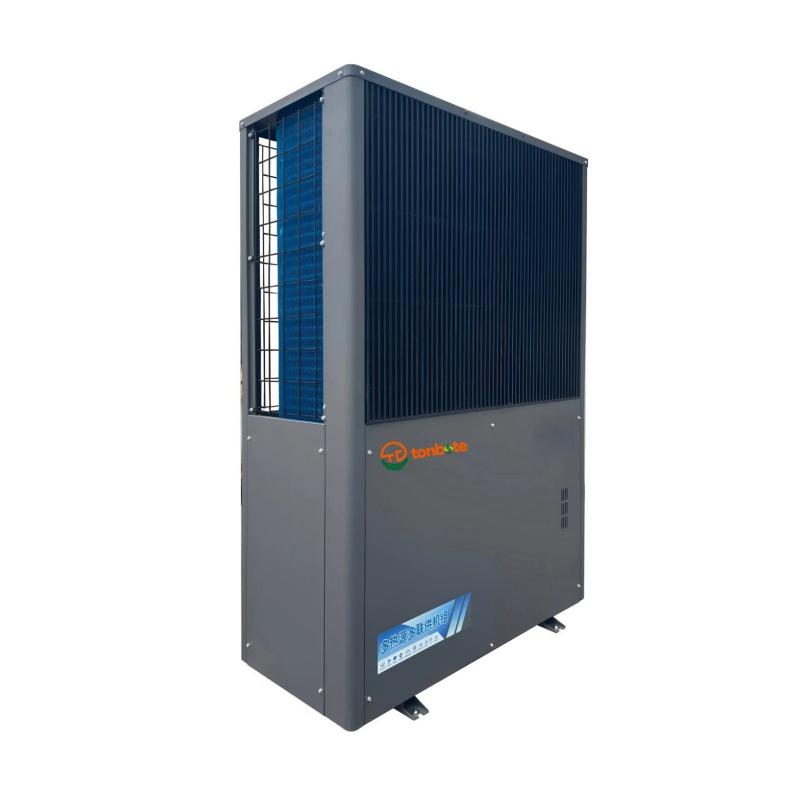
In many Chinese cities, industrial and commercial electricity tariffs swing dramatically between peak and valley periods, with off-peak rates often less than half of the daytime peak. This pricing structure creates a direct financial incentive to shift chiller operation away from high-cost hours. Rather than running cooling systems continuously, facility managers can schedule chillers to precool buildings during the valley window—typically late night to early morning—and then reduce or cycle compressors during the afternoon peak.
A common approach pairs the chiller plant with thermal energy storage, such as chilled water or ice tanks. During valley hours, the chillers run at full capacity to charge the storage, while the building is also being cooled directly. When peak pricing kicks in, the chillers throttle back or shut down, and the stored cooling is discharged to meet the load. For buildings without storage, simple time-of-day scheduling still works: overcooling the space by 1–2°C before the peak period lets the indoor temperature drift upward during expensive hours without sacrificing comfort.
The savings depend on local tariff ratios and the building's thermal mass, but many operators report cutting cooling electricity costs by 20–30% with no capital investment, just by reprogramming the chiller controls. However, successful scheduling must account for occupancy patterns, weather forecasts, and minimum chiller runtime constraints. Some facilities also negotiate with local utilities for special industrial rates that offer even deeper valley discounts, making aggressive load shifting more attractive.
The Overlooked Savings from Condenser Water Temperature Reset
Most facility teams focus on chiller efficiency when hunting for HVAC savings, but the condenser water loop quietly holds untapped potential. Resetting the condenser water temperature setpoint based on ambient conditions or load can reduce total plant energy by 2–5%, yet this measure rarely makes it past the initial audit. The reason is often a lack of visibility: without trending condenser water supply temperature against chiller lift, the savings stay buried in the data.
The logic is straightforward. Lower condenser water temperature improves chiller performance, but only up to a point where cooling tower fan energy offsets the gain. A proper reset strategy finds that balance across part-load conditions, which is where most chillers actually operate. In many buildings, the setpoint is fixed at design conditions, forcing the tower fans to run harder than necessary during mild weather or low-load periods. Adjusting the reset schedule to track wet-bulb temperature or chiller load can trim tower fan energy by 20–40% without sacrificing chiller head pressure.
What makes this opportunity consistently overlooked is that it doesn’t require new equipment—just a controls change and some commissioning time. But because the savings are distributed across the chiller plant and cooling towers, they rarely show up as a single line item. Engineers who take the time to model or trend the plant can usually justify the reset within a few hours of analysis, making it one of the lowest-risk retrofits available.
Corridor and Back-of-House HVAC: The Hidden Energy Drain in Chinese Hotels
Walk down any guest floor in a Chinese hotel around midday and you are likely to feel it: a steady rush of chilled air pouring from ceiling vents into an empty corridor, with no guest in sight. Housekeeping carts prop open fire doors, laundry trolleys block stairwell dampers, and the building's own pressurization system keeps pushing conditioned air into spaces that nobody uses. Because these zones rarely have occupancy sensors or local setpoint controls, the air handling units run at full speed from early morning until late night — often twenty-four hours. The result is a quiet but relentless energy drain that never appears on a guest's bill but shows up month after month in the owner's utility statements.
Back-of-house areas are just as wasteful, if not more so. In many Chinese hotels, the kitchen exhaust hoods pull large volumes of air out of the building, while the adjacent prep corridors and storage rooms are supplied with overcooled or overheated air to make up the difference. Staff frequently override thermostats in linen rooms, uniform stores, and maintenance workshops — sometimes taping over sensors or wedging open windows because the space feels stuffy. Meanwhile, poorly insulated chilled water pipes sweat behind false ceilings, adding latent load that the HVAC system must remove again. The fix is rarely glamorous: reset supply air temperatures by zone, install door switches on back-of-house corridors, and recommission the air balance. Until then, the hidden drain remains.
Heat Recovery from Laundry and Kitchen Exhaust: Short Payback in Humid Climates
Commercial laundry dryers and kitchen hoods discharge air that is not just warm but heavily laden with moisture. In humid climates, this moisture load works in favor of heat recovery because a condensing heat exchanger can extract latent heat as water vapor changes phase. That means the exhaust stream carries substantially more recoverable energy than a dry-air calculation would suggest. Facilities that run multiple dryer cycles or continuous cooking operations end up sending a steady supply of high-humidity, high-temperature air out of the building—air that can be used to preheat incoming cold water.
Typical approaches include run-around coils, heat pipes, or direct exhaust-to-water heat exchangers installed in the ductwork or at the dryer outlet. Instead of relying only on the temperature difference between exhaust and incoming water, a condensing unit pulls additional heat from the moisture. In coastal or tropical climates where ambient humidity stays above 70% for much of the year, the exhaust is already near saturation, so condensation begins almost immediately when it meets a cooler surface. That rapid phase change releases significant energy, often raising cold water temperatures by 30°F to 60°F before it reaches a boiler or water heater.
The financial case tends to be strong for hotels, hospitals, and full-service restaurants with high daily exhaust volumes. Because water heating typically accounts for a large share of energy use in these buildings, preheating with recovered heat cuts fuel or electricity consumption directly. Many installations in humid regions see payback in 12 to 24 months, and some high-volume kitchens report even shorter returns. The equipment itself is relatively simple, with no major changes to existing hoods or dryer vents, which keeps installation costs down and reduces the risk of downtime.
Leveraging BMS Trends to Spot Drifting Setpoints and Valve Leaks
Most facilities treat BMS trend logs as an afterthought, yet a careful look at the data often reveals slow-moving anomalies that don't trip alarms. A setpoint that drifts a fraction of a degree each month or a chilled water valve that leaks by a small percentage can go unnoticed for seasons, quietly raising energy use and masking comfort complaints. By pulling a year's worth of trend data and plotting key variables against their intended values, you can spot these subtle deviations before they become expensive problems.
For drifting setpoints, compare the actual controlled variable with the programmed setpoint over long intervals. A rooftop unit that should maintain 72°F but gradually settles at 74°F over several weeks might indicate sensor drift, poor PID tuning, or manual overrides that were never cleared. Valve leaks, on the other hand, show up as a mismatch between command and effect. If a cooling coil valve receives a 0% open command but the discharge air temperature continues to drop, or if a heating coil shows a persistent temperature rise despite a closed valve, the trend data will reveal the telltale signs of leakage.
Regularly mining BMS trends doesn't require advanced analytics. Simple overlay charts of setpoint, feedback, and valve position against a baseline week will expose patterns that point to mechanical or control issues. The key is to establish what normal looks like for each circuit and then watch for slow divergence. Once you catch a drifting setpoint or a leaking valve early, the fix is often a calibration or a valve rebuild, which costs far less than the wasted energy accumulated over a year of silent drift.
FAQ
Adjust setpoints by zone and time—lobbies need less cooling at night, while guest floors can float a few degrees during checkout hours. Pair this with CO2-based demand-controlled ventilation so fresh air matches occupancy instead of running at fixed rates.
They match pump and fan speeds to real load. In many Chinese hotels, oversized equipment runs at constant speed and wastes energy through throttling valves. Retrofitting VFDs on chilled water pumps and cooling tower fans often pays back within two years.
The humid, warm climate means dehumidification is a big load. A heat recovery chiller can capture condenser heat to preheat domestic hot water, reducing both cooling and boiler fuel. Some properties in Guangzhou report 30-40% lower hot water bills.
Instead of isolated thermostats, a BAS can sequence chillers based on actual load, reset supply air temperature, and detect simultaneous heating and cooling. For a 300-room hotel, eliminating overlap in reheat coils alone can cut gas use by 15%.
Coil cleaning and filter changes are low-cost but often neglected. Fouled coils raise compressor lift and energy use by 10-20%. Also, check refrigerant charge and calibrate sensors—an inaccurate outdoor air sensor can drive up ventilation loads.
Use thermal energy storage or pre-cooling the building at night when electricity is cheaper or demand charges lower. Some hotels shift 20-30% of cooling load to off-peak hours by making ice or chilled water overnight for daytime use.
Adding low-e films to south-facing windows, sealing air leaks in curtain walls, and improving roof insulation reduce both cooling and heating demand. Even a 10% reduction in envelope load can allow downsizing replacement chillers or extending equipment life.
Conclusion
China's hotels face a unique cost squeeze from round-the-clock cooling loads and time-of-use tariffs, so a practical first step is linking actual occupancy patterns to thermostat policy rather than running public areas at fixed setpoints. Mapping check-in surges, banquet schedules, and quiet overnight hours allows front-of-house zones to drift by two or three degrees without guest complaints, while unoccupied meeting rooms and back corridors can be set back aggressively. Corridor and back-of-house HVAC is often ignored, yet it can account for a surprisingly large share of fan and chilled water energy, simply because these spaces are conditioned continuously despite very low occupancy.
On the plant side, chiller scheduling around China's peak and valley electricity prices avoids starting large machines during expensive afternoon windows, shifting cooling production to night-time when tariffs drop. At the same time, condenser water temperature reset yields savings that many operators overlook: allowing the cooling tower to run slightly warmer in mild or humid weather reduces compressor lift with almost no capital cost. In humid southern climates, heat recovery from laundry and kitchen exhaust offers short payback by preheating domestic hot water, cutting boiler fuel during the long cooling season. Finally, using existing BMS trends to spot drifting setpoints and leaking chilled water valves turns data into ongoing savings—small deviations caught early prevent energy waste that otherwise goes unnoticed for months. Together these measures lower operating costs without major renovation.
Contact Us
Contact Person: Wanshu Chen
Email: [email protected]
Tel/WhatsApp: +86-13662871206
Website: https://www.mbcee.com