

Fluralaner Oral Solution Suppliers: Choosing a Reliable Source for Veterinary Anti-Parasitic Treatment
2026-10-16
Every veterinary professional knows that a fluralaner oral solution is only as good as the supplier behind it. Yet too many buyers focus solely on cost and end up dealing with inconsistent batches or delayed shipments. If you're comparing suppliers, the real question is whether they can deliver verified quality, stable supply, and regulatory documentation every time. That's where Lucpets enters the picture—offering a partnership built around product integrity and dependable service. In this post, we'll break down the key factors that separate a trustworthy supplier from a risky one.
What Sets a Trustworthy Fluralaner Supplier Apart
A reliable fluralaner source doesn't just ship a chemical—it brings a level of accountability that is rare in the veterinary supply chain. Look for suppliers who openly share batch-specific purity data, including residual solvent profiles and enantiomeric ratios, rather than hiding behind generic certificates. The best partners will walk you through their stability testing under real-world storage conditions, because fluralaner's performance depends heavily on how it is handled from synthesis to your shelf. If a supplier hesitates to answer pointed technical questions, that silence speaks louder than any marketing claim.
Beyond paperwork, a trustworthy supplier demonstrates consistency across every order, not just the first. Small variations in particle size or polymorphic form can alter bioavailability in ways that lab tests may miss. Ask for retained samples from previous batches and compare them against current shipments—genuine suppliers keep these on file for years. Also pay attention to how they manage cold-chain logistics and container integrity; fluralaner is sensitive to moisture and oxidation, so even minor breaches in packaging can compromise the product you receive. A partner who treats every gram as if it were going into their own animals is the one you want.
Finally, trust is built through responsiveness during problems, not just smooth transactions. The most dependable fluralaner suppliers offer clear escalation paths for out-of-spec results and will proactively notify you of any batch anomalies before you discover them in your own quality control. They understand that your reputation—and the health of the animals you treat—hinges on their reliability. So choose a supplier whose name you can stand behind, not one that merely ticks boxes on a vendor form.
Decoding Quality Claims from Oral Solution Manufacturers
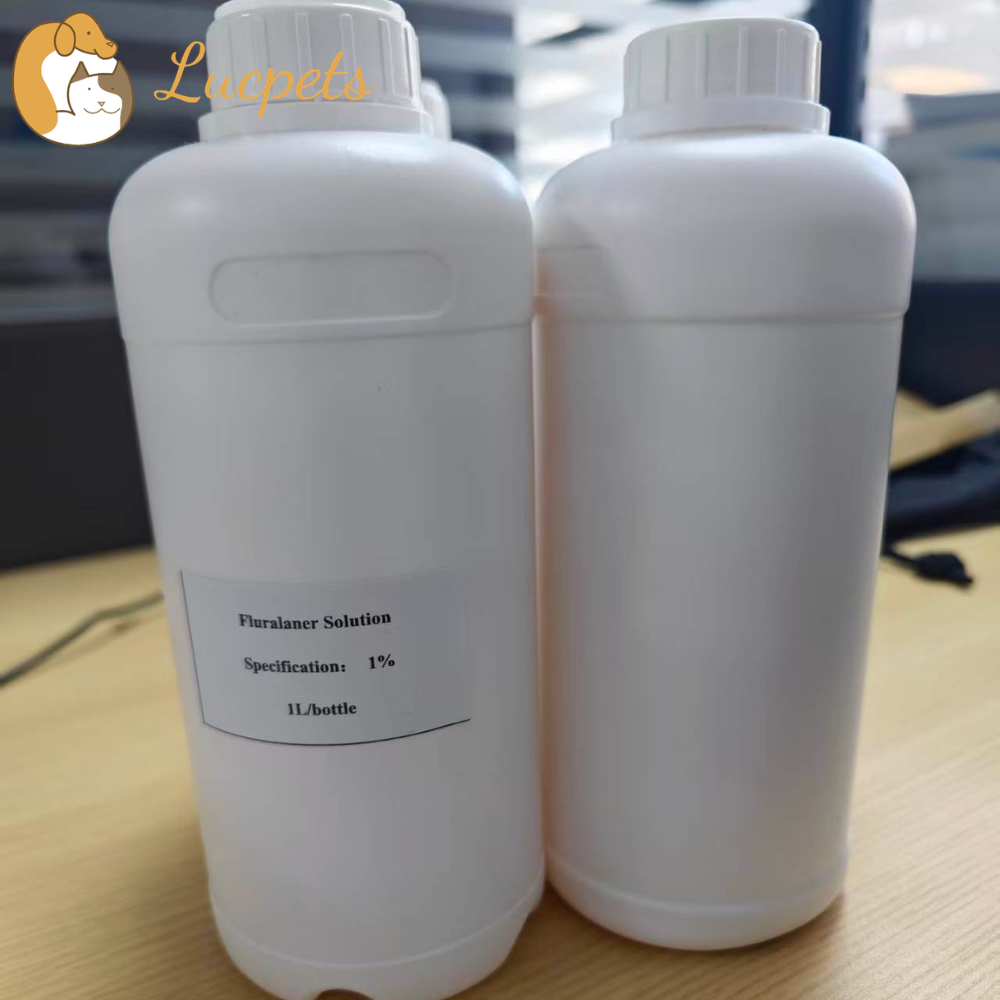
When oral solution manufacturers tout purity or potency, those words rarely carry the same meaning across the board. A claim like "pharmaceutical grade" might sound reassuring, but without a clear definition of what that grade entails, it's little more than marketing gloss. Look instead for specifics: does the manufacturer disclose the exact concentration of active ingredients, the solvents used, and the limits for residual impurities? If they only mention "high quality" without offering batch-specific certificates of analysis, you're likely looking at boilerplate rather than a meaningful promise.
Another angle is process transparency. Reputable manufacturers don't just assert that their oral solutions are stable or bioavailable; they explain how they test for those attributes. Ask whether stability data covers the full shelf life under real storage conditions, not just accelerated chambers. Check if the manufacturer names the independent labs that verify their results, or if they rely solely on in-house testing. A quality claim backed by a third-party audit, such as USP verification or an ISO 17025 accreditation, carries weight because it invites outside scrutiny. Without that, even the most elegant phrasing about "premium ingredients" remains an unverified statement.
The Regulatory Landscape for Veterinary Anti-Parasitic Products
Veterinary anti-parasitic products face a complex web of regulatory requirements that vary significantly across regions, though most authorities share the core goal of ensuring both animal safety and human food-chain integrity. In the United States, the Food and Drug Administration’s Center for Veterinary Medicine evaluates these products for safety, effectiveness, and manufacturing quality before granting approval, with particular scrutiny on parasite resistance management and residue limits in meat, milk, and eggs. The European Union operates under a centralized system through the European Medicines Agency, where a product must demonstrate a positive benefit-risk balance and pass rigorous environmental risk assessments—especially for parasiticides used in pasture animals, given their potential impact on dung fauna and aquatic ecosystems.
Beyond initial approval, post-market surveillance plays an increasingly critical role in shaping the regulatory landscape. Many countries now require pharmacovigilance reporting for suspected lack of efficacy, which serves as an early warning for emerging parasite resistance. Australia’s APVMA, for instance, mandates label statements about resistance management strategies, while New Zealand’s Ministry for Primary Industries has introduced conditional approvals that allow faster access to novel compounds in exchange for enhanced monitoring data. Meanwhile, harmonization efforts through the VICH (International Cooperation on Harmonisation of Technical Requirements for Registration of Veterinary Medicinal Products) have reduced duplicative testing, but local ecological and agricultural practices still drive divergent residue withdrawal periods and grazing restrictions. For manufacturers, this means a strategic balancing act: designing development programs that satisfy the strictest regulators without losing speed to market in less stringent jurisdictions.
Traceability from Batch to Bottle in the Supply Chain
Every bottle leaving our facility carries a digital fingerprint that ties back to its exact production batch. Scanning the QR code on the label reveals not just the bottling date, but the specific harvest lot, the fermentation tank number, and even the operator who oversaw the final filtration. This isn't a marketing gimmick—it's a logistical backbone that lets us pinpoint a single faulty seal or a temperature spike during transit within minutes, not days.
The journey from batch to bottle is mapped through three checkpoints: raw material intake, where each grape delivery is assigned a unique lot code; the blending and bottling line, where sensors record fill levels, cap torque, and label alignment in real time; and the distribution handoff, where pallet-level RFID tags sync with carrier manifests. If a retailer in one region reports an off-flavor, we can trace that bottle back through the warehouse batch record and isolate the issue without recalling an entire vintage.
What makes this traceability practical is that it lives in our existing ERP, not a separate blockchain dashboard. Batch data flows alongside purchase orders and inventory counts, so the supply chain team sees anomalies as they happen—like a delayed truck raising the temperature of a container by two degrees. By the time the bottle reaches the shelf, its full history is already stored, waiting to be queried by a simple lot number. No extra paperwork, no retroactive audits, just a clear line from the vineyard block to the consumer's hand.
Assessing Supplier Track Records Without Marketing Hype
Ask any supplier for their pitch deck and you'll get a glossy list of clients, awards, and promises. None of that tells you how they actually perform when deadlines tighten or specifications change. Instead, request operational data they can't easily polish: on-time delivery rates over the past two years, defect percentages by product line, and the names of three customers who have placed repeat orders in the last six months. Those numbers reveal consistency far better than any brochure.
Verification matters more than documentation. Reach out to those reference customers directly and ask specific questions—not whether they enjoyed working with the supplier, but how many late shipments they experienced, how quickly issues were resolved, and whether the supplier ever proactively flagged a potential problem before it became one. If possible, schedule an unannounced visit to the production floor. You'll see whether quality control is a daily habit or a staged performance for visitors.
Finally, look beyond a single snapshot. A supplier's true track record emerges over multiple production cycles. Ask for quarterly defect trend data and compare it against your own incoming inspection results after you start working together. If their claims hold up under routine, unglamorous scrutiny, you've found someone worth keeping.
Smart Procurement Balancing Cost Consistency and Contingency
Procurement teams often treat cost savings as the sole metric of success, but that narrow focus quietly erodes operational resilience. Smart procurement redefines value by weighing three forces at once: the price you pay today, the reliability of supply over time, and the flexibility to absorb shocks without scrambling. It means negotiating not just unit rates but also lead-time buffers, alternate sourcing clauses, and volume bands that keep costs predictable when demand shifts.
Achieving this balance starts with supplier segmentation that goes beyond spend analytics. Instead of ranking vendors only by invoice value, smart teams map each supplier's exposure to geopolitical, logistical, and raw-material volatility. A low-cost component from a single region might look efficient on paper, yet a minor port disruption could halt production for weeks. By layering contingency costs into total cost of ownership, procurement can justify paying slightly more for a dual-source arrangement or a local backup supplier.
Consistency does not mean rigidity. Contracts designed for smart balancing include pre-negotiated flex terms: the right to adjust order quantities within a range, predefined expediting fees for sudden spikes, or shared risk-reward mechanisms for raw material price swings. These clauses remove the adversarial back-and-forth during disruptions, letting both buyer and supplier respond faster. The result is a procurement function that doesn't just chase the lowest invoice but builds a supply base capable of delivering steady value through both calm and turbulent periods.
FAQ
Focus on manufacturing certifications, batch-to-batch consistency, and transparent documentation. A dependable supplier will share Certificates of Analysis and stability data without hesitation, and their product should align with pharmacopoeial standards for purity and potency.
Fluralaner inhibits ligand-gated chloride channels in arthropods, causing sustained hyperexcitation and death of fleas and ticks. Because it binds tightly to plasma proteins, a single oral dose can provide protection for up to 12 weeks, depending on the species and formulation.
Fluralaner is a potent molecule with a narrow therapeutic window in certain species, especially where off-label use is considered. Inconsistent excipients, impurities, or incorrect concentrations from an unreliable supplier can lead to treatment failure or toxic reactions, so sourcing from a manufacturer with rigorous quality systems is critical.
Request a valid GMP certificate, the product’s marketing authorization or registration status in the destination country, a batch-specific Certificate of Analysis, and a Safety Data Sheet. If the supplier handles export, ask for a Certificate of Pharmaceutical Product and recent stability study summaries.
The approved indications vary by product and region. Some fluralaner oral solutions are licensed for dogs only, while others have separate feline formulations with different dosing. Always confirm the species-specific approval and dosage with the supplier’s technical documentation and your local veterinary regulations.
Watch for unwillingness to provide batch documentation, unusually low prices that suggest skipped quality testing, vague claims about “equivalent” formulations without bioequivalence data, and poor communication about storage or shipping conditions. Legitimate suppliers are transparent about their manufacturing and testing processes.
It should be kept in a cool, dry place away from direct sunlight, typically between 15°C and 30°C unless the label states otherwise. The bottle must be tightly closed to prevent evaporation or contamination, and any diluted or transferred product should not be stored for extended periods.
Conclusion
Choosing a fluralaner oral solution supplier demands scrutiny beyond glossy brochures. The first real test is whether a manufacturer can show batch-level traceability—from raw active ingredient through finished bottles—rather than simply asserting purity. In many regions, veterinary antiparasitic products sit in a regulatory gray zone, so responsible buyers lean on suppliers who proactively share Certificates of Analysis, stability data, and adverse event reporting processes. A supplier's willingness to disclose the origin of the fluralaner API, the solvents used, and the exact fill volume tolerances often reveals more than any marketing claim. Over time, consistent retention samples and a clear recall procedure separate serious operators from resellers who repackage without technical oversight.
Practical procurement also means reading a supplier's track record through independent channels—veterinary distributors, contract manufacturers, and long-term clients—not through polished case studies. Price alone is a weak signal; a low quote may hide inconsistent potency, unregistered excipients, or limited stock buffers that collapse under seasonal demand. Smart buyers negotiate not only unit cost but also delivery guarantees, minimum shelf-life on arrival, and contingency supply for backorders. A reliable fluralaner source can explain how it handles a failed dissolution test or a temperature excursion during transport without deflection. In short, the right partner combines regulatory awareness, verifiable documentation, and enough operational slack to keep clinics and farms protected when parasite pressure peaks.
Contact Us
Contact Person: Aaron
Email: [email protected]
Tel/WhatsApp: +86 18177165140
Website: https://www.lucpetsglobal.com