

Office Chair Exporters You Can Rely on for Bulk Orders and Quality Seating
2026-09-28
Bulk office chair orders live or die on one question: can the exporter deliver the same quality in container #200 as they did in the sample room? Too many buyers learn the hard way that polished catalogs don't equal durable seating. OFCJNS exists to close that gap—supplying office chairs that survive daily use, tight deadlines, and repeat orders without surprises. Whether you're outfitting a corporate campus or stocking a distribution channel, the next few minutes will sharpen your eye for exporters that actually earn the label 'reliable.'
How Dependable Exporters Simplify Large Office Chair Orders
Placing a bulk order for office chairs often turns into a tangle of spreadsheets, shipping windows, and last-minute spec changes. A dependable exporter removes most of that friction by acting as a single point of coordination. Instead of juggling multiple factories, you get one production schedule, one set of compliance documents, and one team that knows exactly when each container leaves the port.
The real simplification happens before production even starts. Reliable exporters walk through your floor plan, headcount, and usage patterns, then suggest frame materials, fabric grades, and casters that match the actual workspace—not just what’s cheapest to ship. This cuts down on back-and-forth sampling and prevents the common mistake of ordering chairs that look right in a catalog but fail after six months of daily use.
After the order is confirmed, the exporter handles the unglamorous but critical work: third-party inspections, palletizing for high-density loading, customs paperwork, and even split deliveries if your project has multiple locations. That kind of operational backbone means you spend less time chasing updates and more time planning the office layout.
The Difference Between Cheap and Truly Durable Seating
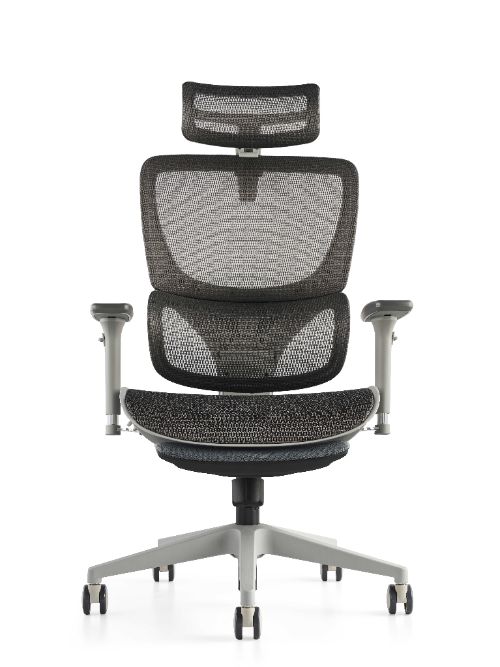
Most people can't tell the difference between a bargain chair and a truly durable one until the seat starts sagging or a joint creaks loose. Cheap seating often hides low-density foam, flimsy particleboard frames, and single-stitched seams under a layer of convincing upholstery. These materials fail quickly under daily use — cushions lose their shape within months, frames crack at the corners, and fabric pulls away from the edges. Truly durable seating starts with a kiln-dried hardwood frame, eight-way hand-tied springs, and high-resilience foam that keeps its bounce for a decade or more.
The real difference shows up in the details you rarely inspect. On a cheap sofa, legs are stapled or glued, seams are narrow, and the suspension is often just a few strips of webbing stretched across the base. On a well-built piece, joints are reinforced with corner blocks, fabric patterns are matched and double-stitched, and the suspension uses sinuous springs or webbing rated for heavy, repeated use. That's why one chair feels wobbly after a year, while another sits just as firmly as the day you brought it home.
Long-term cost is another giveaway. A $200 chair replaced every two years ends up costing more than a $900 chair that lasts fifteen. But beyond money, there's comfort: cheap seating tends to develop pressure points and uneven support once the padding breaks down. Durable seating maintains its original contour and support, which means fewer backaches and a seating surface that stays pleasant. When you compare the two side by side after five years, the difference is never subtle — one looks tired and defeated, the other looks ready for another decade.
What to Inspect When Buying Chairs in Bulk
Before committing to a large chair order, start by examining the frame and joints. Look for sturdy welding or reinforced brackets rather than flimsy staples or glue alone. Press down on the seat and backrest from different angles to check for wobble, squeaks, or flex that could signal weak construction. A chair that feels solid in a showroom may fail after months of daily use, so ask about the weight capacity and what kind of testing the manufacturer has done.
Next, pay attention to the materials that will actually touch people. Upholstery should be tightly woven and resistant to abrasion, stains, and fading—especially if the chairs will be moved between rooms or used outdoors. Foam density matters more than thickness; cheap foam compresses quickly and leaves users sitting on the frame. If you can, request a sample swatch and scratch or spill a little water on it to see how it reacts. Also check that seams are double-stitched and that any exposed edges are rounded or capped to prevent snags.
Finally, think about how the chairs will be stored and stacked. If you plan to stack them, bring a few units together and see whether they nest evenly without scratching or jamming. Check that the floor glides are replaceable—not glued on permanently—and that the chair's overall weight is manageable for your staff. Ask for a written warranty that covers structural failure, not just manufacturing defects, and clarify what happens if a specific batch arrives with a flaw. A vendor who offers a small trial order before the full shipment is often a sign you're dealing with a supplier who stands behind their product.
Why Shipping Reliability Shapes Your Ordering Decisions
Shipping reliability is not just a logistics afterthought—it is the moment of truth between you and the seller. When a package arrives on the date you were promised, the whole transaction feels effortless. But the second a delivery slips, you start replaying the decision to order from that store instead of another.
That single missed window triggers a cascade of small annoyances. You check tracking links repeatedly, rearrange your day to be home, maybe even contact customer service. Meanwhile, the item you actually needed sits somewhere in transit. All of that friction gets attached to the store's name, not the carrier's.
Reliability also lets you plan ahead with confidence. If you know a supplier consistently hits its ship dates, you stop padding your schedule with buffer days. You order closer to the moment of need, which frees up cash and space. Over time, that predictability becomes part of why you choose one vendor over a cheaper but less dependable alternative.
Practical Ways to Keep Quality Consistent Across Batches
Batch consistency starts long before the first ingredient hits the mixer. Lock down raw material specifications with exact tolerances for moisture, particle size, and active content, and stick to approved suppliers even when a cheaper alternative shows up. A running log of supplier lot numbers tied to each production run makes it easier to trace any drift back to its source.
On the floor, small deviations in mixing time, temperature, or operator technique are often what separate a tight batch from an outlier. Use clear setup sheets with photos of correct tooling and finished samples at each station. For anything measurable, move from "check at the end" to in-process checks: pull a sample after blending, measure viscosity or pH mid-run, and adjust within set limits instead of waiting for a failed final test.
Finally, treat your equipment like part of the recipe. Calibrate scales, thermocouples, and dispensers on a fixed calendar, not just when something feels off. Keep a simple trend chart for critical readings so a gradual drift gets caught before it crosses a spec line. Retain a sealed reference sample from every batch and compare new output against it under the same lighting and conditions—this catches visual or textural shifts that numbers miss.
Finding Export Partners Who Grow With Your Workspace Needs
Most workspace providers sign an export partnership, then disappear when your requirements shift. You end up stuck with a fixed set of destinations while your own clients expect flexibility. That’s why you should evaluate potential partners on how they handle expansion — not just the initial contract. Do they offer incremental market entry options? Can they scale warehousing and last-mile delivery as your shipment volume climbs? A partner who treats your growth as a shared roadmap will propose phased milestones, not a static list of ports.
Look for evidence of adaptive infrastructure. Ask to see examples where they helped a workspace client add three new countries within a single quarter without disrupting existing flows. The strongest partners maintain modular service tiers — you might start with freight forwarding, then activate customs brokerage, local compliance, and returns management only when you need them. This prevents you from paying for capabilities that remain idle while ensuring nothing is missing when a client suddenly needs same-week delivery to a secondary market.
Finally, watch how they communicate during the evaluation stage. A partner that asks about your two-year workspace roadmap, seasonal peaks, and product mix shifts is already thinking beyond the first shipment. Those who push a one-size-fits-all export package will likely resist adaptation later. Choose someone who treats your workspace’s needs as a moving target — because in practice, that’s exactly what they are.
FAQ
Look beyond the sample photos—request a pre-production sample, check the chair's base material and gas lift certification, and ask for a load test report. A dependable exporter won't hesitate to share factory audit results or let you video-call the production line.
Ask for their monthly capacity and recent shipment records for similar markets. If they can show you a clear production schedule with buffer days for QC and container loading, that's a stronger signal than a polished catalog.
The usual trouble spots are cheap mesh that sags within months, non-certified gas lifts, and armrests that crack under lateral pressure. Request a tear-down sample so you can inspect the foam density, frame welds, and the way the mechanism is mounted.
Most established exporters offer OEM or ODM options. You can typically adjust seat depth, lumbar support placement, fabric color, and even the logo on the headrest. Just be clear about MOQ changes, because custom tooling or fabric can raise the minimum order significantly.
A balanced starting point is 30% deposit with the balance against a copy of the bill of lading. If a supplier demands 100% upfront on a first order, that's a red flag. Established exporters often accept an irrevocable L/C at sight for larger contracts too.
For stock models, production is often 15–25 days, with another 20–35 days for ocean freight depending on the destination. Custom fabric or mechanism changes can add two to four weeks, so always confirm the ex-works date before finalizing your purchase order.
At minimum, they should supply a clear warranty period—often 1–2 years on mechanisms and gas lifts—plus a spare parts kit with your first shipment. The better ones will also have a point person who responds within 48 hours to missing-part or defect reports.
Usually yes, if you're selling to offices or remote workers. A specialist understands lumbar tension, seat pan tilt, and weight distribution better, and their QC tend to catch issues a general trader might overlook. The small price difference often saves you from high return rates.
Conclusion
Reliable office chair exporters take much of the friction out of large orders. Instead of chasing multiple suppliers, you get a single point of contact who understands bulk timelines, container loading, and local compliance requirements. That simplicity matters when you are ordering hundreds of chairs—one missed detail can cascade into delays or inconsistent seating. A dependable partner also helps you avoid the trap of cheap chairs that look identical online but fail within months. When buying in bulk, you need to inspect weld points, gas lift cylinders, caster durability, and the foam density under the upholstery. These are the quiet indicators of whether a chair will survive daily use or start wobbling after a quarter.
Shipping reliability often gets overlooked until a late container disrupts an office move or a new facility opening. Exporters who provide realistic lead times and keep you updated on vessel schedules make a real difference. Beyond logistics, quality can drift between production batches, so you want a partner who documents agreed specifications and conducts pre-shipment inspections as standard practice. Practical steps like requesting a sealed sample, setting acceptable defect rates, and scheduling periodic factory audits keep batch-to-batch variance low. Over time, the best export partners adapt as your workspace needs change—whether you are expanding headcount, shifting to hybrid layouts, or upgrading to ergonomic task chairs. That flexibility is what turns a one-time bulk purchase into a long-term supply relationship built on trust rather than guesswork.
Contact Us
Contact Person: Diff Wang
Email: [email protected]
Tel/WhatsApp: +8613650281199
Website: https://www.ofcmeshchair.com/