

RCCB Supplier Insights: What to Look for in a Residual Current Circuit Breaker Provider
2026-10-29
RCCB suppliers all claim to meet the same standards, yet real-world performance tells a very different story. From build quality to post-sale support, the details you ignore today can become costly failures tomorrow. So before you settle for a provider that just ticks boxes, ask yourself what truly separates a reliable partner from the rest. One name that keeps surfacing in those conversations is ETEK—and for good reason.
Verify Certifications Before They Become a Liability
Hiring based on a certificate without checking its authenticity can quietly introduce serious risk. A credential that looks impressive on paper might be expired, issued by an unaccredited provider, or belong to someone else entirely. When that person is later placed in a role requiring specific technical or safety knowledge, the gap between the paper qualification and actual competence can lead to mistakes that are costly to undo.
The problem often grows because verification is treated as a formality. Busy managers assume the background check covered it, or they accept a PDF as proof without contacting the issuing body. Yet regulatory bodies, insurers, and clients increasingly expect organizations to show they have validated every certification that matters for the job. A single overlooked license or lapsed credential can trigger fines, contract losses, or liability claims after an incident.
A practical safeguard is to build verification into the onboarding and renewal cycle, not just when something goes wrong. Keep a register of required certifications, note their expiry dates, and confirm directly with the issuing authority rather than relying on the candidate's copy. This simple habit turns certification checks from a weak spot into a routine defense, protecting both the team and the organization from preventable harm.
Match the RCCB Type to Your Actual Load Profile
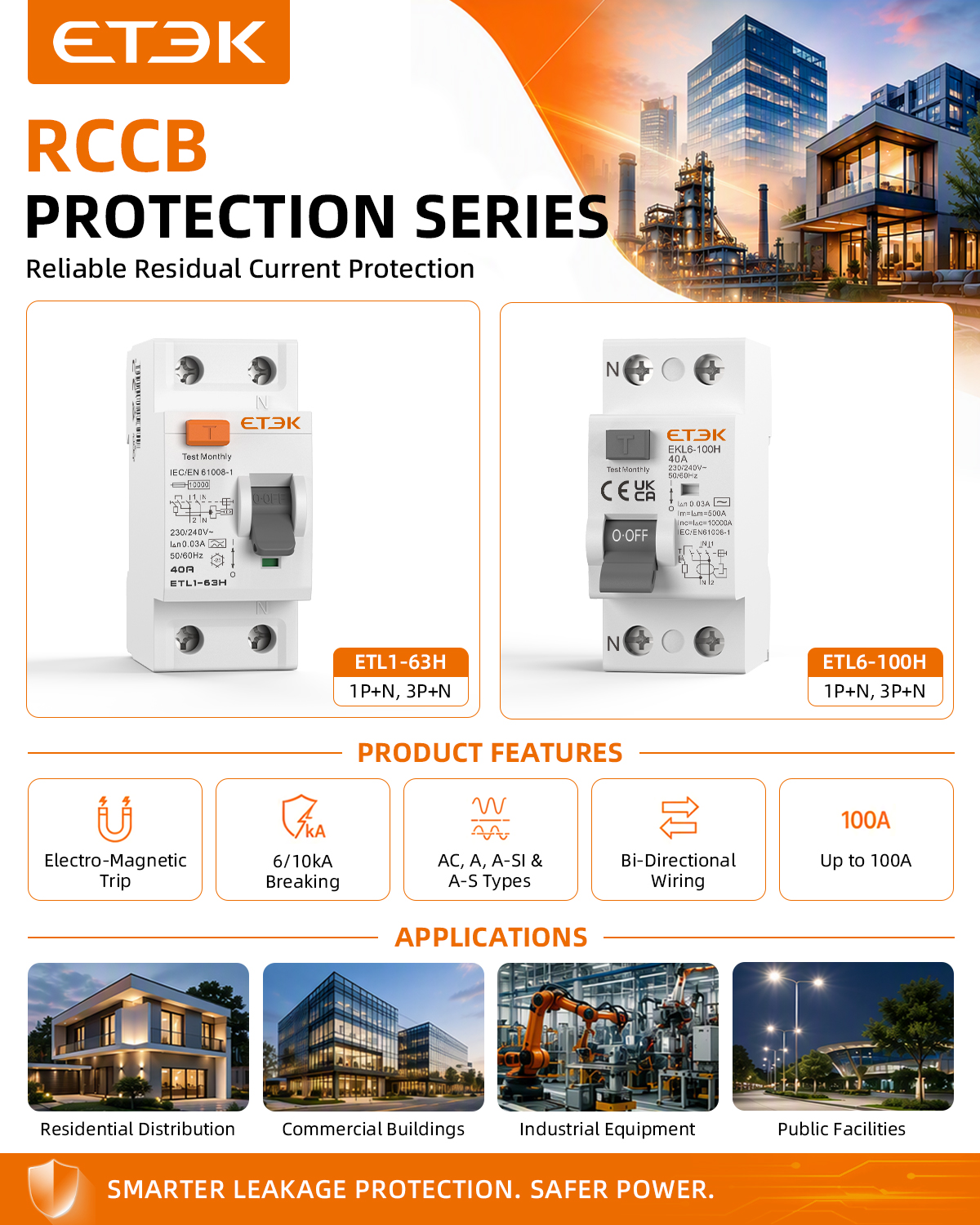
Choosing between an A-type, AC-type, or F-type RCCB isn't about what's written on the datasheet—it's about what actually flows through your circuits day after day. A washing machine with a variable frequency drive doesn't behave like a simple resistive heater. If your load profile includes electronics with DC components, a standard AC-type RCCB may stay silent when it should trip, leaving you with a false sense of safety.
Start by listing the real devices on each circuit, not just their labels. Anything with a switched-mode power supply, EV charger, or modern HVAC inverter pushes DC residual currents that demand an A-type or F-type. Motors with smooth start controls, LED lighting arrays, and even some induction cooktops fall into this category. On the other hand, purely resistive loads like old-style ovens or incandescent lighting rarely need more than an AC-type—but those are becoming rare in modern installations.
Consider start-up surges and harmonic content as well. A circuit heavy with compact fluorescent lamps or small UPS units may cause nuisance tripping on a standard RCCB, while an F-type handles mixed frequencies without false alarms. Match the device to the worst-case normal operation, not the average. If in doubt, leaning toward an A-type with high immunity often saves callbacks later, but never overspecify just for peace of mind—verify what your load profile actually produces.
Demand Test Evidence Beyond the Datasheet
Datasheets are marketing documents first, technical references second. They highlight typical performance under ideal lab conditions, but real-world circuits rarely see those conditions. If you're designing for production, you need to know how a part behaves at temperature extremes, with supply ripple, or after thousands of hours. Ask the vendor for characterization reports, reliability data, and any application notes that go beyond the glossy first page.
A good test report will show corner-lot data, not just one golden sample. Variances in process, voltage, and temperature can push a component outside its headline specs. Demand histograms or scatter plots from actual production runs. If the manufacturer hesitates to share that, it's a red flag. Many reputable suppliers will provide raw test data under NDA without much friction.
Also look for failure analysis or accelerated life test results. These documents reveal how the part degrades over time, which is critical for anything that must last beyond a prototype demo. Compare claimed MTBF or FIT rates against the test conditions used to derive them. If the datasheet cites a 25°C junction temperature but your design runs at 85°C ambient, that number is meaningless. Push for evidence that matches your stress profile.
Pressure Test Lead Times and Stock Buffers
Most inventory models treat lead times as fixed numbers, but that assumption crumbles the moment a supplier misses a shipment or a port clogs up. Instead of relying on a single quoted lead time, run a pressure test by stretching delivery windows by 30%, 50%, or even 100% and track how quickly your stock buffers would drain at current demand rates. This kind of stress test surfaces hidden vulnerabilities, like a component that only has 12 days of cover but a worst-case lead time of 18 days.
Stock buffers should be built around the gap between realistic lead time and assumed lead time, not around a generic safety stock formula. If a critical raw material usually arrives in three weeks but occasionally takes five, the buffer needs to cover that extra two-week exposure plus order cycle variability. Grouping items by lead time volatility, rather than just cost or sales volume, often reveals that a few high-risk part numbers account for most potential stock-outs.
Pressure testing also works in the opposite direction. Some lead times are shorter than expected, and over-buffering those items ties up cash. Reassess buffers every quarter with recent supplier performance data, and adjust reorder points when lead times shrink or expand. The goal is not maximum safety stock but a buffer that flexes with real supply behavior.
Assess Technical Support Before a Fault Strikes
Too many companies only think about tech support after something breaks. The smart move is to test the waters long before any emergency. Send in a few routine questions, open a ticket for something minor, and see how the vendor actually behaves. Do they respond in minutes or days? Is the person on the other end reading from a script, or do they genuinely understand your setup? These small interactions tell you more than any sales demo or glossy brochure ever could.
Look beyond the promised uptime percentages and ask how they handle the messy middle. What happens when a partial outage hits just one region, or when a configuration change doesn't play nice with your legacy tooling? A support team that only shines during full-blown disasters might still leave you stranded for the everyday glitches that eat away at your team's productivity. Ask for references from customers who have actually filed complex tickets, not just those who renewed happily.
Finally, pay attention to how they treat you before you have a contract in hand. If their pre-sales support is slow to answer basic technical questions, or if they keep routing you to account managers instead of engineers, that's a preview of life after the ink dries. The best vendors treat support as a core part of the product, not a cost center to be minimized. By assessing this early, you avoid the trap of discovering on a Friday night that your critical vendor only offers email support with a two-day turnaround.
Look for a Supplier Familiar With Your Industry's Fault Patterns
A supplier who has spent years servicing equipment in your specific sector will recognize failure signatures that outsiders miss. A pharmaceutical packaging line, for instance, often suffers from micro-contamination wear on seal jaws, while a textile mill battles fiber buildup in tension rollers. These patterns aren't in generic manuals—they come from repeated field exposure. Choosing such a partner means troubleshooting starts from a place of pattern recognition rather than guesswork.
Familiarity with industry fault modes also shapes how a supplier stocks spare parts and schedules preventive visits. A vendor who knows that food processing conveyors tend to overheat at drive bearings during summer humidity will preemptively replace seals in spring. They don't wait for a breakdown call; they anticipate based on historical failure trends unique to your niche. This proactive stance reduces unplanned downtime that generic maintenance contracts consistently overlook.
Beyond technical know-how, such suppliers speak your operational language. They understand that a die-casting plant cannot afford a two-day response for a furnace thermocouple failure, but a warehouse conveyor might tolerate it. Their familiarity with your industry's rhythm lets them prioritize correctly, allocate field engineers wisely, and even suggest retrofits that address chronic weak points others never notice. In short, they don't just fix machines—they understand the failure story behind your production line.
FAQ
Look beyond the basic CE mark. For residual current devices, IEC 61008 and IEC 61009 are the minimum benchmarks, but a supplier worth trusting should also hold third-party type-test certificates from bodies like VDE, SEMKO, or UL. If they can't produce these documents quickly, that's a warning sign. Regional approvals like CCC for China or EAC for Eurasian markets matter if you plan to export.
Ask for endurance test data—specifically the number of mechanical and electrical operations the device can handle. A quality RCCB should survive at least 4,000 mechanical cycles and 2,000 electrical cycles under load. Also check whether the test button and trip mechanism are rated for the same lifespan. Some manufacturers only validate the contacts, not the residual current sensing circuit, which is a common hidden weakness.
The key is in the design ownership. A true manufacturer will have in-house capability to adjust magnetic circuits, choose contact materials, and tune the tripping threshold. They can also explain why a specific toroidal core or reed switch is used. Assembly-only shops tend to copy a reference design and can't support custom sensitivity or environmental derating. Ask for a teardown explanation or a design failure mode discussion.
Lead time is a hidden cost. A lower unit price means little if you have to hold six months of safety stock because the supplier ships sporadically. Check their historical on-time delivery rate and whether they maintain buffer inventory of popular ratings. Also ask about their response when a batch is delayed—do they offer air freight or partial shipments? A reliable supplier will give you a realistic production schedule, not just a generic 45-day quote.
You need a supplier that offers field failure analysis, not just a replacement warranty. Ask if they have a process for returned units—will they do a root cause tear-down and share the findings? For harsh environments like coastal installations or heavy dust, they should provide guidance on derating curves and possibly conformal coating options. A supplier that only says 'replace it' without investigating is not handling safety components responsibly.
Yes, but you have to verify differently. Smaller suppliers often lack the in-house testing infrastructure, so they rely on third-party labs. That's fine if they can show valid certificates with traceable sample serial numbers. Ask for the test report's date and ensure it's within the last three years. Also check if they have a designated compliance officer. A small team with deep technical focus can outperform a large brand's generic product line, but you must dig into their quality system.
Watch for suspiciously light units—copper-clad aluminum windings or undersized toroidal cores reduce cost but hurt detection accuracy. Another red flag is if the test button feels flimsy or requires multiple presses to trip. Ask about their incoming inspection of magnetic cores: do they test permeability batch by batch? If they can't answer, they probably don't. Also be wary of suppliers that are eager to bypass type testing by claiming 'equivalent to' a certified model without documentation.
Conclusion
Choosing a residual current circuit breaker supplier involves far more than checking a catalogue. Start by verifying that every certificate is current, genuine, and recognised in the regions where your equipment will be installed; outdated or mismatched approvals can turn into a serious compliance headache later. At the same time, avoid the temptation to treat all RCCBs as interchangeable. A supplier who asks about your actual load profile—whether you have motors, lighting with high inrush currents, or sensitive electronics—will steer you toward the right type, such as an A, F, or B curve device, instead of pushing a generic AC unit. Insist on seeing test evidence that goes beyond the glossy datasheet: request third-party reports, endurance data, and behaviour under fault conditions. If a provider hesitates to share these, treat that as a warning sign.
Lead times and buffer stock can make or break a project schedule, so pressure test the supplier's logistics openly. Ask what they physically hold in regional warehouses versus what must be shipped from overseas, and how they handle sudden demand spikes. Technical support matters most before a fault occurs—check whether you can reach an application engineer quickly, whether they offer installation guidance, and how they respond to neutral-earth voltage issues. Finally, choose a provider familiar with your industry's typical fault patterns. A supplier who understands, for example, the leakage currents common in data centres or the harmonic distortion in industrial drives will recommend products and settings that actually hold up in the field, rather than simply selling a rated component.
Contact Us
Contact Person: Andy
Email: [email protected]
Tel/WhatsApp: +86 13356133008
Website: https://www.etek-china.com/