

Top Silicon Carbide Powder for Superior Ceramic and Abrasive Performance
2026-09-21
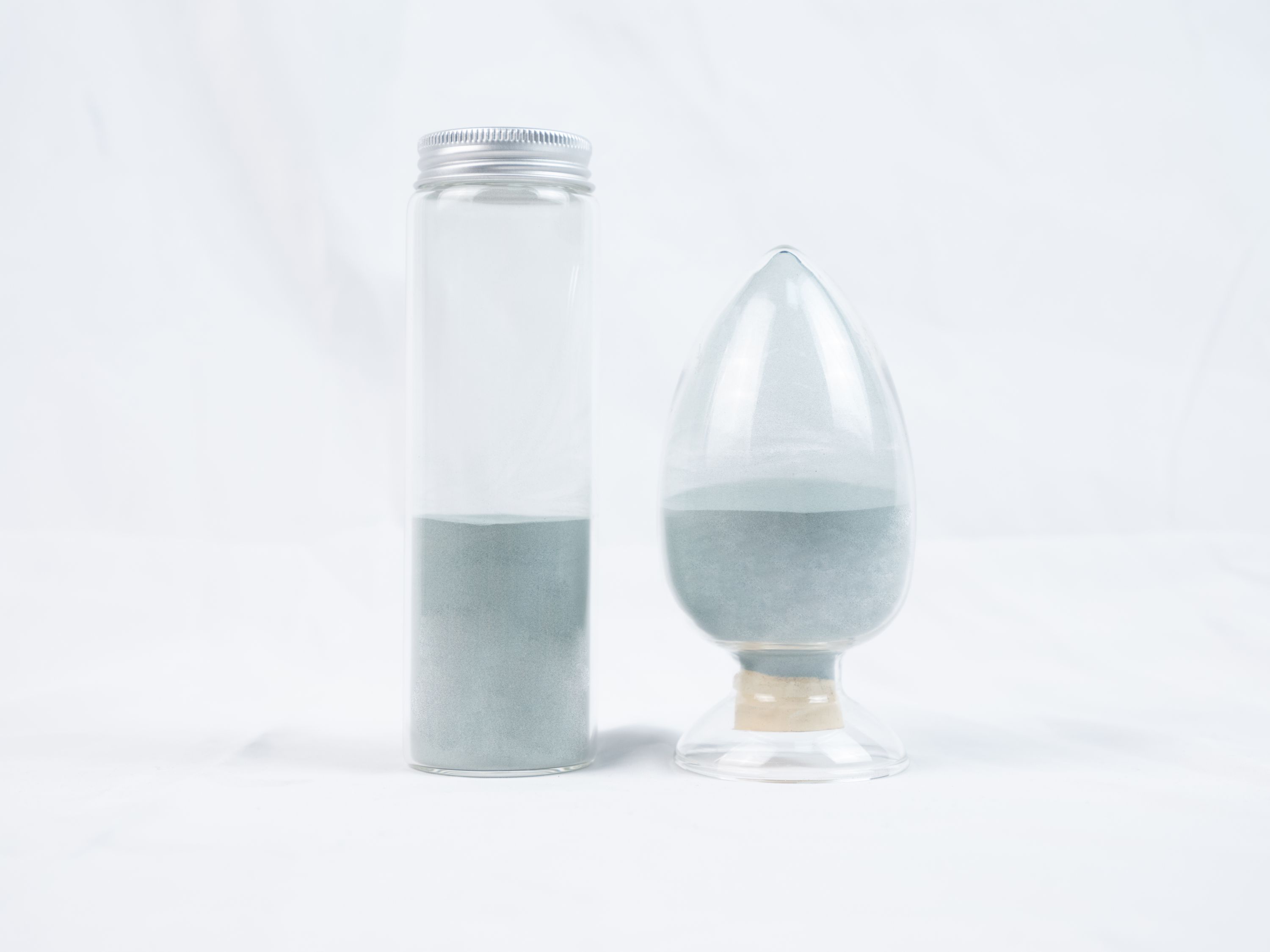
Silicon carbide powder is the unassuming backbone of advanced ceramics and high-performance abrasives. Yet not all SiC powders are created equal—impurities, irregular particle shapes, and inconsistent sizing quietly sabotage your sintered parts and grinding tools. That's where HUAYI TECH steps in. Our top-grade silicon carbide powder is engineered to give you the edge in demanding applications, from dense technical ceramics to long-wear abrasive media. Instead of settling for 'good enough,' imagine a powder that fires cleaner, cuts faster, and holds up under thermal shock. In this post, we'll break down what makes our SiC powder a superior choice and why your next project might just depend on the quality of the raw material you choose.
The Hidden Advantage of High-Purity SiC in Advanced Ceramics
When engineers push advanced ceramics into extreme environments—high heat, corrosive gases, or abrasive contact—the starting powder often decides the final limit. High-purity silicon carbide removes the usual weak points: metallic impurities that seed grain-boundary phases and soften the material under load. Without those contaminants, the sintered body keeps its strength at temperatures where lower-grade SiC would already be creeping or oxidizing from the inside out.
This purity pays off in subtle ways that data sheets rarely capture. Thermal conductivity stays consistent across a wider operating window, so components like mechanical seals or heat exchanger tubes don’t develop hot spots. Wear resistance improves not because the surface is harder, but because there are fewer impurity-rich pockets to pull out as debris. For manufacturers, that translates into fewer unexpected failures and longer intervals between replacements, especially in chemical processing or semiconductor equipment where even microscopic particles cause downtime.
The real distinction emerges in high-temperature structural applications. A turbine shroud or kiln furniture made from high-purity SiC holds dimensional stability with less sintering aid residue migrating to grain boundaries. That means less distortion after repeated thermal cycling, and a more predictable fracture behavior when stress does arrive. In short, the advantage isn’t a single magically improved property—it’s the absence of many hidden degradation paths working simultaneously.
Why Particle Size Distribution Can Make or Break Your Abrasive Results
Most abrasive failures don’t come from weak grit or a bad bond—they come from a particle size distribution that’s too broad, too narrow, or shifted just enough to change how the grains interact with the workpiece. When the distribution is tight, you get predictable cutting action, uniform scratches, and a finish you can control. When it drifts, you’ll see random deep grooves, uneven stock removal, and a surface that needs extra polishing to hide the mistakes. The difference isn’t subtle: a 10% shift in median particle size can double or halve the number of active cutting edges per square inch.
Loading a wheel or belt with too many fines is a classic way to destroy throughput. Those tiny particles pack into the spaces between larger grains, reducing chip clearance and creating heat instead of cutting. That heat softens the bond, releases more grit prematurely, and before long the abrasive is glazed and useless. On the flip side, an excess of oversized particles concentrates pressure on too few points, gouging the surface and wearing down those large grains at an accelerated rate. You either burn the part or scratch it—neither is acceptable.
Batch-to-batch consistency is where particle size distribution really separates professional abrasive suppliers from the rest. If the distribution curve shifts slightly between production runs, operators have to adjust pressure, speed, or dwell time to compensate. That kind of hidden variability eats into scrap rates and labor costs. Tightening the specification on PSD—not just the nominal grit size—is the single most effective way to stabilize abrasive performance and stop chasing a moving target.
From Kiln to Cutting Wheel: How SiC Powder Handles Extreme Heat
Silicon carbide powder starts its journey in an electric arc furnace, where temperatures climb past 2,500°C. The raw mix of silica sand and petroleum coke doesn't just melt—it vaporizes and re-condenses into sharp-edged crystals. This brutal birth process gives SiC a built-in tolerance for heat that few other abrasives can match. Unlike aluminum oxide, which softens at high temperatures, SiC keeps its cutting edges intact even when the grinding interface glows red.
On a cutting wheel, that heat resistance translates into something very practical: the abrasive grains don't round over or fuse under friction. As the wheel spins against steel or stone, local surface temperatures spike instantly. SiC powder sheds that heat fast, thanks to its high thermal conductivity—roughly three times that of steel. So the grain stays sharp, the wheel stays cool at the bond line, and the cut stays clean without loading up.
What really sets SiC apart is how it fails under extreme thermal stress. Most hard materials crack or crumble when heated unevenly. SiC instead fractures in a controlled way, exposing fresh micro-edges each time a dull layer spalls off. This self-sharpening behavior means a cutting wheel made with SiC powder keeps working long after a conventional abrasive would be glazed and useless. From the furnace that forged it to the wheel that spins at 80 meters per second, the powder's heat handling is never an afterthought—it's the whole reason the wheel can bite deep without melting down.
Sintering Secrets for Dense, Defect-Free Silicon Carbide Components
Achieving full density in silicon carbide without introducing flaws is less about a single magic trick and more about a careful choreography of temperature, pressure, and time. Many manufacturers overlook the subtle role of green body homogeneity—any density gradient in the pressed compact will amplify during sintering, leading to warpage or cracks. Start by optimizing the powder packing through spray drying or granulation, then fine-tune the heating profile so the binder burns out slowly before the pores begin to close.
Pressure-assisted routes like hot pressing or spark plasma sintering often get the credit, but they only work if the starting powder has the right additives. Boron and carbon are classic sintering aids, yet their ratio and distribution control grain boundary mobility. Too much boron creates a liquid phase that leaves glassy pockets; too little leaves open porosity. Instead of relying on a fixed recipe, adjust the additive content based on the specific surface area of your SiC powder and the target final grain size.
The real secret to defect-free components is in the cooling stage. Rapid cooling can lock in thermal stresses that later manifest as microcracks along grain boundaries—especially in large or complex shapes. Use a controlled, stepped cooling ramp and consider a post-sintering anneal at a temperature just below the sintering peak to relax residual stress. Also, monitor the atmosphere: even trace oxygen can cause surface pitting or oxidation that weakens the part. Keep the furnace leak-tight and use a slight overpressure of argon or nitrogen.
Green vs. Black SiC: Matching the Grade to Your Grinding Task
The practical difference between green and black silicon carbide comes down to purity and how the grain fractures under load. Green SiC is typically 99% pure or higher, with a sharper, more angular shape that micro-fractures quickly to expose fresh cutting edges. That behavior suits hard, brittle workpieces—think cemented carbide, glass, ceramics, and plasma-sprayed coatings—where a dull grain would simply glaze over the surface. Black SiC, usually around 97-98% pure, has a tougher, blockier grain that resists breakdown longer, making it a better choice for heavy stock removal on cast iron, stone, rubber, leather, and softer non-ferrous metals.
Matching grade to task is less about absolute hardness and more about what you want the abrasive to do. If your grinding operation generates a lot of heat and you need low force on a fragile part, the friable green grade will shed dull grains and keep cutting cleanly. On the other hand, if you are hogging material off a ductile workpiece or running a large contact area, black SiC tends to hold its form longer, requiring fewer dressing cycles and lowering abrasive cost per part. Some shops keep both on hand and switch based on the job, while others blend them in custom wheels to balance sharpness against wheel life.
Surface finish is another deciding factor. Because green SiC fractures into finer, sharper fragments, it usually produces a more refined finish on very hard materials, which is useful for seal faces, precision tool edges, or glass components. Black SiC may leave a slightly coarser finish under identical conditions, but it can tolerate higher feed rates and more aggressive depths of cut without excessive wheel wear. Consider the workpiece material first, then the finish spec and cycle time—these will point to the right grade faster than any hardness rating alone.
Avoiding Common Pitfalls When Blending SiC Powder into Ceramic Slurries
Blending SiC powder into a ceramic slurry rarely fails because of the mixing speed alone. The more common issue is improper wetting. Silicon carbide particles can carry residual surface oxides or hydrophobic contaminants from storage. If these are not addressed, the powder floats on the liquid or forms dry pockets that shear forces later cannot break apart. A short pre-wetting step with a small portion of the vehicle plus a compatible dispersant often solves this. Watch for pH shifts after the powder goes in; silicon carbide surfaces react slowly with water, and the slurry can drift acidic over several hours. Re-check the zeta potential or viscosity after the mixture has rested, not just immediately after blending.
Another pitfall is over-relying on high-shear mixing to fix a poor dispersion. Prolonged high shear can fracture the SiC particles or round their sharp edges, which changes packing density and sintering behavior. Instead, use a staged addition: add the SiC in three or four increments, allow each increment to incorporate fully, and keep the slurry temperature below the point where the binder begins to gel. If the slurry starts to thicken suddenly, stop adding powder and check for either moisture loss or early binder crosslinking. Small adjustments to the dispersant dosage or a brief de-airing step under vacuum usually have a larger impact than increasing mixer RPM.
FAQ
Silicon carbide brings a harder, more thermally stable structure to the table. It maintains strength at temperatures where alumina starts to soften, and its lower thermal expansion reduces cracking risk in rapid heating or cooling cycles. For seals, pump parts, and kiln furniture, that translates into noticeably longer service life.
The key is consistency across the entire distribution, not just the median diameter. A narrow particle size spread leads to more uniform packing in ceramic green bodies and more predictable material removal rates in abrasives. Ask for a full size distribution curve rather than a single average value.
Excess oxygen usually appears as a silica layer on particle surfaces. That layer can inhibit densification by acting as a diffusion barrier during sintering, forcing higher temperatures or longer hold times. Lower oxygen content generally means cleaner particle boundaries and better final density.
Blocky, angular grains cut aggressively but may leave deeper scratches, while more rounded grains produce finer finishes but remove material more slowly. The right shape balances cutting speed against surface quality, and it changes depending on whether you are rough grinding or polishing.
Yes. Abrasive grades often tolerate iron, aluminum, and free carbon in the percent range, but electronic or advanced ceramic grades usually require total metallic impurities below a few hundred parts per million. Even trace amounts of iron can create conductive paths or color defects in sintered parts.
Milling and classification tend to dominate. Aggressive milling can introduce contamination and create a broad particle size distribution, while careful classification removes oversized particles that would otherwise act as failure initiation points. Controlled milling plus precise classification gives the most reliable mechanical properties.
It depends on how many cycles it has gone through and what it was used on. Recycled grains often have rounded edges and embedded contaminants from the workpiece, which reduces cutting efficiency and increases the risk of surface contamination. For critical finishes, virgin powder is usually the safer choice, though recycled material works for less demanding cleaning.
Its high thermal conductivity pulls heat away from hot spots quickly, while its low thermal expansion minimizes dimensional changes under temperature swings. Together, these properties reduce thermal shock damage in things like burner nozzles, heat exchanger tubes, and brake discs.
Conclusion
Silicon carbide powder earns its reputation in advanced ceramics only when purity stays above 99.5%, because trace metals quietly sabotage grain boundaries and leave sintered bodies brittle. Just as important is a narrow particle size distribution—irregular fines or oversized grains create porosity that no amount of furnace time can repair. From kiln to finished component, SiC shrugs off temperatures that would melt alumina, holding its strength through repeated thermal cycling. Dense, defect-free parts depend on precise sintering windows: pre-compaction pressure, ramp rates, and hold times must match the powder's surface area. Ignore any one of these variables and microcracks stay hidden until the part fails under load. High-purity SiC also resists oxidation and chemical attack, which keeps ceramic matrix composites stable in corrosive environments where lesser powders degrade.
On the abrasive side, green and black silicon carbide are not interchangeable. Green SiC's higher purity and sharper fracture suit precision grinding of tungsten carbide and optical glass, while black SiC brings toughness to rough grinding of cast iron and stone. Particle size distribution again decides whether a cutting wheel loads up or cuts freely; too many fines generate frictional heat and burn the workpiece, while coarse tails leave deep scratches. Extreme heat is best handled by SiC's high thermal conductivity and low thermal expansion, which prevent wheel glazing and thermal cracking. When blending SiC into ceramic slurries, avoid dumping powder all at once—add it incrementally under shear, adjust pH, and dose dispersant carefully to stop agglomerates that later cause pinholes or uneven hardness. Master these details and the top silicon carbide powder becomes less a raw material and more a predictable performance tool.
Contact Us
Contact Person: Junting Leo
Email: [email protected]
Tel/WhatsApp: +86 18615009766
Website: https://www.huayimaterial-china.com/