

How Can Battery Pack Air Filter Media Improve Cooling, Protection, and Customization?
2026-09-09
As battery-powered vehicles, energy storage systems, and other electrified equipment become more widely used, reliable thermal management is becoming increasingly important. Battery packs generate heat during charging, discharging, and high-load operation, while cooling airflow can also carry dust, fibers, fine particles, and other contaminants into the system. Battery Pack Air Filter Media provides a practical barrier that allows cooling air to pass through while reducing the entry of unwanted particles. Properly selected filter media can therefore support cleaner airflow, protect cooling components, and help maintain stable battery operating conditions.
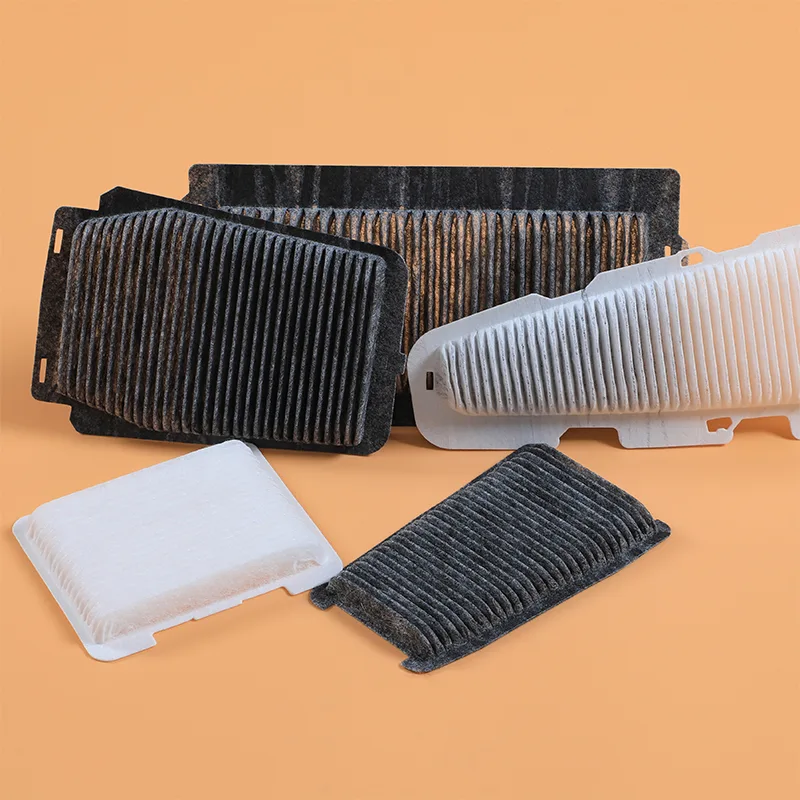
Why Is Battery Pack Air Filter Media Important?
Battery cooling systems need a balance between air permeability and filtration performance. A filter that captures particles effectively but creates excessive pressure drop may restrict airflow and increase the workload of cooling fans. On the other hand, media with insufficient filtration capability may allow dust to accumulate around battery modules, fans, heat exchangers, and other sensitive components.
This makes Battery Pack Air Filter Media an important functional material rather than simply a replaceable accessory.
For air-cooled battery systems, suitable filtration media can help:
- Reduce dust and airborne particle entry
- Protect cooling fans and airflow passages
- Maintain more consistent cooling airflow
- Reduce contamination of battery compartments
- Support longer maintenance intervals
- Improve the reliability of ventilation systems
- Provide flexibility for different battery pack structures
Research and engineering applications have demonstrated that multi-stage filtration can be useful where both coarse and fine particles need to be controlled. A pre-filter can capture larger contaminants before a finer filter handles smaller particles, helping balance filtration efficiency and service life.
What Does Battery Pack Air Filter Media Do?
The primary function is simple: filter incoming air without unnecessarily restricting the airflow required for thermal management.
During operation, external air may contain road dust, industrial particles, fibers, insects, moisture droplets, or other contaminants. If these materials enter a battery cooling system, they can accumulate on ventilation components and reduce airflow efficiency over time.
A properly engineered filtration layer works as a protective interface:
Outside Air → Filter Media → Cooling Fan → Battery Pack → Heat Dissipation
This principle is particularly relevant for electric vehicles, hybrid vehicles, battery cabinets, and energy storage systems where continuous ventilation may be required.
Commercial battery filtration solutions also emphasize low pressure loss because excessive resistance can negatively affect fan performance and cooling efficiency.
Which Performance Characteristics Matter Most?
Choosing Battery Pack Air Filter Media should not be based only on filtration efficiency. Engineers and purchasers should consider the complete operating environment.
| Performance Factor | Why It Matters |
|---|---|
| Air Permeability | Helps maintain sufficient cooling airflow |
| Filtration Efficiency | Reduces particle contamination |
| Dust-Holding Capacity | Supports longer service intervals |
| Pressure Drop | Influences fan workload and energy consumption |
| Mechanical Strength | Helps media maintain its structure during operation |
| Moisture Resistance | Useful in humid or variable environments |
| Thermal Resistance | Important around heat-generating battery systems |
| Customizability | Allows integration into different battery pack designs |
The ideal balance depends on the battery structure, airflow volume, installation location, environmental conditions, and expected maintenance cycle.
Battery Pack Air Filter Media vs. Conventional Filter Materials
Not every industrial filter material is suitable for battery applications. Battery cooling systems often require lightweight construction, stable airflow, compact installation, and customized dimensions.
Compared with generic filtration applications, battery pack filtration may have more demanding requirements because airflow directly relates to thermal management.
Battery Pack Air Filter Media can be developed around specific performance targets, including:
- Appropriate filtration grade
- Low airflow resistance
- Suitable thickness and density
- Stable fiber structure
- Resistance to humidity and temperature changes
- Compatibility with different filter frames or housings
- Custom dimensions and shapes
This customized approach can be particularly valuable for OEM battery manufacturers and system integrators.
How Does Customization Improve Battery Pack Applications?
One major advantage of working with an experienced filtration-material supplier is the ability to develop media according to the actual battery pack structure rather than forcing a standard filter into a non-standard application.
Biaodian Nonwovens technology Co., Ltd focuses on nonwoven filtration solutions and can support customized Battery Pack Air Filter Media for different application requirements.
Support for Custom Shapes
A battery pack does not always have a simple rectangular air inlet. Space limitations, cooling ducts, ventilation openings, and enclosure structures may require specially shaped filtration materials.
Biaodian Nonwovens technology Co., Ltd can support shape customization, allowing the filter media to be designed according to customer drawings, dimensions, or application requirements.
This is especially useful when customers require:
- Special-shaped filter media
- Customized width and length
- Different thickness options
- Die-cut filtration pieces
- Customized installation configurations
- OEM filtration components
- Prototype development for new battery designs
Shape customization is a key advantage for battery pack manufacturers, particularly when standard filter dimensions cannot fully match the available installation space.
Where Can Battery Pack Air Filter Media Be Used?
Battery filtration requirements vary across industries, but the basic principle remains the same: provide clean cooling airflow while protecting critical components.
Typical applications include:
Electric Vehicles
Electric vehicle battery packs may operate under changing temperatures, speeds, road conditions, and environmental contamination. Proper air filtration can help reduce dust entering air-cooled battery systems.
Hybrid Vehicles
Hybrid vehicles may expose battery cooling systems to urban dust, road debris, and seasonal environmental conditions. Battery filtration therefore needs to maintain airflow while providing reliable particle protection. Field testing of battery cooling filters has included challenging environments such as road salt, fine dust, snow, and high temperatures.
Battery Energy Storage Systems
Containerized BESS and battery cabinets commonly use ventilation systems to manage internal temperature. Filtration media can be installed at fresh-air inlets to reduce coarse dust, fibers, and outdoor debris before they reach battery modules and cooling components.
Battery Cabinets and Electrical Enclosures
Compact battery cabinets may have limited installation space. Customized media can help manufacturers optimize filtration within the available enclosure structure.
What Are the Practical Benefits?
A well-designed Battery Pack Air Filter Media solution can contribute to several practical improvements.
1. Cleaner Cooling Air
The filtration layer intercepts unwanted particles before they enter the battery cooling pathway.
2. Better Component Protection
Reducing dust contamination can help protect fans, heat exchangers, sensors, and other components exposed to cooling airflow.
3. Stable Airflow
Low-resistance media helps avoid unnecessary restriction of the cooling system. Maintaining airflow is particularly important because battery thermal management depends on effective heat removal.
4. Easier Maintenance
Higher dust-holding capacity can reduce how quickly a filter becomes loaded with contaminants, potentially supporting longer maintenance intervals.
5. Flexible Product Design
Customized dimensions and shapes allow filtration media to fit different battery housings and ventilation structures.
How Should Buyers Select Battery Pack Air Filter Media?
Before placing an order, buyers should provide as much application information as possible.
A practical selection checklist includes:
- Battery pack type
- Cooling method
- Required airflow
- Available filter installation space
- Target particle size
- Expected environmental conditions
- Temperature and humidity range
- Desired filter thickness
- Replacement or cleaning requirements
- Required shape and dimensions
- Prototype or mass-production quantity
For new battery platforms, it is often beneficial to test prototype filter media before moving into large-scale production. The relationship between filtration efficiency, pressure drop, operating temperature, and actual battery cooling performance should be evaluated together rather than independently.
Why Choose Biaodian Nonwovens technology Co., Ltd?
For OEM and industrial customers, material flexibility can be just as important as filtration performance. Biaodian Nonwovens technology Co., Ltd provides a customization-oriented approach for customers seeking Battery Pack Air Filter Media for different battery applications.
The company can support projects requiring:
- Customized filter shapes
- Customized sizes and thicknesses
- Application-specific nonwoven media
- OEM production
- Prototype and product development support
- Bulk manufacturing
- Solutions adapted to different battery ventilation structures
The ability to customize the shape of the filter media is especially valuable when battery pack designers face restricted installation space or unique airflow openings. Instead of redesigning the battery enclosure around an off-the-shelf filter, manufacturers can explore a filtration solution that better matches their existing structure.
Conclusion
Battery thermal management requires more than simply moving air through a battery enclosure. The incoming air also needs appropriate filtration to reduce contamination while maintaining sufficient airflow. The right Battery Pack Air Filter Media can therefore play an important role in protecting cooling components, supporting thermal stability, and improving the overall reliability of air-cooled battery systems.
For manufacturers, the best solution is not necessarily the filter with the highest filtration efficiency alone. A more effective approach considers filtration efficiency, air permeability, pressure drop, dust-holding capacity, environmental resistance, service requirements, and customized shape as one integrated solution.
With its focus on nonwoven filtration and OEM customization, Biaodian Nonwovens technology Co., Ltd can provide Battery Pack Air Filter Media tailored to different battery pack structures and application requirements. Whether you need standard dimensions or a custom-shaped filter designed around your battery housing, a customized solution can help make your filtration system more practical and production-ready.
Looking for Battery Pack Air Filter Media with customized dimensions or special shapes? Contact us today to discuss your application, specifications, drawings, and OEM requirements with Biaodian Nonwovens technology Co., Ltd.