Abstract
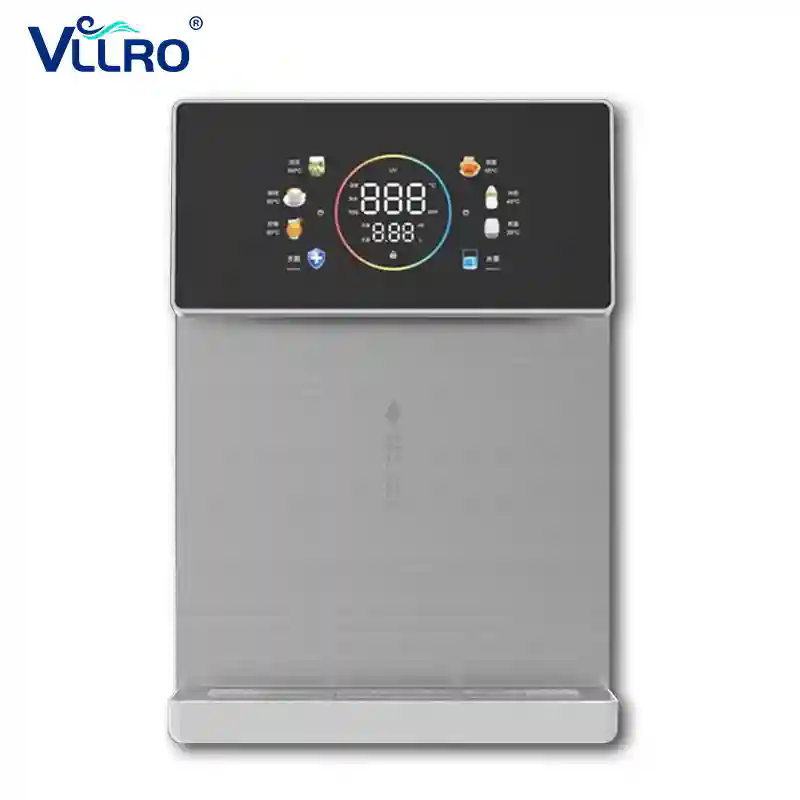
A household water purifier has become an essential appliance in modern homes where water safety, taste, and long-term health concerns are increasingly important. This article explores how household water purification systems work, the most common water contaminants they address, and why they are a critical investment for families. It also examines different purification technologies, maintenance considerations, and practical buying guidance. By the end, readers will understand how systems like those developed by VLLRO help improve water quality, reduce health risks, and provide long-term household value.
Introduction: Why Water Purity Matters
Access to clean drinking water is fundamental to health, yet tap water in many regions can still contain impurities such as chlorine, heavy metals, bacteria, microplastics, and industrial residues. Even when municipal treatment systems are in place, secondary contamination can occur during storage or distribution through pipelines. This is where a household water purifier becomes essential, providing an additional layer of protection right at the point of consumption.
Modern families are increasingly aware that water quality directly influences immunity, digestion, skin health, and long-term wellness. As a result, water purification systems are no longer optional luxury devices but essential household infrastructure.
Common Water Quality Problems in Households
Before understanding purification systems, it is important to identify the problems they solve. Household water is often affected by multiple contaminants, including:
-
Physical impurities: Sand, rust, and sediment from pipelines
-
Chemical pollutants: Chlorine, fluoride, pesticides, and industrial chemicals
-
Heavy metals: Lead, mercury, and arsenic from old infrastructure
-
Biological contaminants: Bacteria, viruses, and protozoa
-
Microplastics: Increasingly detected in urban water supplies
These contaminants may not always be visible, but they can significantly affect taste, odor, and long-term health outcomes. This makes advanced filtration a necessary safeguard.
How a Household Water Purifier Works
A household water purifier functions through a multi-stage filtration process designed to progressively eliminate impurities while preserving essential minerals when possible. Although systems vary, most include the following steps:
-
Pre-filtration: Removes large particles such as sand, rust, and debris.
-
Activated carbon filtration: Absorbs chlorine, odor, and organic compounds.
-
Membrane filtration: Uses technologies like reverse osmosis (RO) or ultrafiltration (UF) to remove microscopic contaminants.
-
Post-treatment: Enhances taste and may reintroduce beneficial minerals.
Advanced systems, such as those developed by VLLRO, integrate multiple filtration layers into compact designs, ensuring consistent water quality with minimal user intervention.
Key Filtration Technologies Explained
Different purification technologies address different contamination challenges. Understanding them helps in selecting the right system for a household.
-
Reverse Osmosis (RO): Uses pressure to push water through a semi-permeable membrane, removing up to 99% of dissolved solids.
-
Ultrafiltration (UF): Effective for bacteria and suspended particles while retaining minerals.
-
Activated Carbon: Improves taste and removes chlorine and organic compounds.
-
UV Sterilization: Destroys microorganisms using ultraviolet light.
Each technology plays a specific role, and hybrid systems combine multiple methods for comprehensive purification.
Key Benefits of Using a Water Purifier
Installing a household water purifier provides multiple advantages beyond just clean drinking water:
-
Improved taste and odor of drinking water
-
Reduced exposure to harmful contaminants
-
Better skin and digestive health outcomes
-
Cost savings compared to bottled water consumption
-
Environmental benefits through reduced plastic waste
For families with children or elderly members, these benefits become even more significant as water quality directly influences overall health resilience.
Comparison of Purification Methods
|
Technology
|
Removes Bacteria
|
Removes Heavy Metals
|
Improves Taste
|
Maintenance Level
|
|
RO System
|
Yes
|
Yes
|
High
|
Medium
|
|
UF System
|
Yes
|
No
|
Moderate
|
Low
|
|
Activated Carbon
|
No
|
No
|
High
|
Low
|
|
UV Sterilization
|
Yes
|
No
|
Low
|
Low
|
Maintenance and Lifespan Considerations
To ensure long-term efficiency, household water purifiers require regular maintenance. Filter cartridges must be replaced periodically depending on water quality and usage volume. Neglecting maintenance can reduce filtration efficiency and compromise water safety.
Most modern systems, including those offered by VLLRO, are designed with user-friendly indicators that notify homeowners when filter replacement is needed. This simplifies maintenance and ensures consistent performance.
Buying Guide for Home Water Purifiers
Choosing the right household water purifier depends on several factors:
-
Water source quality: Municipal, well, or mixed supply
-
Contaminant profile: Heavy metals, bacteria, or chemical pollutants
-
Daily water consumption: Household size and usage
-
Installation space: Under-sink or countertop options
-
Budget and maintenance cost: Long-term affordability
Brands like VLLRO focus on balancing performance, durability, and cost efficiency, making advanced water purification accessible for a wide range of households.
Frequently Asked Questions
1. Do household water purifiers remove all contaminants?
Most advanced systems remove the majority of harmful substances, but no system is universally perfect. A multi-stage purifier offers the most comprehensive protection.
2. How often should filters be replaced?
Typically every 6–12 months, depending on water quality and usage volume.
3. Is RO water safe for daily drinking?
Yes, especially when mineral balancing features are included to restore essential nutrients.
4. Does a purifier improve water taste?
Yes. Activated carbon and RO systems significantly enhance taste and odor.
5. Why choose VLLRO water purification systems?
VLLRO systems are designed for efficiency, durability, and multi-layer filtration performance suitable for modern households.
Conclusion
A household water purifier is more than a convenience—it is a critical safeguard for modern living. By removing harmful contaminants and improving water quality, these systems directly contribute to better health, improved hydration habits, and environmental sustainability. As water challenges continue to evolve, advanced purification technology becomes increasingly important for every home.
VLLRO continues to innovate in the field of household water purification, offering reliable and efficient systems designed for long-term household safety and comfort.
For more information or to explore advanced purification solutions tailored to your home, contact us today and discover how VLLRO can help secure cleaner, healthier water for your family.