

How Does a Motorcycle Air Filter Affect Engine Performance and Riding Experience?
2026-01-06
Abstract
A motorcycle air filter plays a critical role in regulating airflow, protecting engine components, and supporting combustion efficiency. This article provides a comprehensive analysis of how motorcycle air filters function, how technical parameters influence performance, and how riders and distributors can evaluate long-term suitability.
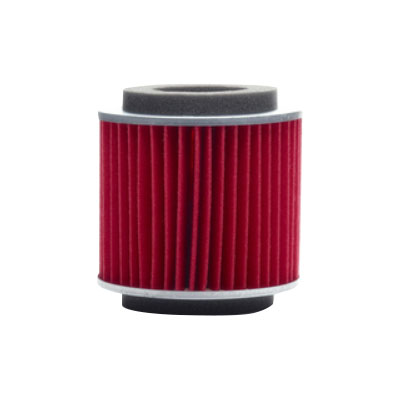
Table of Contents
- How Does a Motorcycle Air Filter Work Within the Engine System?
- How Do Technical Parameters Define Motorcycle Air Filter Performance?
- How Should Motorcycle Air Filters Be Selected and Maintained?
- How Is the Motorcycle Air Filter Market Evolving?
Outline
- Functional role of motorcycle air filters
- Material structures and filtration mechanisms
- Detailed product parameters and specifications
- Common questions and technical explanations
- Market trends and product evolution
How Does a Motorcycle Air Filter Work Within the Engine System?
A motorcycle air filter is designed to regulate the quality and volume of air entering the engine’s combustion chamber. During engine operation, large volumes of ambient air are drawn into the intake system. This air often contains dust, sand, soot, and other particulate contaminants that can accelerate engine wear if left unfiltered.
By capturing contaminants before air reaches the throttle body or carburetor, the motorcycle air filter protects pistons, cylinder walls, valves, and fuel delivery components. Proper airflow balance is essential, as insufficient airflow may reduce combustion efficiency, while excessive unfiltered airflow may compromise engine durability.
Most motorcycle air filters rely on a combination of surface filtration and depth filtration. Surface filtration blocks larger particles at the outer layer, while depth filtration captures finer particles within the filter media. This layered approach ensures stable airflow under varied riding conditions, including urban commuting, off-road riding, and long-distance touring.
How Do Technical Parameters Define Motorcycle Air Filter Performance?
Evaluating a motorcycle air filter requires close attention to technical parameters that determine compatibility, efficiency, and service life. These parameters are typically standardized to align with original equipment manufacturer (OEM) requirements and international quality benchmarks.
Motorcycle Air Filter Technical Specifications
| Parameter | Description |
|---|---|
| Filter Media | Multi-layer paper, cotton gauze, or synthetic fiber designed for controlled airflow and particulate capture |
| Filtration Efficiency | Up to 98% particle capture for contaminants ≥5 microns under standard test conditions |
| Airflow Capacity | Engine-matched airflow rate to maintain optimal air-fuel ratio |
| Frame Material | Thermoformed polyurethane or rubberized sealing frame for vibration resistance |
| Operating Temperature | -30°C to 120°C, suitable for varied climates and riding environments |
| Service Interval | 5,000–15,000 km depending on riding conditions and filter type |
These parameters collectively influence engine responsiveness, fuel mixture stability, and long-term maintenance costs. Matching filter specifications to engine displacement and intake design is a fundamental requirement for consistent performance.
How Should Motorcycle Air Filters Be Selected and Maintained?
Selection and maintenance strategies for motorcycle air filters vary depending on riding style, environmental exposure, and regulatory standards. Urban riders may prioritize stable airflow and noise control, while off-road riders often require enhanced dust-holding capacity.
Motorcycle Air Filter FAQ
How often should a motorcycle air filter be replaced?
Replacement intervals depend on riding conditions. In clean urban environments, replacement may occur every 10,000–15,000 km, while dusty or off-road conditions may require inspection and replacement every 5,000 km to prevent airflow restriction.
How does a clogged motorcycle air filter affect engine operation?
A clogged filter restricts airflow, leading to incomplete combustion, reduced throttle response, increased fuel consumption, and potential carbon buildup on internal components.
How can compatibility between a motorcycle air filter and engine model be confirmed?
Compatibility is determined by intake dimensions, sealing structure, and airflow requirements specified by the engine manufacturer. Cross-referencing OEM part numbers and dimensional tolerances ensures proper fitment.
Routine inspection, proper installation, and adherence to recommended service intervals are essential for preserving both engine reliability and riding consistency.
How Is the Motorcycle Air Filter Market Evolving?
The motorcycle air filter market is evolving in response to stricter emission standards, extended service expectations, and diversified riding applications. Manufacturers increasingly focus on material optimization, including advanced synthetic fibers and hybrid filtration layers, to balance airflow stability with high dust-holding capacity.
In parallel, global distribution channels demand standardized quality control, traceable production processes, and consistent batch performance. These requirements influence how motorcycle air filters are engineered, tested, and positioned across international markets.
Within this landscape, TRF continues to align product development with OEM benchmarks and real-world riding demands. By emphasizing controlled airflow, material durability, and precise dimensional compatibility, TRF supports long-term engine protection across multiple motorcycle categories.
For additional technical details, customized specifications, or bulk supply inquiries related to Motorcycle Air Filter solutions, please contact us to discuss application requirements and service support.