Article Summary
Clean and reliable water has become a critical requirement for industries, commercial facilities, and municipal applications. Traditional filtration methods often struggle with removing fine suspended solids, microorganisms, and complex contaminants while maintaining stable operation. An Ultrafiltration System provides an advanced membrane-based solution that delivers high-quality water purification with excellent filtration accuracy, low chemical consumption, and reliable performance.
This article explains how an Ultrafiltration System works, why it is widely used in modern water treatment, what challenges it can solve, and how businesses can choose the right system for their applications. With advanced water treatment technologies, VLLRO provides efficient ultrafiltration solutions designed to help customers achieve safer, cleaner, and more sustainable water management.
Article Outline
-
Understanding the basic principles and structure of an Ultrafiltration System
-
Exploring the filtration process and membrane technology
-
Identifying common water purification challenges
-
Analyzing the benefits of ultrafiltration solutions
-
Reviewing industrial and commercial applications
-
Learning how to select and maintain suitable equipment
-
Answering common questions from users
What Is an Ultrafiltration System?
An Ultrafiltration System is an advanced water purification technology that uses specialized membrane filtration to separate unwanted substances from water. The system relies on extremely fine membrane pores to remove suspended particles, bacteria, colloids, and macromolecules while allowing clean water molecules and dissolved minerals to pass through.
Unlike conventional filtration methods that mainly depend on physical barriers or chemical treatment, ultrafiltration uses membrane separation technology to achieve consistent purification performance. This makes it suitable for applications where stable water quality and operational efficiency are essential.
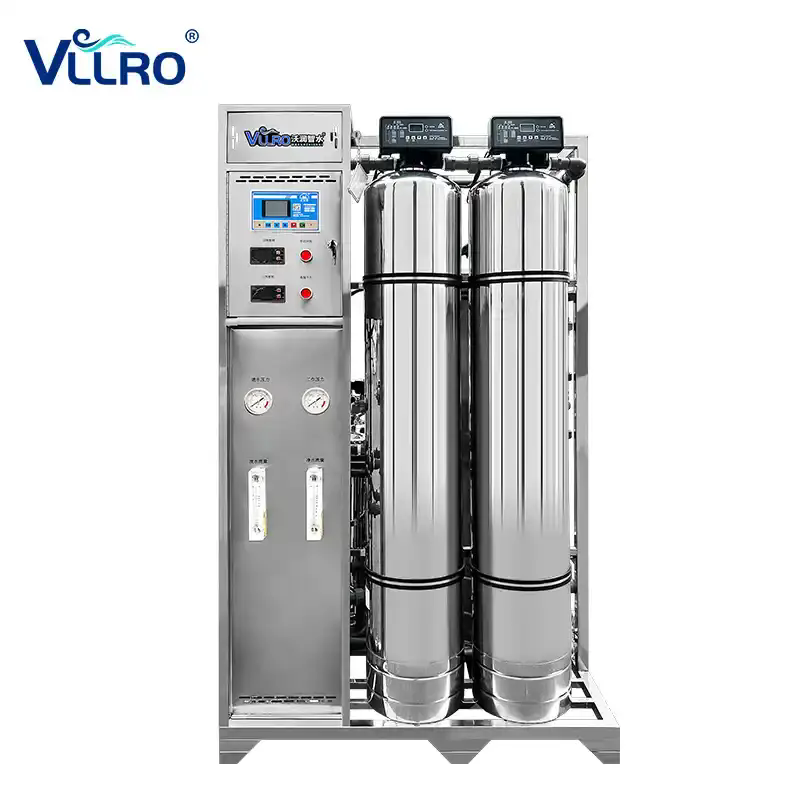
A typical Ultrafiltration System consists of several important components:
-
Ultrafiltration membrane modules: The core filtration unit responsible for contaminant separation.
-
Feed water system: Controls water flow into the membrane modules.
-
Pumps: Provide the necessary pressure for filtration operation.
-
Control system: Monitors operation parameters and improves automation.
-
Cleaning system: Helps maintain membrane performance and service life.
Through precise membrane filtration, an Ultrafiltration System can provide dependable water treatment performance for different industries and environments.
How Does an Ultrafiltration System Work?
The working principle of an Ultrafiltration System is based on pressure-driven membrane separation. During operation, contaminated water enters the membrane module under controlled pressure. Water molecules pass through the microscopic membrane pores, while larger contaminants remain on the feed side and are removed through concentrated discharge.
|
Filtration Stage
|
Main Function
|
|
Pre-treatment
|
Removes large particles and protects the membrane from damage.
|
|
Membrane Filtration
|
Separates suspended solids, bacteria, and macromolecules.
|
|
Backwashing
|
Removes accumulated contaminants from the membrane surface.
|
|
Final Water Output
|
Provides purified water suitable for specific applications.
|
The pore size of ultrafiltration membranes is usually much smaller than traditional filters, allowing the system to achieve higher purification accuracy. Automatic control functions can also adjust operating conditions according to water quality changes, improving reliability and reducing manual intervention.
What Water Treatment Problems Can Ultrafiltration Solve?
Many organizations face challenges caused by poor water quality, unstable filtration performance, and rising treatment costs. An Ultrafiltration System helps address these issues through efficient and environmentally friendly purification.
|
Common Challenge
|
Ultrafiltration Solution
|
|
High suspended solids content
|
Membrane filtration effectively removes fine particles and improves water clarity.
|
|
Microbial contamination
|
Provides a physical barrier against bacteria and microorganisms.
|
|
Unstable water quality
|
Maintains consistent filtration performance under changing conditions.
|
|
High chemical consumption
|
Reduces dependence on chemical treatment methods.
|
|
Complex operation requirements
|
Automation simplifies system management.
|
For industries requiring continuous production and strict water quality control, ultrafiltration technology offers a practical solution to improve efficiency and reduce operational risks.
Key Advantages of Using an Ultrafiltration System
Modern water treatment requires solutions that are efficient, sustainable, and cost-effective. An Ultrafiltration System provides multiple advantages compared with traditional purification technologies.
-
High filtration accuracy: Removes small particles and microorganisms effectively.
-
Stable water quality: Produces consistent filtration results.
-
Lower chemical usage: Minimizes environmental impact and operating costs.
-
Compact design: Requires less installation space compared with some traditional systems.
-
Energy efficiency: Operates with relatively low energy consumption.
-
Easy automation: Intelligent control improves convenience and reliability.
VLLRO focuses on developing reliable ultrafiltration solutions that help customers improve water treatment efficiency while meeting different application requirements.
Common Applications of Ultrafiltration Technology
Because of its flexibility and reliable purification ability, Ultrafiltration Systems are widely used across multiple industries.
|
Industry
|
Application Purpose
|
|
Drinking Water Treatment
|
Improves water safety and removes harmful suspended substances.
|
|
Food and Beverage Industry
|
Provides clean process water and supports production quality.
|
|
Pharmaceutical Manufacturing
|
Supports strict water purity requirements.
|
|
Electronics Industry
|
Provides high-quality water for precision manufacturing.
|
|
Industrial Wastewater Treatment
|
Helps recover and reuse treated water.
|
How to Choose the Right Ultrafiltration System?
Selecting a suitable Ultrafiltration System requires careful evaluation of water characteristics, treatment goals, and operating conditions. The wrong system configuration may lead to inefficient performance or unnecessary maintenance costs.
-
Analyze the source water quality before selecting equipment.
-
Determine required treatment capacity according to water demand.
-
Select suitable membrane materials based on application conditions.
-
Consider automation features and maintenance requirements.
-
Work with an experienced supplier for customized solutions.
A professional manufacturer can help design a system that matches specific water treatment challenges and provides long-term value.
Ultrafiltration System Compared with Traditional Filtration Methods
|
Feature
|
Traditional Filtration
|
Ultrafiltration System
|
|
Filtration Precision
|
Limited removal ability for very small contaminants
|
High precision membrane separation
|
|
Chemical Requirement
|
Often requires additional chemicals
|
Lower chemical dependence
|
|
Automation
|
Usually requires more manual operation
|
Supports automatic control systems
|
|
Water Quality Stability
|
May fluctuate with raw water changes
|
Provides stable purification performance
|
Maintenance Tips for Long-Term Ultrafiltration Performance
Proper maintenance is essential for extending membrane life and ensuring stable operation. Regular inspection and cleaning can prevent performance decline.
-
Monitor pressure changes and filtration flow regularly.
-
Perform scheduled membrane cleaning according to operating conditions.
-
Prevent excessive contamination from entering the membrane system.
-
Check pumps, valves, and control components periodically.
-
Follow professional maintenance guidelines.
A well-maintained Ultrafiltration System can provide reliable operation for many years while maintaining excellent water quality.
Frequently Asked Questions About Ultrafiltration Systems
1. What contaminants can an Ultrafiltration System remove?
An Ultrafiltration System can remove suspended solids, colloids, bacteria, microorganisms, and large molecular substances. It is especially effective for improving water clarity and reducing biological contamination.
2. Is ultrafiltration suitable for industrial water treatment?
Yes. Ultrafiltration technology is widely used in industrial applications because it provides stable performance, high efficiency, and reliable water quality control.
3. How long can an ultrafiltration membrane last?
Membrane lifespan depends on water conditions, operating parameters, cleaning frequency, and maintenance quality. Proper operation can significantly extend service life.
4. Why choose VLLRO for an Ultrafiltration System?
VLLRO provides professional water treatment solutions designed according to customer requirements. The company focuses on reliable equipment performance, efficient purification technology, and customized solutions for different industries.
Conclusion
An Ultrafiltration System is an effective solution for modern water purification challenges. By using advanced membrane separation technology, it provides accurate filtration, stable water quality, reduced chemical usage, and improved operational efficiency.
For businesses looking to upgrade their water treatment process, selecting a reliable supplier is essential. VLLRO delivers advanced ultrafiltration solutions designed to meet different application needs and support sustainable water management.
If you are searching for a dependable Ultrafiltration System customized for your project requirements, choose VLLRO as your trusted water treatment partner. Contact us today to discuss your water purification needs and receive a professional solution.