

How Does an Ultrafiltration System Work for Advanced Water Purification?
2026-06-23
Abstract
An Ultrafiltration System is a membrane-based water treatment technology designed to remove suspended solids, bacteria, viruses, and high-molecular-weight substances from water. It is widely used in municipal water supply, industrial processing, food & beverage production, and wastewater recycling. This article explains the working principles, structure, benefits, applications, and maintenance considerations of ultrafiltration systems, with a focus on solving real-world water quality challenges. It also highlights how VLLRO provides reliable ultrafiltration solutions for diverse industrial needs.
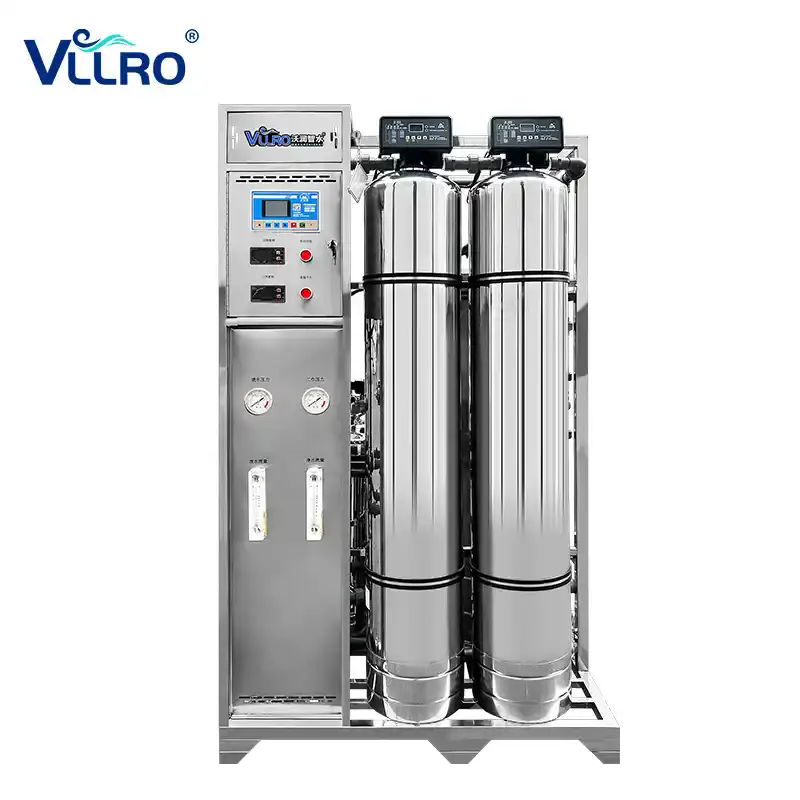
Table of Contents
- Outline
- What Is an Ultrafiltration System?
- How an Ultrafiltration System Works
- Key Components
- Applications
- Key Benefits
- Common Customer Pain Points
- Ultrafiltration vs Other Filtration Methods
- Maintenance Guidelines
- Why Choose VLLRO Ultrafiltration Systems
- FAQ
- Conclusion
Outline
- Definition and purpose of ultrafiltration technology
- Step-by-step filtration mechanism
- Core system components and structure
- Industrial and municipal applications
- Advantages over conventional filtration systems
- Operational challenges and solutions
- Comparison with microfiltration and reverse osmosis
- Maintenance best practices
- VLLRO product advantages
- Frequently asked questions
What Is an Ultrafiltration System?
An Ultrafiltration System is a pressure-driven membrane filtration process that uses hollow fiber or tubular membranes with pore sizes typically between 0.01 and 0.1 microns. This fine filtration barrier allows water molecules and dissolved salts to pass through while effectively blocking contaminants such as bacteria, colloids, algae, and fine particulates.
Unlike traditional filtration methods that rely on physical sieving alone, ultrafiltration provides a consistent and high-quality effluent regardless of variations in raw water quality. This makes it particularly valuable in industries where water purity directly impacts product quality and operational safety.
How an Ultrafiltration System Works
The working principle of an ultrafiltration system is based on membrane separation under pressure. Water is forced through a semi-permeable membrane, and contaminants larger than the membrane pores are retained.
- Step 1: Pre-treatment – Raw water passes through a coarse filter to remove large debris and protect membranes.
- Step 2: Pressurization – A pump applies pressure to push water through ultrafiltration membranes.
- Step 3: Membrane Separation – Suspended solids, microorganisms, and organic molecules are retained on the membrane surface.
- Step 4: Permeate Collection – Clean water (permeate) passes through and is collected for use.
- Step 5: Backwashing/Cleaning – Periodic backflushing removes accumulated contaminants to maintain efficiency.
This continuous cycle ensures stable water quality output with minimal chemical usage.
Key Components
| Component | Function |
|---|---|
| Membrane Module | Core filtration barrier responsible for particle separation |
| Feed Pump | Provides pressure to drive water through membranes |
| Control System | Automates filtration cycles, backwash, and monitoring |
| Pre-filter Unit | Removes large solids before ultrafiltration stage |
| Backwash System | Cleans membranes to reduce fouling and maintain flow rate |
Applications
- Municipal drinking water treatment
- Industrial process water purification
- Food and beverage clarification
- Pharmaceutical water systems
- Wastewater reuse and recycling
- Desalination pre-treatment systems
In each of these sectors, ultrafiltration ensures stable water quality and reduces dependence on chemical disinfection.
Key Benefits
- High removal efficiency for bacteria and suspended solids
- Stable output quality even under fluctuating raw water conditions
- Reduced chemical consumption compared to conventional systems
- Compact system footprint
- Automated operation with low labor requirements
- Environmentally friendly water treatment process
These benefits make ultrafiltration systems a preferred choice for modern water treatment infrastructure.
Common Customer Pain Points
Many industries face recurring water treatment challenges that ultrafiltration systems are designed to address:
- Inconsistent water quality affecting production processes
- High operational costs due to chemical usage
- Frequent membrane fouling in poorly designed systems
- Limited scalability of traditional filtration systems
- Difficulty meeting strict regulatory water standards
A properly engineered ultrafiltration system resolves these issues by ensuring reliable and predictable performance.
Ultrafiltration vs Other Filtration Methods
| Technology | Filtration Range | Key Advantage | Limitation |
|---|---|---|---|
| Ultrafiltration | 0.01–0.1 micron | Removes bacteria & colloids effectively | Does not remove dissolved salts |
| Microfiltration | 0.1–10 micron | Handles larger particles | Lower purification precision |
| Reverse Osmosis | <0.001 micron | Removes dissolved salts | Higher energy consumption |
Maintenance Guidelines
To ensure long-term efficiency, ultrafiltration systems require structured maintenance practices:
- Regular backwashing cycles to prevent membrane fouling
- Chemical cleaning when flux decline is detected
- Monitoring pressure differentials across membranes
- Replacing pre-filters at scheduled intervals
- Routine inspection of pumps and control systems
Proper maintenance significantly extends membrane lifespan and reduces operational costs.
Why Choose VLLRO Ultrafiltration Systems
VLLRO delivers engineered ultrafiltration solutions designed for durability, efficiency, and scalability. The company focuses on delivering systems that maintain stable performance under challenging water conditions.
- Advanced membrane technology for higher filtration stability
- Customized system design for industrial requirements
- Optimized energy consumption for cost efficiency
- Reliable after-sales technical support
- Proven application experience across multiple industries
With VLLRO, users gain access to systems that balance performance, operational cost, and long-term reliability.
FAQ
Q1: Can ultrafiltration remove dissolved salts?
No. Ultrafiltration is designed to remove suspended solids and microorganisms, but not dissolved salts or ions.
Q2: How long do ultrafiltration membranes last?
Typically between 3–7 years depending on water quality and maintenance practices.
Q3: Is chemical usage required?
Minimal chemicals are used mainly for cleaning purposes, not continuous treatment.
Q4: What industries benefit most from ultrafiltration?
Municipal water systems, food processing, pharmaceuticals, and industrial manufacturing benefit significantly.
Q5: How often should cleaning be performed?
Cleaning frequency depends on feed water quality, but periodic backwashing is typically automated within the system.
Conclusion
An Ultrafiltration System represents a modern, efficient, and scalable solution for water purification challenges across multiple industries. Its ability to consistently deliver high-quality water while minimizing chemical dependency makes it an essential technology in sustainable water management strategies. From municipal treatment to industrial applications, ultrafiltration ensures operational stability and compliance with water quality requirements.
VLLRO continues to develop advanced ultrafiltration systems that meet evolving industrial demands and deliver reliable performance in real-world conditions.
For tailored solutions, system selection guidance, or technical consultation, contact us at VLLRO today to explore how our ultrafiltration systems can optimize your water treatment operations.