

How Does Gearbox Filter Media Improve Filtration Performance and Gearbox Reliability?
2026-09-01
Gearbox systems operate under demanding conditions where lubricating oil must remain clean, stable, and capable of protecting gears, bearings, valves, and other precision components. During operation, metal particles, dust, wear debris, carbon deposits, and other contaminants can enter the oil and gradually affect system performance. This makes Gearbox Filter Media an important component in modern filtration systems. Properly designed filter media can help capture contaminants while maintaining suitable oil flow, reducing pressure loss, and supporting longer service intervals. For manufacturers and buyers seeking dependable filtration solutions, Biaodian Nonwovens technology Co., Ltd. provides nonwoven filtration materials designed for demanding industrial and automotive applications, with flexible customization options including special shapes and vessel-specific requirements.
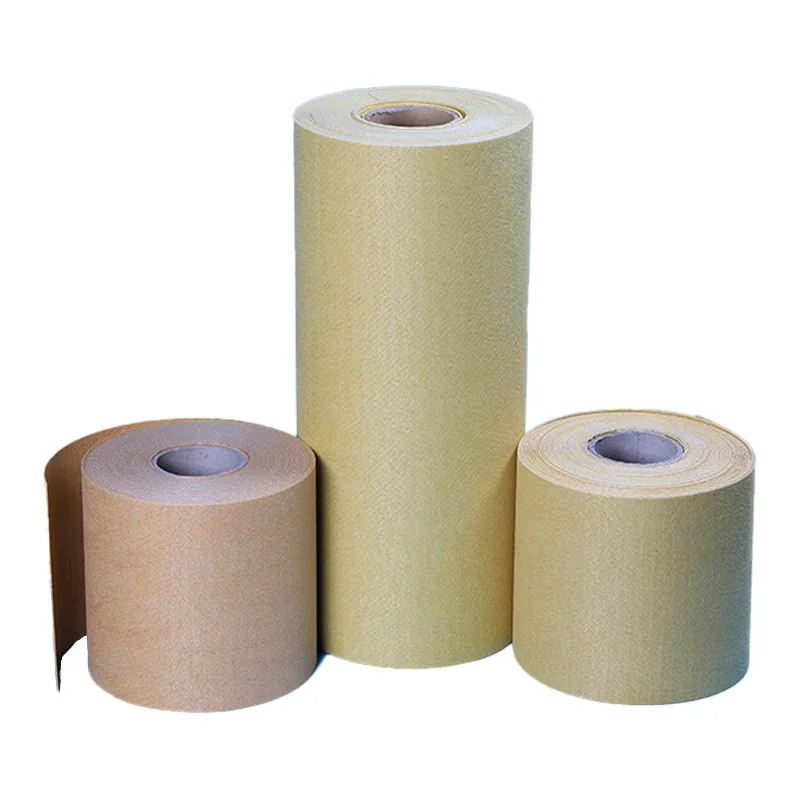
Why Is Gearbox Filter Media Important?
A gearbox depends on clean lubricating oil to minimize friction and wear. When contaminants circulate through the lubrication system, they may accelerate component wear or interfere with hydraulic passages and precision control components.
Modern transmission and gearbox filtration therefore requires a balance between filtration efficiency, flow resistance, contaminant-holding capacity, mechanical strength, and chemical resistance. Research and industrial filtration practices have shown that nonwoven media can provide depth filtration, allowing contaminants to be captured throughout the thickness of the material rather than only at its surface.
For applications involving automatic transmissions and advanced gearbox systems, fine particles can be particularly problematic because small clearances and precision flow paths require effective contaminant control. Specialized nonwoven filter structures can provide a larger effective filtration area and create micro-scale spaces for particle capture.
Key Functions of Gearbox Filter Media
High-quality Gearbox Filter Media can contribute to:
-
Removing metal wear particles and other solid contaminants
-
Protecting gears, bearings, valves, and hydraulic components
-
Maintaining cleaner transmission or gearbox oil
-
Supporting stable oil circulation
-
Reducing the risk of premature component wear
-
Increasing filter service life through higher dirt-holding capacity
-
Supporting reliable gearbox operation under changing flow conditions
The right filter material should not simply provide a high filtration rating. It must also maintain its structural integrity when exposed to oil, temperature changes, pressure fluctuations, and long operating cycles.
What Performance Does Gearbox Filter Media Deliver?
The actual performance of filter media depends on fiber type, fiber diameter, basis weight, thickness, pore structure, manufacturing process, and the specific gearbox application.
A well-designed nonwoven structure can create a three-dimensional filtration network. As oil passes through this network, particles can be captured at different depths. This depth-filtration mechanism can improve contaminant retention while allowing the material to maintain suitable permeability.
For example, fine fibers can increase the available surface area for particle capture, while an appropriately designed pore structure helps balance filtration efficiency and pressure drop. Patent literature on automatic transmission filter materials similarly emphasizes the value of fine fibers and interconnected micro-spaces for capturing smaller particles while maintaining permeability.
Main Performance Factors
| Performance Factor | Why It Matters |
|---|---|
| Filtration efficiency | Determines how effectively contaminants are removed |
| Air/oil permeability | Helps maintain appropriate fluid flow |
| Dirt-holding capacity | Influences filter service life |
| Mechanical strength | Helps prevent deformation or media failure |
| Chemical resistance | Supports compatibility with transmission fluids |
| Thermal resistance | Important for high-temperature gearbox operation |
| Thickness and density | Affect filtration depth and pressure drop |
| Fiber structure | Influences particle capture and flow characteristics |
Gearbox Filter Media vs. Conventional Filter Materials
Different filtration materials can provide different combinations of performance, cost, and durability. Common options include cellulose-based media, synthetic nonwoven media, needle-punched felt, and wire mesh.
| Media Type | Filtration | Flow Performance | Dirt Holding | Typical Advantage |
|---|---|---|---|---|
| Cellulose | Moderate | Good | Moderate | Cost-effective |
| Wire mesh | Coarse to moderate | Excellent | Limited | Strong and washable |
| Needle-punched nonwoven | Good | Good | Good | Flexible and economical |
| Synthetic nonwoven | High | High | High | Advanced filtration and durability |
| Multi-layer media | Very high | Application-dependent | Very high | Specialized filtration |
Nonwoven materials can offer an important advantage because their internal fiber structure allows depth filtration. SAE research on transmission sump filtration has reported that nonwoven media can provide advantages over paper and mesh through this mechanism.
Synthetic media can also be engineered for demanding transmission applications. Modern transmission filtration solutions commonly focus on high contaminant retention, low pressure drop, durability, and resistance to thermal and chemical conditions.
How Does Gearbox Filter Media Affect Actual Operating Results?
The value of a filter material becomes most obvious during long-term operation.
When filtration is properly matched to the gearbox, the media can help maintain oil cleanliness and reduce the circulation of abrasive particles. This can contribute to more stable lubrication and lower contamination-related risks.
1. Better Component Protection
Gears, bearings, valves, and other precision components can be sensitive to abrasive contaminants. Effective filtration helps prevent particles from continuously circulating through the system.
2. More Stable Oil Flow
A filter with excessive resistance can restrict oil flow, particularly during cold starts or high-viscosity conditions. Therefore, filtration efficiency must be balanced with permeability and pressure drop.
3. Longer Filter Service Life
High dirt-holding capacity allows the media to retain more contaminants before reaching its service limit. Properly engineered depth-filtration structures can therefore support longer maintenance intervals.
4. Improved System Reliability
Clean oil contributes to a cleaner operating environment for gearbox components. In applications where downtime is expensive, reliable filtration can become an important part of preventive maintenance.
Why Choose Customized Gearbox Filter Media?
Not every gearbox uses the same filter structure. Different systems may require different thicknesses, densities, pore structures, fiber compositions, dimensions, folding patterns, or mechanical properties.
This is where customization becomes particularly valuable.
Biaodian Nonwovens technology Co., Ltd. focuses on nonwoven filter media solutions that can be adapted to specific application requirements. Instead of forcing customers to use one standard material, customized specifications can be developed around the actual filter design.
Customization Options Can Include:
-
Material composition
-
Fiber type and fineness
-
Basis weight
-
Thickness
-
Density
-
Filtration grade
-
Permeability
-
Roll width
-
Sheet dimensions
-
Pleating requirements
-
Lamination requirements
-
Special mechanical properties
-
Customized filter shapes
-
OEM and application-specific specifications
Special Shape and Vessel-Type Customization
For customers working with marine gearboxes, vessel propulsion systems, or specialized equipment, vessel-specific customization can be especially important. Filter media may need to fit non-standard housings, compact installation spaces, or specially designed filtration assemblies.
Biaodian Nonwovens technology Co., Ltd. can support customized shapes and dimensions according to customer drawings and application requirements. This capability makes the material suitable for projects where standard rectangular or roll-form media cannot fully satisfy the final filter design.
Whether the requirement involves a conventional industrial gearbox, automotive transmission, marine gearbox, or another specialized mechanical system, customized media can help improve compatibility between the filter material and the finished filtration assembly.
What Should Buyers Consider When Selecting Gearbox Filter Media?
Before purchasing, buyers should evaluate more than price.
A practical selection process should consider:
-
Operating temperature – Determine the expected temperature range.
-
Oil compatibility – Confirm compatibility with the specific lubricant or transmission fluid.
-
Target particle size – Define the contaminants that need to be removed.
-
Required filtration efficiency – Match media performance to system requirements.
-
Pressure drop – Ensure filtration does not unnecessarily restrict oil circulation.
-
Dirt-holding capacity – Consider the expected maintenance interval.
-
Mechanical strength – Evaluate resistance to deformation and pressure fluctuations.
-
Filter geometry – Confirm that the media can be processed into the required shape.
-
Customization requirements – Check whether the supplier can provide OEM dimensions or special structures.
-
Production consistency – Stable quality is essential for large-volume manufacturing.
Why Work with Biaodian Nonwovens technology Co., Ltd.?
For industrial buyers, filter media is not simply a piece of fabric. It is a functional filtration material that must work consistently inside a demanding mechanical system.
Biaodian Nonwovens technology Co., Ltd. combines nonwoven material technology with application-oriented customization to support customers looking for reliable filtration solutions. Its ability to provide customized material structures, dimensions, and shapes can be particularly useful for OEM manufacturers and filtration-product producers.
The company can support projects requiring:
-
Customized Gearbox Filter Media
-
Automotive transmission filter media
-
Oil filter media
-
Industrial filtration materials
-
OEM nonwoven filter materials
-
Special-shaped filter media
-
Customized vessel or marine filtration applications
-
Bulk production requirements
The objective is to provide a filtration material that fits the customer's design rather than requiring the customer to redesign the filtration system around a standard material.
Conclusion: Build Better Gearbox Filtration with the Right Media
The performance of a gearbox filter depends heavily on the filtration media inside it. Effective Gearbox Filter Media should provide a carefully controlled balance between contaminant capture, oil permeability, dirt-holding capacity, mechanical strength, and resistance to the operating environment.
For standard applications, conventional nonwoven materials may provide an economical solution. For demanding applications, however, customized synthetic or multi-structure media can provide greater flexibility and more precise performance matching.
For automotive transmissions, industrial gearboxes, marine systems, and specialized vessel applications, customized dimensions and shapes can make an important difference. With application-specific requirements, Biaodian Nonwovens technology Co., Ltd. can help customers develop filter media solutions tailored to their equipment, filter structure, and production requirements.
If you are looking for reliable Gearbox Filter Media, customized nonwoven filtration materials, or special-shape and vessel-specific filter solutions, contact us to discuss your application, specifications, drawings, and OEM requirements. Let Biaodian Nonwovens technology Co., Ltd. help you develop a filtration material designed for better compatibility, dependable performance, and long-term operating value.