

What Makes Particulate Cabin Filter Media Essential for Cleaner Vehicle Air?
2026-10-15
As air quality becomes an increasingly important consideration in the automotive industry, Particulate Cabin Filter Media plays a vital role in improving the air inside vehicles. From urban traffic pollution to road dust, pollen, and fine airborne particles, modern vehicles require reliable filtration materials to support a cleaner and more comfortable cabin environment. For automotive filter manufacturers, selecting suitable media is essential for balancing filtration efficiency, airflow, durability, and production costs.
Biaodian Nonwovens Technology Co., Ltd. recognizes the importance of functional nonwoven materials in automotive filtration applications. By focusing on material performance and practical manufacturing requirements, businesses can develop cabin air filters that meet different market expectations and vehicle design specifications.
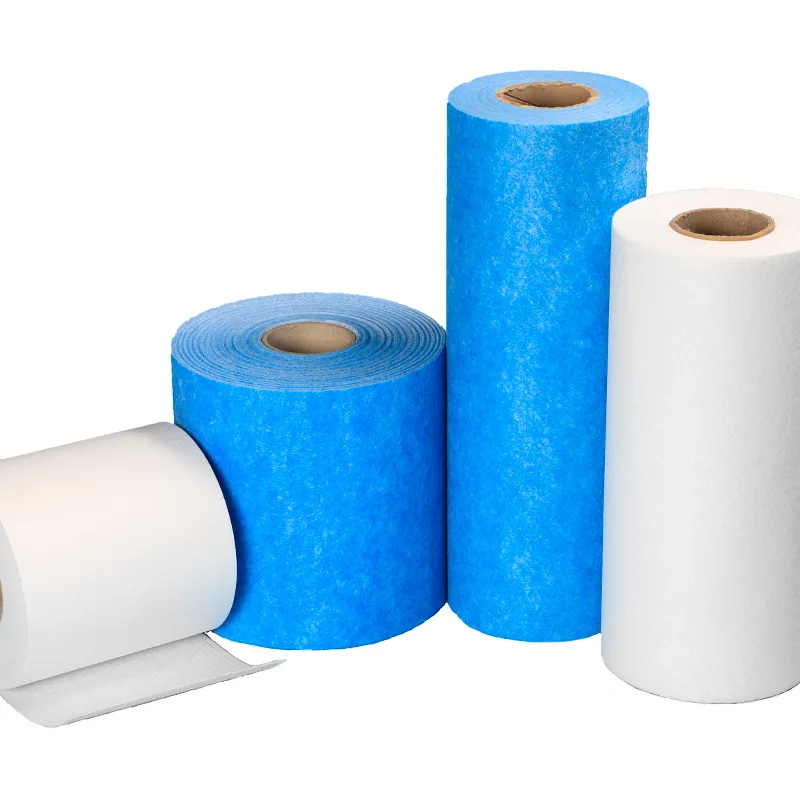
What Is Particulate Cabin Filter Media?
Particulate Cabin Filter Media is the functional material used in vehicle cabin air filters to capture airborne particles before outside air enters the passenger compartment. Depending on the material structure and filtration technology, it can help reduce the entry of dust, pollen, soot, and other particulate contaminants.
Common media options include synthetic nonwovens, melt-blown materials, composite structures, and electrostatically enhanced filtration layers. Each option offers different characteristics in terms of particle capture, air permeability, mechanical strength, and resistance to environmental conditions.
The most suitable material depends on the filter design, vehicle application, target filtration performance, and manufacturing process.
Why Is Particulate Cabin Filter Media Important?
1. Improving In-Cabin Air Quality
Vehicles frequently operate in environments containing traffic-related particles, road dust, and seasonal pollen. Effective Particulate Cabin Filter Media helps capture these contaminants as air passes through the filtration system.
This can contribute to a cleaner cabin environment and improve the overall passenger experience. However, actual performance depends on particle size, media construction, filter sealing, and the operating conditions of the vehicle.
2. Balancing Filtration Efficiency and Airflow
High filtration efficiency is important, but it should not come at the expense of excessive airflow resistance. If a filter creates too much pressure drop, the vehicle's HVAC system may need to work harder to maintain the desired airflow.
Well-designed filter media aims to achieve an appropriate balance between particle capture and low pressure drop. This balance is particularly important for manufacturers developing filters for different vehicle platforms.
3. Supporting Reliable Filter Performance
Cabin filters are exposed to changing temperatures, humidity, and particle concentrations. Suitable media should maintain its structural integrity during manufacturing and service.
Consistent fiber distribution, adequate mechanical strength, and reliable pleating performance can help manufacturers produce filters with stable quality and predictable operating characteristics.
How Does Particulate Cabin Filter Media Work?
The filtration process generally involves several particle-capture mechanisms:
-
Mechanical interception: Particles follow the airflow and contact fibers within the media.
-
Inertial impaction: Larger particles deviate from airflow paths and collide with fibers.
-
Diffusion: Very small particles move irregularly and have a greater chance of contacting filter fibers.
-
Electrostatic attraction: In appropriately engineered media, electrostatic forces can improve the capture of certain particles.
These mechanisms may work together in a single filter. Their effectiveness depends on fiber diameter, media thickness, porosity, air velocity, and the particle-size distribution.
As contaminants accumulate, pressure drop can increase. Therefore, filter design must consider both initial performance and behavior under dust loading.
Which Properties Should Buyers Evaluate?
For automotive filter manufacturers, distributors, and OEM procurement teams, evaluating material specifications is an important step in supplier selection.
| Key Property | Why It Matters |
|---|---|
| Filtration efficiency | Determines how effectively particles of specified sizes are captured |
| Air permeability | Helps maintain suitable airflow through the filter |
| Pressure drop | Indicates airflow resistance under defined test conditions |
| Dust-holding capacity | Helps assess how much particulate matter the media can retain |
| Tensile strength | Supports converting, pleating, and assembly processes |
| Thickness and basis weight | Influence filter structure, material consumption, and design compatibility |
| Structural consistency | Helps improve manufacturing stability and finished-product quality |
Buyers should request test data under clearly defined conditions rather than relying solely on general performance claims. Filtration efficiency and pressure drop should be evaluated together to establish whether the material suits the intended application.
Where Is Particulate Cabin Filter Media Used?
Particulate Cabin Filter Media is commonly used in a range of automotive filtration products, including:
-
Passenger car cabin filters: For everyday commuting and general road conditions.
-
Commercial vehicle filters: For trucks, vans, buses, and other vehicles exposed to varied operating environments.
-
High-efficiency cabin filters: For applications requiring enhanced capture of fine particulate matter.
-
Composite cabin filters: For designs combining particle filtration with additional functional layers.
It is important to distinguish particulate filtration from gas and odor removal. Activated carbon or other suitable adsorbents may be needed to address selected gaseous contaminants and odors; particulate media alone does not guarantee effective gas removal.
How Can Manufacturers Choose the Right Filter Media?
Choosing the right material requires more than comparing prices. Automotive filter producers should consider the complete production process and the final filter's intended performance.
A practical evaluation process includes:
-
Define the application. Identify the vehicle type, installation space, target particle sizes, and required filtration performance.
-
Set performance priorities. Establish acceptable ranges for filtration efficiency, pressure drop, and dust-holding capacity.
-
Verify processing compatibility. Confirm that the material supports pleating, cutting, bonding, and the selected filter structure.
-
Request samples and test reports. Compare candidate materials using consistent methods and operating conditions.
-
Assess supply consistency. Evaluate specification control, production capacity, delivery reliability, and quality assurance.
Working with a capable material supplier can help buyers reduce development uncertainty and identify suitable options for their product lines.
Why Work with Biaodian Nonwovens Technology Co., Ltd.?
For businesses sourcing Particulate Cabin Filter Media, material selection is closely connected to product development, production efficiency, and long-term supply requirements.
Biaodian Nonwovens Technology Co., Ltd. is a potential partner for businesses evaluating nonwoven materials for filtration applications. When assessing a supplier, buyers should focus on available material specifications, application suitability, sample evaluation, quality consistency, and the ability to support their particular manufacturing requirements.
Clear communication about target performance, filter dimensions, processing methods, and expected order volumes helps both parties identify appropriate material solutions more efficiently.
Conclusion
Particulate Cabin Filter Media is a fundamental component in the development of effective automotive cabin air filters. Its filtration efficiency, airflow resistance, dust-holding capacity, and mechanical properties all influence the performance of the finished product.
For automotive filter manufacturers and B2B buyers, selecting the right media means balancing technical requirements with production needs and cost considerations. Careful testing and supplier evaluation can support more consistent manufacturing outcomes and help deliver reliable filtration solutions for different vehicle applications.
Looking for suitable Particulate Cabin Filter Media for your automotive filtration projects? Contact us at Biaodian Nonwovens Technology Co., Ltd. Share your application requirements and target specifications with our team to discuss potential material options for your next project.